










































Arab Youth as Political Actors
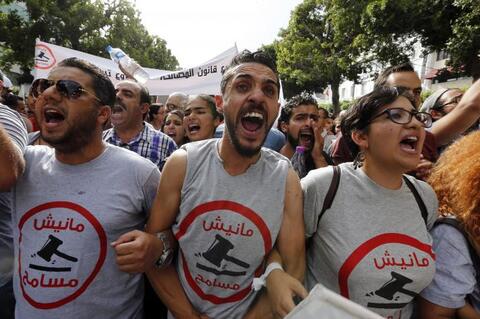
Created by the Arab Reform Initiative (ARI) with support from the International Development Research Centre (IDRC), this 2-year project, which ran from 2016 to 2018, used action-research methodology to support the social-economic and governance initiatives of youth in Algeria, Tunisia, Lebanon, and Syria. The project aimed to foster the development of youth as political actors by working directly with them to encourage and enhance their roles in political and social reform and by providing concrete strategies and tools that are designed to strengthen their resilience and capacity to bring about ground-up change.
The project's activities included:
Research into youth civic and governance practices, as well as comparative case studies of other youth actors from around the globe, specifically from Latin America.
The research involved 4 case studies of new forms of youth engagement and political participation, covering Algeria, Tunisia, Syria, and Lebanon. For each case study, a Core Working Group was established that was composed of a lead researcher and a youth activist, in accordance with the action-research methodology adopted by the project. This methodology proposes direct collaboration between researchers and practitioners and is based on participation and joint-learning between the researchers and the youth activists. The case study research relied on approximately 25 semi-structured interviews per country with youth activists from a variety of different formal and informal groups, as well as focus group discussions. Selected results include:
- Syria: 24 field interviews and 2 focus groups were carried out in Gaziantep, Turkey, or via Skype for activists still located in the areas of Idlib, Dara'a, Douma, Raqqa, and Deir Ezzor. The findings related to 4 principle categories of research: public affairs, civil and political work, military work, and women's participation in political work. For example, with regards to the latter, the research showed the extent to which this is patterned on the cultural-social geography as well as security layout of Syria. The research found that women's representation still reflects traditional gender roles (women should be active in sectors such as education and health), and that most women active in the local councils are employees and not elected representatives, and as such do not participate in decision-making processes. Nonetheless, the research also found a high number of female candidacies in local councils of liberated areas such as Douma, and that women active in local councils are generally against quotas.
- Tunisia: Focusing in particular on youth campaigns, the research has revealed that the form that youth mobilisation is taking does not fit with classical non-governmental organisations (NGOs) or political parties, and indeed has rejected such models. Engaged youth in post-revolution Tunisia have indeed been making a deliberate effort to develop new organisational models that are horizontal, democratic, and participatory, with a nucleus that meets daily for programmatic purposes.
- Lebanon: The research examined 22 NGOs and initiatives in Lebanon in order to understand the personal characteristics of members, different forms of youth activism, and challenges confronting these groups, taking as its premise that youth represent a practice of activism rather than age category. Some key findings of this study were that Lebanese youth groups are seeking to structure and standardise their work more, connect with constituents, and use more Arabic to reach a wider audience. Nonetheless, activism as per this sample remains somewhat elitist, as evinced by the reluctance to use Arabic within activist communities. In a marked difference from the Syrian case, engaged Lebanese youth are redefining politics as public service and do recognise the inherently political nature of their action.
- Algeria: The research included 24 interviews across the country to examine the condition and experiences of youth mobilisation in Algeria. The research is structured around 2 main analytical lines: the forms and logics of youth engagement, and how action and organisation can exist despite the authoritarian context; and the question of politicisation and representation, and the extent to which youth engagement breaks norms. This includes a study of how the activists understand themselves and others, and how they interpret their actions and interactions. One finding: In some cases, new organisations emphasise new ways of being together, placing emphasis on giving voice to all and reflecting a desire to change internal governance and seeking social mixing. They are quite interested in the concept of horizontality at the conceptual level, but do not yet have the tools to achieve this at the pragmatic level. As in the other case studies, engagement acts a source of hope for youth to improve their society and achieve social justice.
- A comparative case study with youth engagement in Latin America has revealed numerous similarities with youth activism in the Arab countries. The cases thus far reviewed of youth initiatives in Brazil and Mexico indicate a deeply individual concept of engagement. Activism is highly local or community-based in nature, but also explicitly takes place in the field of art and artistic expression. Youth activists in Latin American also reject political ideologies as unconstructive and see discussion about ideas as a diversion of energy; instead, they focus on promoting present-day action. The notion of solidarity with those who are intended focal points of youth action (e.g., economically poor communities) and engaging in solidarity is understood as a practice of citizenship via becoming an agent of change.
Learning groups, working directly with youth actors to develop collaborative strategies regarding the role of youth in local governance, political/social transformation, and other issues for engagement.
In order to create a long-term forum for the exchange of experiences, best practices, success stories, and lessons learned between the youth activists across the 4 countries being investigated in the project, ARI is in the process of creating an online "Activist Tool-Kit", a web-based platform with short videos (3-5 minutes). This tool is not designed for training purposes but, rather, is meant to document what is new and successful in new forms of engagement and civic action, and to share this widely. These testimonies are practical in nature, are in various Arabic dialects with subtitles in classical Arabic, and include a wide variety of topics regarding mobilisation strategies and organisational models. (Just a few examples: The importance of humor and positivism as a different way to express political opinions, with examples from the trash crisis in Lebanon, and the use of art to bring about change.) Through the research and case studies, new testimonies can be collected and uploaded onto the site. This is designed to be of particular use for civil society actors in the Gulf, who are currently isolated in their actions and have little experience of mobilisation.
An impact group involving experts in digital engagement and creative digital strategies to reach out to external constituencies, share experiences of new practices, and establish new networks and coalitions.
Filming for a documentary film is complete and includes interviews and testimonies from a variety of youth groups from the 4 case study countries as well as Egypt, thanks to co-finance by the Rockefeller Brothers Fund. The documentary film is an audio-visual compilation of the research conducted by the project, and as means of disseminating research results and allowing youth groups across the region to become aware of one another. ARI is currently under discussion with the Friedrich Ebert Stiftung (FES) to organise joint screenings of the documentary film across its offices in the Arab world. These screenings will be followed by guided discussion with audience members, thereby serving as outreach to new coalitions and groups and benefiting from the network of FES.
Policy dialogues, bringing together youth actors from different groups and organisations and more traditional political actors, to focus on how youth practice can be complementary to the more traditional efforts at political and social transformation. Examples:
- June 3 2018, Tunis, Tunisia - brought together 18 representatives of youth activist groups as well as political parties and traditional NGOs. Featuring 4 presentations by youth activities and 2 moderated discussions, the policy dialogue explored the modes of action and new forms of engagement of Tunisian youth as alternative practices to political action, and the rupture between activist youth and the traditional political sphere. One activist cited the series of small battles that those in power have been winning vis-à-vis youth groups, and the manner in which media coverage has successfully weakened the image of youth activism by exposing internal conflicts and negative images of these social movements. In response, youth groups have focused on rehabilitating their public image rather than achieving their broader socio-economic goals. The discussion also considered various strategies for the renewal of youth mobilisation, and the various possibilities for direct collaboration of youth within the formal political arena. Click here to read more about this dialogue.
- October 27 2018, Beirut, Lebanon - brought together over 20 young activists, including representatives from the Lebanese Association for Democratic Elections (LADE) and from Lebanese political groups that represent a break from "politics as usual" in the Lebanese political scene but that had relatively little success in the May 2018 parliamentary elections. The objective of the dialogue, which included a series of presentations by representatives from Libaladi, the SMART news agency, and Beirut Madinati, followed by a broader debate, was to take stock collectively of what actions were achieved, what succeeded and what failed, and what lessons could be learned for future engagement - and, in particular, by youth - in Lebanon's elections and formal political sphere.
- October 31 2018, Gaziantep, Turkey - brought together 17 youth representatives from 7 Syrian local councils as well as researchers and practitioners from the Omran Centre for Strategic Studies, the Shaml Coalition of Syrian CSOs [civil society organisations], the Local Administrations Council Unit (LACU), and Sharek Youth Forum of Palestine. The dialogue aimed to discuss the process of decentralisation in Syria and the role local councils can play in that process and in building sustainable peace more broadly, as well as the specific role of youth who are currently engaged in Syria's local councils in the post-conflict period.
- November 25 2018, Paris, France - brought together 13 Algerian youth activists living in France. The event aimed to discuss the modes of action and new forms of engagement adopted by Algerian youth as vectors of thought and political practice. In the first session, participants discussed the impact of living in diaspora on activism in Algeria, including how the experience abroad changes understanding of politics, how the diaspora in France can strengthen associative action in Algeria, and the impact of the experience on the trajectories of youth activists. In the second session, participants discussed in particular social entrepreneurship and associative work as new forms of political action, looking in particular at the current and potential future political roles of engaged youth in Algerian politics and an eventual transition process.
Youth, Democracy and Governance
Background and context:
According to ARI, repression, conflicts, and instability are plaguing countries across the Arab region. However, there remain pockets of optimism in the shape of formal and informal efforts by its people to counter its complex challenges. At the heart of this process are the youth, who played an important role in the social movements of 2011 and who are finding meaningful ways to resist the regional tendencies and to carve out spaces where democratic practice is geared to social justice concerns. ARI understands "youth" not simply as meaning all young people, nor as a social or demographic group, but, rather, as a collective interpretation/understanding of politics and state-society relations that have led to different forms of engagement. ARI contends that youth have shown a broader understanding of politics, focusing less on procedural dimensions than on transforming relations between governance and civil/political society. They are pursuing freedom of expression, equal citizenship, and social justice in seemingly non-political domains. These collective understandings have pushed youth towards different forms of engagement and new forms of governance.
In Lebanon and Syria, ARI's focus groups with youth highlighted that engaged youth do not see their action as a form of politics, revealing a lost sense of political agency among engaged youth. In Lebanon, youth groups define their action as public service and do recognise the inherently political nature of their action. In Syria, youth active in local councils do not see their work as political in nature but rather as service provision in the face of humanitarian crisis. In their collective understanding, the "political" is located elsewhere, in the high negotiations process in Geneva and in large-scale representative institutions rather than the local level. As such, they express little interest in staying in politics once the war ends.
In those same 2 countries, the focus groups also revealed gender inequalities in youth initiatives. In Lebanon, activism is identified as "women's domain", associated with "female" qualities of altruism and the ability to dedicate one's time to volunteer activities with the associated expectation of men as the family breadwinners. In this sense, while youth proclaim they are breaking with the existing political and social structure, their engagement may be reinforcing gender inequalities. In Syria, women's participation in local councils is uneven and in certain areas absent entirely, revealing inequalities that fall along geographic lines (women's participation is more important in Northern local councils and entirely absent - and indeed actively discouraged - in Southern ones).
Founded in 2005, the ARI is an independent Arab think tank working with partners in the Middle East and North Africa and beyond to articulate an agenda for democratic change. It conducts research and policy analysis and mobilised stakeholders to build coalitions for positive change based on the principles of diversity, impartiality, and social justice.
Project impact, according to ARI:
The project has raised awareness among the youth groups regarding the gaps between their internal practices and their stated values of full citizenship, equality, and breaking with the status quo, as well as their own understandings of "politics" and the "political" and how they situate their own activism and agency within the framework of political action. This was achieved in particular by stimulating discussion between different youth groups regarding their decision-making structures, practices of transparency and accountability, and the participation of women, and broader discussions about their own assessment of the political field and their own role and potential in political change.
For example, in Algeria, youth groups have revealed that they have little knowledge of governance and, while expressing their desire to break from the traditional practice of politics and its hierarchical and un-participatory nature, instead reproduce the same structural model within their initiatives. Through the dialogue process with the youth groups in Algeria, the project has raised awareness that their action is marked by a duality that is both integrative and transgressive/transformative, whereby there is both a reproduction of norms and order as well as their breaking down. Indeed, even the most oppositional among them seek a degree of integration within the existing system rather than total transgression.
In the case of Tunisia, the focus group discussions with youth activists have reportedly brought forth an urgent debate about what changes need to be made for activism and the application of political pressure to be maintained. Youth in discussions admit that their initiatives are losing steam, and that they have not been able to generate continued interest in their battles or continued engagement on the part of the mobilised. Yet, they disagree in profound ways about how to move forward from here. While some advocate institutionalisation or even the conversion of their initiatives into political parties, others adamantly wish to maintain their loose, horizontal organisational structures in order to forge new models of activism. Yet, they lack the know-how to succeed in this vein. This debate between youth groups about the different strategies and tactics that should be applied moving forward, both with respect to their political campaigns as well as their organisational formats, have brought forth the differences that exist between engaged youth and have revealed potential fractures that have been previously hidden by the momentum of activism.
In short, raising awareness of these and other issues through the research process has allowed youth to start to see themselves and their activism differently, and to have a critical eye on the meaning of their action and its potential ability to both produce change and re-produce the status quo, even unwittingly. This has thus revealed to activists the weak spots in their own forms of engagement, and where their action needs to be strengthened in order to have the desired social, political, and cultural impact.
Conclusion:
ARI asserts that this project highlights the importance of conducting more research with youth and about youth in order to better understand their realities, needs, and challenges. The findings from the research project show how diverse youth voices are and how central they are to the process of reform in their societies. The initiative also points to the importance of connecting youth across the Arab world and elsewhere to learn from each other and to help identify what a future action-oriented research agenda should look like.
ARI, IDRC, FES
Email from Liane Cerminara to The Communication Initiative on October 17 2018; emails from Roula El-Rifai via Liane Cerminara to The Communication Initiative on January 22 2019 and January 24 2019; and ARI website, October 17 2018. Image credit: ARI
- Log in to post comments