










































Community Rapid Assessment - Round 2 for Communication Response to COVID-19 Crisis
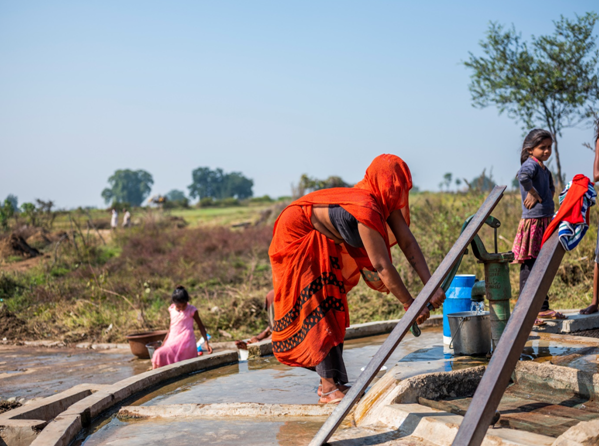
"Findings indicate women, marginalised communities and rural populations need more access to information on COVID-19 vaccine."
In order to understand attitudes towards COVID-19 safe practices and vaccine hesitancy, the United Nations Children's Fund (UNICEF) India commissioned a community rapid assessment, which was conducted by Ipsos Research, in five states of India. Its intent is to complement existing information with regular data from the communities, which will allow UNICEF to examine the changing behaviours, needs, and challenges during and post COVID-19 transition to recovery.
Specific questions the research seeks to explore, per UNICEF's Behavioural Drivers Model (BDM) are: How are communities coping with COVID-19-related disruptions, and what are the emerging needs of the community? How are certain behaviours changing over time? To what extent is people's behaviour affected by their trust in institutions? And how can UNICEF adapt its programming to better address relevance based on community-sourced data?
The assessment is being conducted in 3 rounds (see Related Summaries, below, for details on the first one). This second round (R2) was carried out among 2,631 members of the general population (male and female, aged 18 years and above) from August 13 - September 6 2021 and among 2,645 platform members, or PMs (self-help group (SHG) members, Panchayati Raj Institutions (PRI) members, and frontline workers, or FLWs) from August 13 - September 12 2021. Key findings:
- In R1 (April 2021), people had shown positive intent to get the COVID-19 vaccine, and a small portion had been vaccinated. In R2, the intent is still positive, and the majority of those surveyed have already received at least one dose of the vaccine. Uptake is highest in Andhra Pradesh, where 41% respondents had taken both doses of the vaccine, compared to the other states, where 16-22% had taken both doses.
- In response to the question "What helped you make the decision to be vaccinated?" most cite fear of getting COVID-19 and assert that the vaccine provides protection against COVID-19 (getting seriously ill from it). A high proportion of the general population surveyed also cite normative reasons ("because everyone is taking it" and/or "because my family suggests it").
- An analysis of the 8% who said they do not intend to take the vaccine shows that 60% are rural dwellers, and many of them are women, belong to marginalised communities, and have an education below primary level. The primary reason stated for not taking the vaccine even when it is available is "wait and see"; there was a sharp increase in people (over one-third) who expressed this hesitancy in R2 as compared to R1. There was a decline in concerns like side effects of the vaccine and its effectiveness. Reasons for not being able to take the vaccine when intent was there include non-availability of slots, and no vaccine centre nearby. These supply-side challenges are greater in rural areas.
- There is improved trust in government vaccination and communication efforts. While in R1, 81% trusted information provided by the government on the COVID-19 vaccine, this level rose to 91% in R2. Trust in efforts made by the government on the COVID-19 vaccine rose from 79% to 90%. Overall trust in information about the COVID-19 vaccine increased from R1 to R2 even by gender and area. Trust in government and its efforts towards COVID-19 and the COVID-19 vaccine seems to be significantly low among those who don't intend to take the vaccine.
- Trust in local healthcare providers sharply increased from R1 to R2. Trust in community groups ("to take actions that benefit you") such as local government and youth groups saw a slight increase from R1 to R2, but SHGs saw a decrease.
- Mass media, especially TV, remains the top-trusted source of information, after print media. (Social media as a trusted source of information has declined when compared with R1.) However, the number of people who said they heard nothing about COVID-19 in the last week has increased. This finding indicates a gap in the flow of information.
- There was no major variation in risk perception by vaccination status, but low risk perception in the community continues to be a challenge. Washing hands with soap or sanitiser is the most common protective practice. Fewere people are avoiding social gatherings compared to R1, which poses a risk for new infections, especially in communities with low vaccination rates.
After sharing data and trends on coping strategies and emerging needs (e.g., around children's return to in-person learning/school), the survey report examines the effectiveness of UNICEF interventions with PMs (e.g., COVID-19 trainings). It concludes with recommendations:
- Continue to capacitate FLWs and SHGs, building their confidence.
- Further tap trusted sources of information, especially television and FLWs.
- Refine the content/key messages.
- Define state-specific interventions for state-specific challenges (in addition to national protocols).
- Appreciate the good work: Acknowledge and amplify motivational stories.
- Leverage related national opportunities to reinforce COVID-19-appropriate behaviours (e.g., Poshan Maah, which is the Indian government's flagship programme to improve nutritional outcomes for children, and Swachhta Pakhwada, which is a governmental drive to achieve total sanitation and cleanliness).
Email from Sumita Thapar to The Communication Initiative on December 26 2021. Image credit: UNICEF India/2020/Prashanth Vishwanathan
- Log in to post comments