










































Report on the Meeting of the Technical Advisory Group (TAG) on Polio Eradication in Pakistan [February 2021]
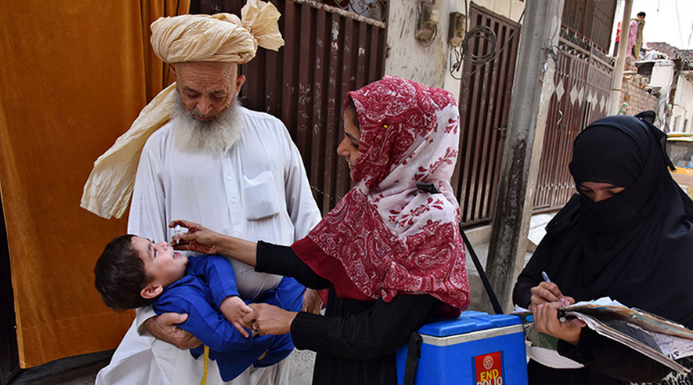
"The paradox of disease eradication is that in the last mile, when most focus is needed, targeted disease initiatives may seem the least of the country's concerns, with competing health priorities like the ongoing COVID-19 pandemic. However, continued failure to root out polio from its last hideout on earth risks undermining public trust and programme credibility, donor commitment and international support."
As shared in this report on the virtual meeting of the Technical Advisory Group (TAG) - held February 8, 9, and 11 2021, seven months after the June 2020 TAG meeting - the Polio Eradication Initiative (PEI) in Pakistan has resumed supplementary immunisation activities (SIAs) despite the ongoing COVID-19 pandemic. In addition, acute flaccid paralysis (AFP) surveillance demonstrated an ability to rebound from challenges presented by the COVID-19 pandemic, but the programme entered 2021 with surveillance on a downward trend of AFP case reporting. In short, the programme continues to grapple with the co-circulation of wild poliovirus type-1 (WPV1) and circulating vaccine-derived poliovirus type-2 (cVDPV2) - an epidemiological situation that is outlined in the report.
The TAG offers findings and recommendations; below are some highlights of their discussions related to communication:
- National leadership - "Pakistan demonstrated unprecedented levels of political commitment and capacity in response to the COVID-19 national crisis that it needs to bring to its efforts to interrupt poliovirus transmission within its borders." One idea for supporting these efforts: National Task Force (NTF) and Provincial Task Force (PTF) meetings should be established and should include the leadership from the Pakistan Army and law enforcement agencies; minutes of all meetings should be readily available to stakeholders.
- National Emergency Action Plan (NEAP) 2021 - June 2022 (see also the Annex) - "Overall, the TAG observes that the NEAP 2021-22 incorporates a very large number of strategies and activities, but often without evidence of impact/value." What is critical is how the NEAP will maximise quality in core programme functions, such as community engagement.
- Transformation - This is the term for a PEI agenda that was initiated in 2019. The TAG asserts that it is unclear if the provincial emergency operations centres (PEOCs) have fully embraced and set up strong teams to implement this agenda. One suggested way forward is to "Ensure operational and communication functions remain fully integrated and coordinated throughout the programme and assess SIA quality (e.g., number of children unimmunized after SIA) through joint analysis of operational and communication functions." Specific components of the Transformation agenda:
- Cross-cutting programme requirement to "Fix the Basics": Sub-optimal programme delivery is evident in areas including community engagement. One recommendation: By June 2021, demonstrate improvement in SIA delivery through clear indicators, such as 100% local female vaccinators and supervisors matched for language and tribe, fully accepted by the community.
- Gender and the programme: Among the recommendations: Actively ensure male and female participation in community engagement processes (jirgas, etc.), including "spaces" for dialogue in household visits for women when not possible at the community level.
- Priority community engagement (PCE): TAG recommendations in 2020 and NEAP 2021 - June 2022 recognised the urgent need to improve engagement with polio-affected underserved communities based on participatory research, community-driven problem-solving, and alliance-building. The PCE strategy will only work if it is based on authentic understanding of, and response to, target community interests and needs and should not focus primarily on 'refusal conversion.' Good progress has been made in developing region-specific PCE analysis, but it is not clear that PCE work is fully integrated with operations and communications. Effective PCE with genuinely locally representative organisations and groups will require modes of working that differ from conventional civil society/NGO [non-governmental organisation] sub-contracting. Further efforts and evidence are needed to demonstrate that the PCE strategy is able to identify and engage effectively with such local organisations and groups."
- Integrated service delivery (ISD)/essential immunisation (EI), with focus on super high-risk union councils (SHRUCs): ISD is widely accepted as a strategy to potentially improve community engagement and vaccine acceptance, but the TAG calls it inconsistently defined and unsystematically implemented in Pakistan. In addition to offering recommendations on ISD, a suggestion related to EI is to train community midwives (CMWs)/lady health workers (LHWs)/traditional birth attendants (TBAs)/community-based vaccinators (CBVs) on how to give messages on the importance of oral polio vaccine (OPV0) dose within 72 hours of birth.
- Communication - "The TAG commends the strategy and innovation of multiple traditional and new communication approaches but cautions the programme to...[e]nsure full coordination of communication and PCE engagement activities. Communication interventions should focus on and be evaluated vis-à-vis their contribution to...the defined four pillars: 1) Mass/social media and formal partnerships to create an enabling environment for vaccination; 2) ISD to improve community conditions, reducing opposition to PEI, through strengthened basic services; 3) PCE to build community participation to support SIA quality and long-term local alliances; and 4) UC management teams to engage local influencers and households to support frontline teams and OPV acceptance."
The report also examines the SIA plan for remainder of 2021, the response strategy to stop cVDPV2 transmission by June 2021, and SIA quality. On the latter issue, with regard to efforts to vaccinate high-risk mobile populations (HRMPs), the TAG recommends, among other actions, efforts to improve understanding of HRMP immunisation status, PEI awareness, and attitude, as well as measures to ensure language-appropriate teams in HRMP settlements.
Global Polio Eradication Initiative (GPEI) website, March 30 2021 and April 21 2021. Image credit: ©NEOC/Pakistan
- Log in to post comments