











































Beyond Masks: Societal Impacts of COVID-19 and Accelerated Solutions for Children and Adolescents
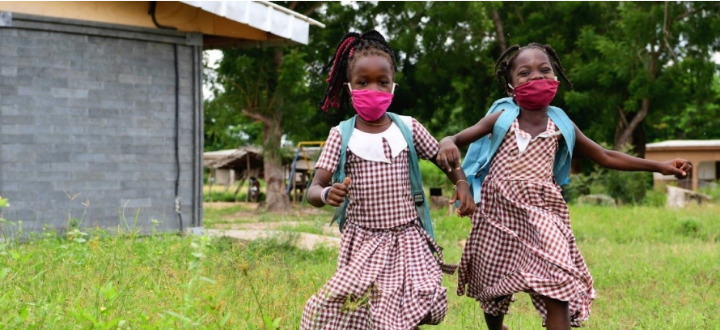
"Examining the available evidence to understand the potential and actual societal effects on children and identifying viable evidence-based solutions are critical pathways to inform timely policy and programmatic responses."
From health to education, all children and adolescents, especially the most vulnerable and marginalised, have been affected by the COVID-19 pandemic. This report from the United Nations Children's Fund (UNICEF) Office of Research—Innocenti looks at these impacts, bringing to bear evidence from past health crises, such as HIV/AIDS and Ebola, and proposing solutions for mitigating impact at individual, household, community, and societal levels.
A review of the COVID-19 literature confirmed that COVID-19 has not only created new challenges for children and adolescents through its impact on household income, healthcare disruption and school closures, restricted mobility, and mental health but has also exacerbated existing disparities and inequalities. The framework below presents a depiction of the potential impact of the pandemic on children. A multi-level social ecology around the child gives rise to determinants that contribute to both preexisting vulnerabilities and resilience. Over time and as the pandemic unfolds, children are subject to multiple influences across their life-course, giving rise to positive and negative trajectories – depicted by the green and blue arrows.

To respond to this global situation, UNICEF proposes "accelerator solutions" that are low-cost, scalable, and address multiple vulnerabilities. The literature review found that among the strongest accelerators for mitigating the impact of COVID-19 are social protection (especially cash transfers and nutrition), parenting programmes, psychosocial or mental health support, and safe and quality education environments, including school feeding.
UNICEF stresses that interventions should be informed by what has worked in previous health crises to promote positive social resources and resilience, paying attention to the specific needs of the most vulnerable groups of children and adolescents. Creative solutions are needed to reach young people without phone or internet access. During the Ebola crisis, for example, Liberia and Sierra Leone tackled the digital divide by providing access to education via radio broadcasts. Research conducted by the United Kingdom Research Initiative's Global Challenge Research Fund (UKRI GCRF) Accelerate Hub has shown that telling stories, including online, is itself an effective outlet for children and young people when they are anxious, as in the rapidly changing and stressful situation of the pandemic.
Other suggestions include:
- Solutions should be adapted for delivery in contexts of sustained poverty, weakened government capacity, social distancing/physical distancing, and movement restrictions.
- Rapid innovation and evidence-building is needed to adapt evidence-based interventions to a COVID-19 context and should include digital adaptation and infrastructure strengthening.
- It is critical to collect disaggregated data on children and young people and invest in research to better understand the impact of COVID-19 on their health and well-being.
The report complements UNICEF's Six-Point Plan to Respond, Recover and Reimagine a Post-Pandemic World for Every Child, which calls on governments and partners to:
- Ensure all children learn, including by closing the digital divide.
- Guarantee access to health and nutrition services and make vaccines affordable and available to every child.
- Support and protect the mental health of children and young people and bring an end to abuse, gender-based violence and neglect in childhood.
- Increase access to clean water, sanitation, and hygiene (WASH), and address environmental degradation and climate change.
- Reverse the rise in child poverty, and ensure an inclusive recovery for all.
- Redouble efforts to protect and support children and their families living through conflict, disaster, and displacement.
Editor's note: An hour-long panel discussion, timed with the launch of the Beyond Masks report, explored how its findings can shape national and subnational policy responses and individual, family, and community behaviours. The webinar recording may be accessed below.
Email from UNICEF Office of Research - Innocenti to The Communication Initiative on November 16 2020; and UNICEF Office of Research - Innocenti website, November 20 2020. Image credit: © UNICEF/UNI333569/Dejongh
- Log in to post comments