











































Prevention of COVID-19 in Internally Displaced Persons Camps in War-Torn North Kivu, Democratic Republic of the Congo: A Mixed-Methods Study
Université Catholique du Graben (Kasereka, Muyisa, Kahindo); University of Alberta (Hawkes)
"These results call for an ethical, inclusive approach to the global pandemic that leaves no one behind, just as COVID-19 will not respect borders and will not leave behind refugees and IDPs..."
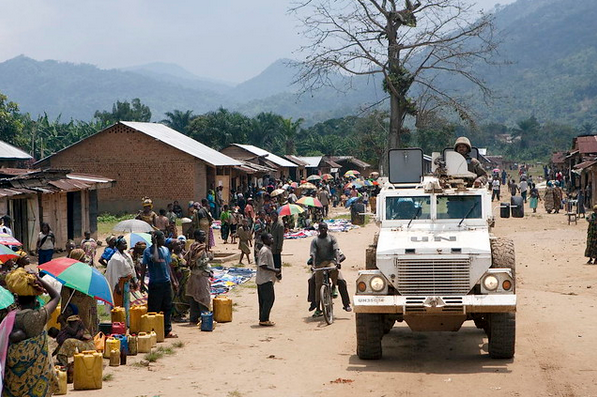
The conditions in which displaced populations (refugees and internally displaced persons [IDPs]) live complicate COVID-19 control measures in low-and middle-income countries (LMICs), particularly in conflict zones such as North Kivu, Democratic Republic of the Congo (DRC). With the goal of contributing to the improvement of prevention strategies among a highly vulnerable and neglected group facing the pandemic in an environment of extreme scarcity and insecurity, this study assessed the knowledge, attitudes, and practices (KAPs) of IDPs in Eastern DRC with respect to the prevention of COVID-19.
The mixed-methods study involved qualitative focus group discussion (FGDs) and quantitative (52-item survey questionnaire) data collection. Specifically, first, the researchers conducted 6 FGDs, involving 23 participants in total, in 3 IDP camps (Mwangaza, Masosi, and Luvangira) located near the rural commune of Oïcha, North Kivu. The groups included adult women (3 FGDs) and men (2 FGDs) who were heads of households, and youth (1 FGD). The following themes emerged from the FGDs:
- Displacement narratives - e.g., "On 1 side, the insecurity, and on the other, this corona—yes, we are scared. I'm just in shock..." (FGD5, F5)
- Population movements in and out of the camp and risk of introducing COVID-19 - e.g., "There is a constant coming and going of people from outside the camp and vice-versa." (FGD 6, F11)
- High level of awareness and fear of COVID-19 - e.g., "Ebola killed people, yes, but the radio talks of frightening numbers of deaths due to corona. Really very many." (FGD6, F9)
- Challenges associated with hand hygiene in the camp - e.g., "You have to wash your hands. That's what they say, but we don't have water here." (FGD4, Y2)
- Impossibility of physical distancing in the IDP camp - e.g., "Here, it's not possible 'ku achana metre moya moya' [to stay 1 meter apart; to practice physical distancing]. If it comes here, we will all die..." (FGD1, M4)
- Restoring peace and security takes priority over vaccine - e.g., "If security returns, we will protect ourselves against corona, we will respect all the measures, and it's only at that time that you can start talking about a vaccine or physical distancing. But in these conditions, I wouldn't accept this vaccine." (FGD5, F5)
The FDGs revealed that public health messages about the severity of COVID-19 appear to be widely accepted and believed, with participants citing the high number of deaths in wealthy "white" countries and the closing of churches as evidence of danger. Although mistrust in the government), belief in corruption, and belief in conspiracy theories were prevalent, endorsement of these views did not appear to be associated with prevention practices. This is likely due to barriers and challenges such as those identified above. Another worrisome finding: "Expressions of futility or fatalism as expressed by FGD participants in our study are noteworthy and may reflect learned helplessness or loss of self-efficacy among IDPs under extraordinarily difficult living conditions."
For the quantitative component, a local Congolese physician with tacit knowledge of the circumstances, culture, and language of the IDPs chose the appropriate wording of the survey's questions and ensured the content was relevant for the conditions in the IDP camp. From May 25-29 2020, a study team member - a local Congolese health worker with tacit understanding of the language and culture, biomedical understanding of COVID-19, and past experience administering surveys by verbal interview - administered the questionnaire and recorded the participant's answers using a field-adapted electronic data collection tool. The final sample consisted of 164 IDPs (66 from Mwangaza; 44 Masosi, and 54 Luvangira) and 143 in the comparison group. There were 74 women (45%) among the IDPs surveyed and 57 women (40%) in the comparison group. Selected findings:
- IDPs and the comparison group both identified local radio as their major source of information on COVID-19. Radio, television, and social media were more common sources of information among the comparison group, whereas church was a more common source among IDPs.
- Overall, 15% of IDPs had sufficient knowledge of COVID-19, versus 30% of the comparison group. Other factors associated with low COVID-19 knowledge in bivariate analyses included younger age, larger household size, and lack of radio ownership. In a multivariable logistic regression model adjusting for these possible confounders, IDP status remained statistically significantly associated with lower knowledge.
- Despite widespread agreement (89%) that physical distancing was important to prevent COVID-19, a higher proportion of IDPs than individuals in the comparison group reported close contact with someone outside the family in the past 24 hours, and a higher proportion had shaken hands with at least 1 person.
- By self-report, 83 (61%), 62 (38%), and 19 (12%) left the camp on a daily, weekly, and monthly basis, respectively. In addition, 107 (65%) of IDPs had received a visitor from outside the camp in the past month.
In general, IDPs were found to have differed from neighbouring Congolese residents in terms of larger household size (including 46% of families with a member over the age of 60), more extreme poverty, lower educational attainment, less access to information through media and internet, less COVID-19-specific knowledge, lower rate of physical distancing, and reduced access to hand hygiene. These factors, as well as the high mobility of IDPs, leaving and reentering the camp daily for subsistence labor, establish their vulnerability to COVID-19.
Based on the qualitative and quantitative data, the researchers recommend:
- Provide IDPs with adequate facilities and tools (e.g., face masks) to implement recommended COVID-19 precautions.
- Make additional space and housing available to allow IDPs to practice physical distancing, particularly within sleeping quarters.
- Work to restore peace by controlling armed conflict in the area, so as to allow IDPs to safely return to their ancestral homes, where they could more adequately practice COVID-19 prevention.
Global Health: Science and Practice October 2020, https://doi.org/10.9745/GHSP-D-20-00272; and email from Michael Hawkes to The Communication Initiative on October 24 2020. Image credit: UN Photo/Marie Frechon - labeled with a creative commons licence - via Flickr
- Log in to post comments