










































Clinical and Vaccine Trials for COVID-19: Key Considerations from Social Science
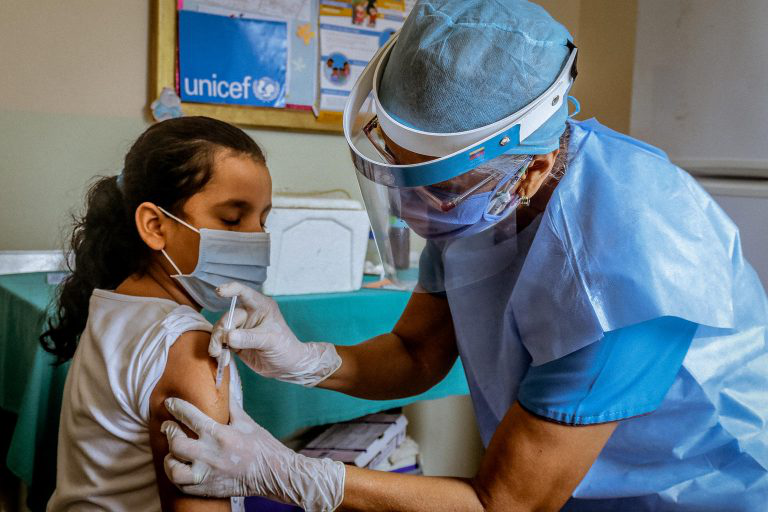
London School of Hygiene and Tropical Medicine, or LSHTM (Burns, Bowmer, Enria, Lees); University of Oxford (Vanderslott)
"Without contextual understanding and positive community engagement, the negative impacts on trial participants and protests against vaccine trials themselves, could ultimately lead to trials collapsing and being shut down." - Dr. Shelley Lees
From the Social Science in Humanitarian Action Platform (SSHAP), this brief outlines how, and in what ways, social science can contribute to ongoing/future COVID-19 clinical and vaccine trials. For instance, social science insights help elucidate the complexities of the situations in which outbreaks occur, and the dynamic, complex and uncertain forms of public authority and power that are at play. Such insights can also influence operational decisions regarding tailoring messaging, ensuring the right people are involved in discussions, and creating opportunities for participants and communities to have a say in how the trial is run. In short, the brief articulates why community engagement and patient and public involvement (PPI) with COVID-19 vaccine trial participants and their communities - pre, during, and post-trial - are key to finding and delivering a successful vaccine.
Drawing on examples from emergent disease outbreaks, including SARS, MERS, H1N1, Zika, and Ebola, the brief identifies considerations for COVID-19 clinical trials, such as the need to:
- carry out context-specific research, engaging with prospective participants and communities around relevant ethical, political, economic, legal, and religious dynamics, histories, and experiences of clinical research, perceptions of COVID-19 and associated interventions, concerns and expectations of clinical research, and potential facilitators and barriers to participation;
- identify community dynamics and patterns of trust - that is, understanding contextual determinants of (mis)information and (dis)information and identifying both formal authority structures and informal sources of information/influence – to be able to ensure different kinds of actors and groups are involved in discussions before, during, and after trials are conducted;
- watchguard open data and ensure full transparency in clinical trial protocols;
- integrate participant and community perspectives in deliberations about aspects of trial design and procedures to ensure these take into account specific benefits, concerns, and socio-cultural contexts;
- maintain open dialogue with participants and relevant communities, e.g. through participant advisory groups and community consultations; and
- ensure that engagement does not focus simply on the need for more information but also identifies sources of mistrust and potentials for community dialogue and responds to them in dynamic ways.
Experience from trials in past outbreaks suggests that "Identifying community dynamics, rather than treating them as homogenous, and recognising who has authority and influence in different communities, can help to identify pathways for meaningful community engagement. For example, trust has been built in communities around trials when local leaders are engaged, involved in communicating the purpose of research, and when they decide to take part in trials themselves....Above all, engagement needs to be understood as an iterative exercise; publics are not static and are often brought together through the very process of research. It is critical to attend to the ways in which practices of inclusion and exclusion can be played out and amplified through the research process..."
Along these lines, the brief suggests that research on anthropology, human behaviour, socio-political contexts, and implementation strategies should play a role in ongoing and future COVID-19 trials. Examples of how trials can integrate social science research into their design are provided. For instance, community groups and key stakeholders should be consulted to test informed consent language, to ensure that informed consent forms are translated into relevant languages, and, where necessary (e.g., low literacy contexts), to consider alternative approaches, including video and audio.
Some overarching recommendations provided in the brief include:
- Trial participants should be included in the design of trials from the beginning. Evidence shows that this leads to greater participation and more successful emergency vaccine trials.
- Local community dynamics and patterns of trust need to be understood before trials begin, including formal authority structures and informal sources of information or influence.
- Information about trials should be free flowing from, and to, communities via participant advisory groups and community consultations, including clear and accessible trial data during and after the trial has finished.
- Once a vaccine has been licensed, research on local dynamics and trust needs to inform vaccine roll-out strategies.
- Rapid social science research needs to be included alongside national distribution mechanisms to ensure that rumours, concerns, and anxieties are identified in real time, including analysis of social media.
The brief concludes with a list of, and links to, relevant resources
"Vaccine trials must engage with communities or risk failure, say social scientists", LSHTM, October 9 2020 - accessed on October 14 2020. Image credit: United Nations Children's Fund (UNICEF)
- Log in to post comments