










































To Vaccinate or Not to Vaccinate? Perspectives on HPV Vaccination among Girls, Boys, and Parents in the Netherlands: A Q-methodological Study
Erasmus University Rotterdam (Patty, van Dijk, Wallenburg, Bal, van Exel, Cramm); Erasmus MC (Helmerhorst)
The Netherlands, where the current study was conducted, was among the first countries to include the human papillomavirus vaccine (HPV) in its national immunisation programme (NIP), in 2008. However, this was only for girls and not for boys, which is currently still the case. Furthermore, vaccination rates in most countries remain relatively low. The aims of this study were to explore prevailing perspectives on HPV vaccination among girls, boys, and parents, and to identify underlying determinants shaping decisions about whether to vaccinate against HPV.
Much attention has been devoted to determinants influencing HPV vaccine uptake, and the researchers introduce this study by summarising the literature. In brief:
- The intention to vaccinate tends to increase with the perceived benefits, which typically involve the perceived effectiveness of the vaccine and beliefs that the vaccine will protect against or minimise the severity of HPV-related disease and/or promote the future health of recipients and others through herd immunity.
- Perceived barriers also influence decisions about whether to vaccinate against HPV. Reported barriers entail the low perceived effectiveness of the vaccine, concerns about side effects and safety, fear of needles, fear of sexual disinhibition or promiscuity stigma, gender norms, lack of trust in the government (promoting the vaccine) and/or concerns about commercial interests of pharmaceutical companies, and lack of knowledge and awareness.
- Most studies have shown that beliefs about the severity and likelihood of HPV infection and/or development of HPV-related diseases positively affect vaccination uptake, though many girls perceive a low likelihood of contracting HPV.
- Demographic determinants (e.g., education, religion), social influences, and subjective norms (e.g., peer acceptance) have been found to affect the decision to vaccinate.
This study was conducted in the Netherlands using Q-methodology, an approach designed to explore subjective perspectives. Participants were girls and boys aged 10–16 years who had not yet received HPV vaccination, and parents or legal guardians of such children. Forty-seven girls, 39 boys, and 107 parents were asked to rank a comprehensive set of 35 statements, assembled based on the health belief model (HBM), according to their agreement with them. (The HBM has 5 major components shaping individuals' health beliefs: perceived severity (seriousness of a disease), perceived susceptibility (likelihood of getting a disease), perceived barriers (tangible and psychological costs of the action), perceived benefits (advantages gained from the action), and self-efficacy (belief in one's ability to execute a behaviour). In addition to these 5 major components, an action is further influenced by internal and external "cues to action" (e.g., symptoms, media) and "modifying factors" (e.g., age, education, ethnicity). The researchers added a "social influences" component, involving subjective norms (e.g., beliefs about whether significant others think that one should engage in a behaviour) to the model.) By-person factor analysis was used to identify common patterns in these rankings, which were interpreted as perspectives on HPV vaccination. These perspectives were further interpreted and described using data collected with interviews and open-ended questions.
The analysis revealed 4 perspectives:
- "Prevention is better than cure" - This pro-vaccination perspective, with which 45 participants [35 (78%) parents, 1 (2%) girl, 9 (20%) boys] were associated significantly, emphasised the perceived threat of HPV and HPV-related diseases. Parents stated that they would rather announce this decision to their children than negotiate it with them. Given the perceived complexity of the topic, participants with this perspective valued professional advice from trusted sources, such as governmental recommendations. This perception may explain the minimal value placed on social influences.
- "Fear of unknown side effects" - This perspective, with which 46 participants [40 (87%) parents, 4 (9%) girls, 2 (4%) boys] were associated significantly, involved assessment of the severity and susceptibility of HPV-related disease as minimal. Perceived barriers, particularly fear about the potential unknown long-term side effects of HPV vaccination, dominated this perspective. Respondents' fears were also linked to mistrust of pharmaceutical companies and a lack of trust in the goverment to give advice about HPV vaccination. Participants with this perspective perceived that adequate and objective information on HPV vaccination was difficult to find.
- "Lack of information and awareness" - The defining feature of this perspective, with which 38 participants [14 (37%) parents, 14 (37%) girls, 10 (26%) boys] were associated significantly, was lack of awareness and information about HPV and HPV-related disease, which posed a major barrier to informed decision making. When asked how information should be distributed, one respondent suggested more active communication about the vaccine through spot advertisements and increasing awareness through general practitioners (GPs) and informational pamphlets distributed with formal invitations for other vaccinations. This perspective involved the least perceived severity among viewpoints of the potential consequences of HPV-related disease and a neutral perception of susceptibility. Yet, interviewees stated that cervical cancer could be severe. Respondents valued friends' and family members' opinions about the HPV vaccine, and thus appeared to be influenced more easily by the social environment. In contrast to participants with other perspectives, those with this viewpoint valued GPs' advice highly. In addition, many children holding this view appeared to trust and rely on their parents’ decision, but felt that they should have a say in this decision despite their limited knowledge about the HPV vaccine.
- "My body, my choice" - The 22 participants [2 (9%) parents, 15 (68%) girls, 5 (23%) boys], in large majority girls, associated significantly with this perspective did not perceive HPV-related diseases as a particular threat to health. Children believed that they should make this decision, positioning themselves (as vaccine recipients) centrally in responses to open-ended questions and in ex-post interviews. Compared with participants with other perspectives, they felt that knowledge, when needed, was easily obtainable from parents or GPs.
The first two perspectives and corresponding determinants of HPV vaccination decisions were coherent and distinct; the third and fourth perspectives were more ambiguous and, to some extent, incoherent, involving doubt and lack of awareness and information (perspective 3) and overconfidence (perspective 4). The researchers delve into these findings in the disscussion section of the paper, where they also describe the reasons they believe this study to be important:
- First, they write, "the modifiable-phase status of those with perspectives 3 and 4, who have not (yet) made well-considered decisions about HPV immunization, emphasizes the need for investment in tailor-made independent communication policies (e.g., spot advertisements, informational pamphlets accompanying invitations to preceding vaccine sessions, promotion of contact with GP or other medical professionals for advice) to enhance HPV immunization. A focus on increasing awareness and knowledge is particularly important among those with perspectives 3 and 4, who appeared to be rather unfamiliar with the topic of HPV. The involvement of adolescents in decision-making is a particularly important opportunity to provide HPV education. HPV awareness could be increased by incorporating informational sessions in schools' sexual health education classes. When providing information to those with perspectives 3 and 4, a focus on solidifying the link between HPV and cervical cancer, and emphasis that cervical cancer is only one of many severe consequences of persistent HPV, would be beneficial."
- "Second,...there appears to be a missed opportunity in educating children of parents with perspective 1, who make HPV vaccination decisions for their child without discussion given the perceived complexity of the topic. Parents should be encouraged to have open dialogs with their children, which clearly differs from perspective 4. However, HPV vaccination decision making may become tense when parents and children hold different perspectives."
They conclude: "HPV vaccine clearly deviates from other childhood vaccinations in NIP's, as vaccinating against HPV is not necessarily considered 'the natural thing to do'. Increasing awareness and knowledge by investing in tailored-made communication policies could help promote the uptake among those not familiar with the vaccine. This is especially important among those holding perspective 3 or 4, who appeared to be in a modifiable phase. Despite the non-generalizability of this study, the methods and results of this study could contribute to the development of campaigns wishing to address uptake of HPV vaccination."
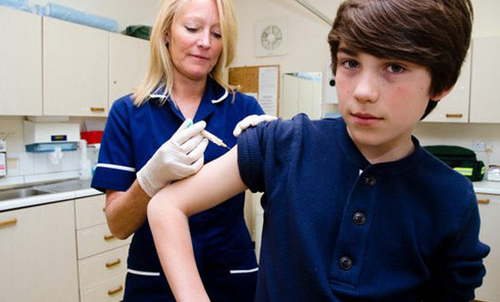
BMC Public Health (2017) 17:872. DOI 10.1186/s12889-017-4879-2. Image credit: Dr. P. Marazzi/SPL
- Log in to post comments