










































Augmented Reality Knowledge Transfer (ARKT): The Neurological Condition Posters
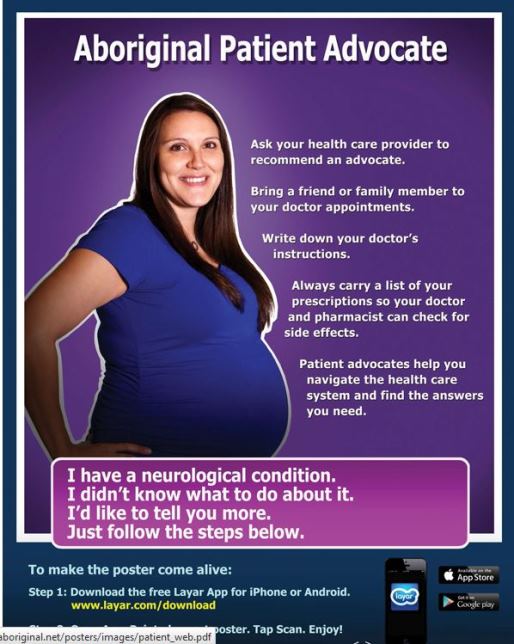
The Healthy Aboriginal Network (HAN) created a series of augmented reality knowledge transfer (ARKT) format neurological condition posters for the Native Women's Association of Canada. These posters interact with the Layar App on an Android mobile device or an iPhone. Pointing it at one of the posters triggers a video and information that wouldn’t usually be available in written format.
Augmented reality (AR) is a term applied to using more than a single visual or audio format by adding information through technology. AR may use one of two built-in technologies - the camera, for example, on a mobile device, and GPS (geographic positioning system) - to display information, data, videos, illustrations, or images based on the user's surroundings or, in this case, on the printed poster. With visual-based augmented reality, a user launches an AR app on a mobile device and then points the device's video camera at the subject (poster). The app will identify key objects and layer information on the screen based on what it's "looking" at.
One aim of this format is the engagement of youth. "Not only because it delivers knowledge in a format they are comfortable with, but it allows organizations to revitalize ‘stale’ or text-heavy knowledge transfer (KT) materials into something visual learners can access readily." According to HAN, "ARKT posters are great for universities trying to attract youth to their programs, or museums for re-invigorating static exhibits." In addition, HAN points to the idea of "marketing" health and social information to youth using ARKT as a tool.
Publishers
Email from Sean Muir to The Communication Initiative on March 11 2013.
- Log in to post comments