










































Building Bridges: The Health Professionals and Journalists' Media Resource Project
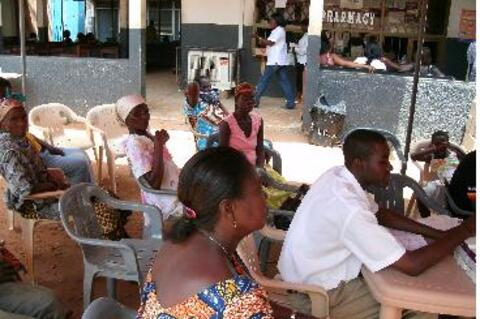
"Good health reporting is needed to promote public understanding and engagement with health research."
Motivated by the belief that in Accra (the capital of Ghana), health professionals and journalists lack the training and the resources - such as contact information for health professionals or researchers - needed to report on health, the Accra Metropolitan Health Directorate is working to promote health reporting in Ghana. The goal is to help local journalists become familiar with health jargon and issues so that they can write authoritative, educative, informative, and interesting stories and features that help expose the fundamental challenges facing the health sector and, it is hoped, help people lead healthier lives. Although the main audiences are journalists and health professionals (including health researchers), the project ultimately aims to promote public engagement in health research as these audiences produce more health stories or programmes.
The project uses interpersonal communication and capacity building to foster a cordial relationship between health practitioners and journalists, thereby "building bridges" that help journalists disseminate health research. It has four main stages. First, organisers characterised the expectations and experiences of 20 senior editors (journalists) and the project team on health reporting through a one-day seminar. Second, based on the findings of the seminar, a short course was designed for use in a two-day seminar on health reporting for 30 journalists and 30 health professionals, including health researchers. Third, 5 journalists and 5 health professionals were selected and coached as trainers of health reporting. Finally, an online database of all the participants of this project has been created so that they can communicate effectively and report more health stories. All the participants will be tracked for 6 months to determine the effect of the training on their health reporting practices and beliefs.
To illustrate one activity carried out as part of this initiative: David Newton of the Ghana Institute of Journalism (GIJ) addressed health reporters at a Building Bridges forum carried out in October 2012. In his talk, Mr. Newton said increased collaboration between health reporters and health workers would create a platform for journalists to call on health professionals for first-hand information concerning health issues so that they would not rely solely on secondary sources of information, especially the internet, which might not necessarily be reliable or provide accurate information. He explained that such knowledge would further equip health reporters to write authoritatively on subjects of health, help find solutions to health problems, and advocate for critical health issues for the benefit of the public. Mr. Newton emphasised that journalists must be in the field and interact with the people to bring their health problems to the attention of health professionals and duty bearers. It was expected that the findings from the forum would be incorporated into the GIJ's curriculum to allow students, especially those in the field of humanities, to specialise in health reporting.
A public health specialist associated with the initiative stated that, with a better collaboration between journalists and health workers, the former group would seek expert knowledge before using video coverage/pictures of medical issues, particularly of fatal accidents. He called on health reporters to take advantage often of capacity building programmes that would equip them to write evidence-based reports, so as not to report research findings out of context.
Health
Some of the problems facing the health sector in Ghana include misinformation, carelessness of people, lack of cordiality between health workers and some patients and clients due to language barriers, improper attitudes, and self-medication.
In an address read on behalf of the President of the Ghana Journalist Association (GJA) at one Building Bridges event, the Treasurer of GJA said that health reporting has not been encouraged because of inadequate access to information from health professionals. According to her, the reluctance of health professionals to provide journalists with needed information was due to a lack of trust in journalists, but, "now that the gap has been bridged, we hope they work as bed fellows to give service to the people of Ghana."
Funded by the Wellcome Trust.
"International Engagement Awards: Projects funded in 2011" [PDF]; "Ghana: Journalists Asked to Specialise in Health Reporting", by Laud Nartey, September 28 2012; and "Ghana: Journalists Urged to Collaborate With Health Workers", by Maame Agyeiwaa Agyei, AllAfrica, October 3 2012. Image credit: NGO News Agrica
- Log in to post comments