










































Early Learning Prevents Youth Violence
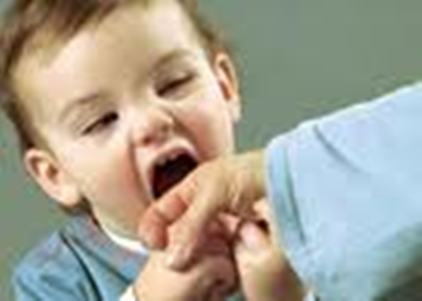
University of Montreal (Tremblay), Université du Québec, Outaouais (Gervais), Laval University (Amélie Petitclerc)
According to this report on early childhood aggression: "Children violently express anger soon after birth.... For most children, the use of aggression starts to decline after toddlerhood, as they learn to control their emotions, communicate through language, and express their frustrations in a more constructive way." This report was prepared and issued by the Centre of Excellence for Early Childhood Development (CEECD), funded by the Public Health Agency of Canada.
The report suggests that nurturing in a supportive environment leads to socially appropriate behaviour. "The preschool years are the critical time to teach children the fundamentals of social interaction - sharing and compromise, cooperation and verbal communication....Like most types of problems, aggression is best addressed early - and the earlier, the better. Even the youngest children can be taught to modulate their behaviour...." As the brain develops, according to this report, use of physical aggression in young children dwindles. Language skills can help them to obtain their goals without violence. However, language can also be used for indirect aggression.
The stage of play fighting allows for social growth away from violence: "...the onset of play fighting actually marks a new stage in child development, as play fighting requires self-control and the ability to make believe, while still using aggressive gestures. Play fighting allows children to test themselves against others, learn who is physically stronger, and understand which aggressive behaviours are acceptable and which are not. Play fighting also requires that children learn compromise and respect for rules.”
Social skills development also diminishes physical aggression: "Young children who are developing social skills will try to cooperate with others, look for understanding and sympathy, and comment on other children’s emotions...Important social skills for young children include:
- Approaching a new peer or peer group to play.
- Identifying emotions in themselves and others.
- Showing cooperation with adults and other children.
- Expressing emotions rather than falling into a tantrum.
- Using negotiation with others to share or cooperate in reaching a goal.
Part of social skills is the art of reconciliation. Learning how to reconcile after a conflict can greatly diminish future aggressive interactions and help re-establish cooperation between former antagonists."
The report includes: examples of fostering social skills; tips for helping parents, caregivers, and educators discipline children; tips on when to seek professional help; and available intervention programmes for various ages.
For infants, toddlers, and pre-schoolers, the report points to programmes for parents of infants and toddlers that address specific problem behaviours in the children, such as aggression, and cover multiple issues at once (e.g., parents’ skills, parents’ well-being, the family’s economic status, other caregivers who may care for the children). It also cites nurse home-visitation programmes to promote a good mother-infant relationship, and group sessions for parents of preschoolers who are about to enter kindergarten to teach parents how to support the development of their children’s social skills. It cites evidence that high-quality preschool programmes have been effective in reducing at-risk children’s later violent crime rates, in addition to increasing their education level and economic self-sufficiency. Such programmes follow a curriculum that emphasises children’s learning through experience and involve regular contacts between the teachers and the parents.
Centre of Excellence for Early Childhood Development (CEECD) website, August 29 2012. Image credit: Encyclopedia on Early Childhood Development
- Log in to post comments