










































A National Conversation: Mid-Term Review
Independent Consultant,
This 57-page report shares findings from a mid-term review of "A National Conversation", a 5-year project to enhance media's capacity to cover governance issues by increasing transparency, accountability, and citizen participation in media in Angola, Sierra Leone, and Tanzania, funded by the Department for International Development's Governance and Transparency Fund (GTF) and delivered by the BBC World Service Trust (BBC WST) - now called BBC Media Action. According to the mid-term review, the quality of the work has been good and the progress to date has been fairly good. The report notes that the BBC WST has taken on an ambitious task and is delivering an innovative and, at times, highly sensitive project with commitment, hard work, attention to high standards, and efficiency.
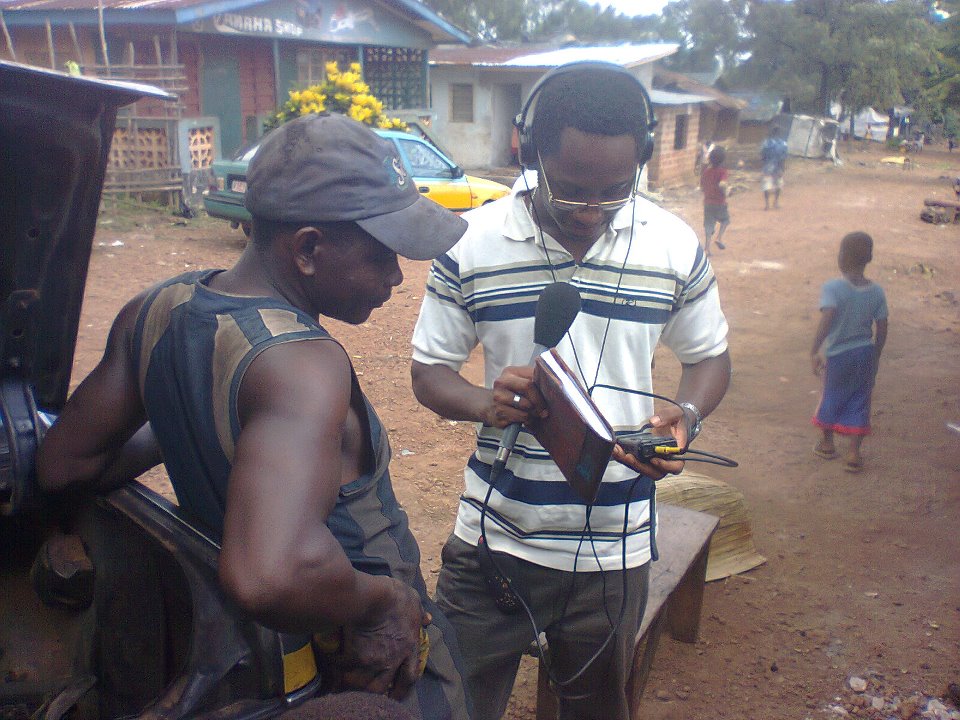
The report suggests that in terms of progress against the log-frame indicators, many of the objectives are in line to be achieved by the end of the project, despite a few shortcomings. The project is particularly strong on media development and co-productions with partner broadcasters, as well as training and mentoring. All the trainees interviewed as part of the mid-term review expressed positive feedback about the training they received from the BBC WST. For example, in Angola, the Forum of Women Journalists said the training they received and the co-productions on domestic violence and the preparations for a governance and gender drama were "high quality." In Sierra Leone, the mentoring model that is used, whereby local radio journalist-trainers are stationed within one community radio for 6 months, has been judged a success by all trainees and station managers.
The review suggests that despite its lofty ambitions to create "national conversations," the part the BBC WST can realistically play and the high-level gains it can show at this stage, especially considering its relatively modest budget, are fairly small. Initially, the major emphasis was to be on the national (state) media and helping them to become public service broadcasters (PSBs) in all three countries. This idea quickly became unworkable in Angola, given the political situation, and has also become very difficult in Sierra Leone and Tanzania. Nevertheless two other innovations stand out in particular: firstly the training that is being done directly with government officials on issues relating to the right to information, media relations, and media literacy. Secondly, the creation of the travelling constituency talk-show for TV and radio that the project did with the Tanzanian Broadcasting Corporation around the elections in Tanzania in late 2010.
Partnership arrangements with broadcasters are working well in Sierra Leone and Angola but in Tanzania shifted away from the main broadcasting partner, the Tanzanian Broadcasting Corporation to focus, instead, on strengthening local radio broadcasters to produce governance programmes to be broadcast through the BBC Swahili service. In terms of value for money, the biggest concern for this project is the balance between direct project costs and overheads. Another important issue is the high cost of "doing business" in Angola. There is also concern about the research aspect of the project not delivering satisfactorily yet. But, all things considered, this reviews finds that the project is giving value for money.
The report identifies a number of reccomendations going forward:
- The project needs to change the way research is managed so that researchers in-country no longer report sideways to the Research and Learning Group in London.
- It is important that the BBC WST documents and desseminates its experiences of mentoring.
- Some scholarly reflection and practitioner-focused write-ups need to be done on the challenges of turning state broadcasters into PSBs.
- The project's M&E plans should include data about the size of audiences.
- Case-studies about governance impacts need to be collected in a more systematic way.
- In Sierra Leone the project should have clear MOUs with partner community radios.
- A discussion and assessment of "value for money" should appear in Annual Reports.
- All spending in London on overheads, including on research, should be explained and justified clearly to the country offices.
- In the new log-frame, the Learning Outcome should be strengthened.
- The roles of the Mo Ibrahim Foundation and the Nation Media Group need to be clarified.
BBC Media Action website on January 19 2012.
Comments

A National conversation - mid-term review
Please note - my affiliation is not the University of South Florida. I am an independent consultant based in the UK. Thanks. Mary Myers.
- Log in to post comments