










































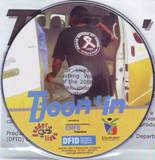
Tjoon'in - 16 Days of Peace Taxi Campaign

The CD was produced in a participatory way, involving transport stakeholders and survivors of gender violence. According to the organisers, participation both ensures that programmes reflect the priorities of the community and provides an opportunity for new and unexpected perspectives to be heard. The organisers believe that participation is about facilitating processes whereby the intended audience, in this case taxi drivers, participates in making choices about what issues to cover and how to cover them and has a role in carrying through what is decided on - for example, by working on producing the radio programme. Based on this strategy, the majority of the content was developed through a series of workshops, as well as via collaborations with organisations that had already produced relevant material:
- Radio Features workshop - a three-day workshop where young media people, representatives from organisations, and survivors of gender violence worked to develop and produce radio features based on the selected 16 Days themes. Over the course of the workshop, the participants learned about different kinds of radio programmes, how to plan and make a radio feature, how to conduct interviews, and script narration. The result was four 3- to 4-minute feature reports exploring domestic violence, xenophobia, human trafficking, and men as partners.
- Spot (PSA) workshop - a one-day workshop with Ekurhuleni city councillors, taxi association representatives, and police. The workshop taught participants what spots are and how to develop them. They then worked in groups to create, script, and voice six spots designed to be entertaining and engaging in order to get people thinking about the gender discrimination they see every day, particularly in taxi ranks. The spots deal with xenophobia, gender discrimination based on size and culture, disability, the treatment of passengers in taxis, and HIV.
- "I" Stories - an annual project of Gender Links, in collaboration with partnering organisations, to share first-hand accounts of women and men affected by gender-based violence. In order to further encourage speaking out, some of the participants also record parts of their stories. Two such stories are included on the CD.
These various segments were tied together into an hour-long programme by two young radio presenters, and then recorded in a mix of English and Zulu, as these two languages are the most widely understood by taxi drivers and commuters.
According to organisers, it was important that the CD be appealing to men, as they make up the majority of taxi drivers, owners, and taxi association heads. For this reason, the role of men as partners features strongly on the CD. The programme contains positive stories and role models for men as well as women, and urges men and women to work together for gender justice.
Click here to download the features, spots, and music on the Gender Links website.
Gender, Rights, Human Trafficking, Xenophobia
According to the organisers, approximately 2,000 copies of Tjoon'in were distributed to the various taxi associations in the Ekurhuleni municipality. The CD is part of a response to high levels of gender violence women experience in taxi ranks and on taxis, violence which was made public in early 2008 when several young women reported being sexually assaulted at a taxi rank because they were wearing miniskirts. Organisers say that, region-wide, the taxi industry remains one of the least gender-aware in the country.
Gender Links, Enukhukeni Metropolitan Municipality, CMFD (Community Media for Development) Productions, Gauteng Women in Public Transport.
Pambazuka News website on December 15 2008; and CMFD website on April 15 2010.
- Log in to post comments