










































Lessons Learnt from COVID-19 to Reduce Mortality and Morbidity in the Global South: Addressing Global Vaccine Equity for Future Pandemics
Emory University (Martin, Gay, Fatima); Kenya Legal & Ethical Issues Network on HIV and AIDS, or KELIN (Maleche); J Gay Associates (Gay); Georgia State University (Fatima)
"Principles of scientific integrity, transparency, accountability and working with communities, together with global goals, are key...lessons from HIV and COVID."
As COVID-19 illustrated, vaccines are key to preventing and ending pandemics. In the wake of experiences during the COVID-19 pandemic, scientists and human rights activists have called on pharmaceutical companies and countries in the Global North to promote global vaccine equity. Given how little progress has been made to date, this article asks what countries in the Global South, working with local civil society organisations (CSOs), can do now to prepare for the next pandemic. This article distils policy-level recommendations and actions that CSOs, including community groups, and other leaders in the Global South can take to promote global vaccine equity.
The authors argue that the path forward will be two-fold, entailing:
1) Increasing access by:
- Decentralising the production of vaccines - that is, fostering the increased production of mRNA vaccines on many continents rather than relying on donations. Global South countries can continue to develop their capacities and expertise to scale up vaccine trials, with scientific integrity and transparency that is independent of political pressures.
- Creating a system of price transparency for vaccines to obtain the lowest prices, following the model established by the United Nations Children's Fund (UNICEF) for childhood vaccines.
- Collecting easily understandable, accessible, and transparent data on COVID-19 vaccines. The existence of a website asking for this information in the early days of a pandemic could help vaccine developers, distributors, and manufacturers focus on the data they should collect that would be shared.
- Stimulating demand for a new international legal framework that allows intellectual property (IP) rights to be waived quickly once a global pandemic is identified. "An ongoing global advocacy strategy by Global South governments, CSOs and multilateral and bilateral organisations pressuring the Global North to engage in improved global vaccine equity is needed....One of the lessons from the global AIDS pandemic is that public advocacy leads to results."
- Drawing on the expertise of scientists in pharmaceutical companies around the world and other expert scientists globally who are willing to share and collaborate.
2) Improving delivery by:
- Creating or strengthening public health systems that can deliver vaccines and other healthcare services throughout the lifespan that will lead to a reduction in morbidity and mortality. For example, public health systems could be designed to vaccinate all members of a family together. Also, specific laws to provide fair working conditions may need to be enacted to protect healthcare workers, including community health workers, from stigma and violence. Donors could ensure that health programmes they support are more inclusive by investing in creating community demand and decision-making, along with creating synergies across health services.
- Vaccinating strategically, which means vaccinating in the early stages as many people as possible, particularly those at highest risk, with available vaccines to reduce mortality. Communication with the public during this process is key; for example, Vietnam deployed massive diffusion of information through all media, including TikTok, with dance tunes by youth, until the country increased access to vaccines.
- Creating an equitable system of prioritisation for gaining access to vaccines and making criteria for prioritisation transparent.
- Creating and/or strengthening national regulatory agencies (NRAs) in order to be able to appropriately regulate vaccines.
- Identifying credible, trusted sources of health information, promoting health literacy, and creating a national scientific advisory committee to disseminate accurate and reliable information during a pandemic through all platforms, including radio, mass media, and digital media, that can be interactive, trusted, and transparent. There is a need for governments to create and/or strengthen ways to counter misinformation and disinformation, while listening to the needs and concerns of the population. Gathering information on sources of vaccine hesitancy and how to overcome these barriers could be important in reducing mortality.
- Fostering transparent surveillance systems. For instance, countries could provide digital phones to community health workers to gather incidence and mortality data.
In conclusion: "Both from a moral ethical standpoint and from the standpoint of reducing preventable mortality globally, it is vital to have the long-term goal of vaccine equity with practical intermediate steps and long-term advocacy goals. Scientific integrity, transparency, accountability and clear communication will be key."
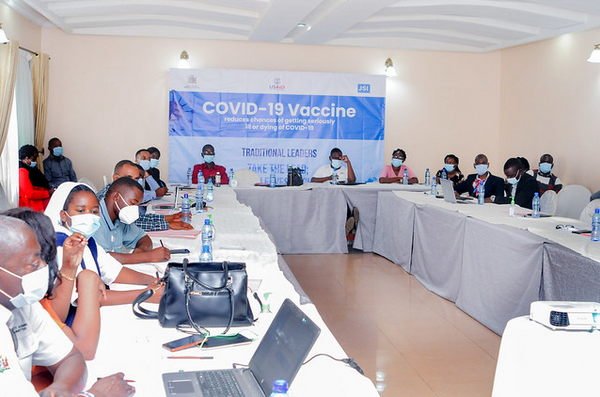
BMJ Global Health 2024;9:e013680. doi:10.1136/bmjgh-2023-013680 - sent from Jill Gay to The Communication Initiative on January 2 2024. Image credit: USAID/Zambia via Flickr (CC BY-NC 2.0 Deed)
- Log in to post comments