










































Understanding the Role of Power and Its Relationship to the Implementation of the Polio Eradication Initiative in India
IIHMR University (Majumdar, Mangal, Sharma); Indian Institute of Health Management Research (Gupta); Johns Hopkins Bloomberg School of Public Health (Kalbarczyk)
"Analyzing and engaging with power can promote more transparent, equitable, and fair health systems in low- and middle-income countries (LMICs). "
Power shapes health policy and practice, as manifested in areas such as community collaboration, participation, and ownership. Studying power is thus a core concern of researchers and practitioners working in health policy and systems research (HPSR), an interdisciplinary, problem-driven field focused on understanding and strengthening multilevel systems and policies. This paper describes a power analysis as mobilised by the actors involved in implementation of the Global Polio Eradication Initiative (GPEI) in India. It also reflects on how different power categories are exerted by actors and embedded in strategies to combat programme implementation challenges while planning and executing the GPEI.
To orient the reader, the paper examines concepts of power. Sriram identified 6 sources of power that arise in the broader social science literature: technical expertise, political power, bureaucratic power, financial power, networks and access, and personal attributes. In HPSR, these sources can be mapped to Walt and Gilson's "Policy Triangle" which highlights the fact that power cannot be exerted in isolation from the actor, context, content, structure, and policy of the process or system in focus. Each of these concepts - from the sources of power to the relationships between individuals, networks, and systems - represents facets of implementation research (IR), as highlighted by the consolidated framework for implementation research (CFIR). CFIR is comprised of 5 major domains - the intervention, inner and outer setting, the individuals involved, and the process by which implementation is accomplished - that interact in rich and complex ways to influence implementation effectiveness.
From August 2018 to January 2019, the Synthesis and Translation of Research and Innovations from the Polio Eradication (STRIPE) project collected 517 survey responses from and conducted 25 key informant interviews (KIIs) with stakeholders who were part of the polio universe. Key informants were main actors of the polio eradication programme, both at the national and sub-national levels. The majority (51%, n = 266) of the respondents were engaged in vaccinating children; around 20-23% were also involved in other activities like polio surveillance, community engagement, and monitoring and evaluation.
Survey respondents identified major challenges faced at the time of process of implementing the GPEI programme in the field, including planning, engaging, executing, reflecting, and evaluating the programme (n = 151) and the political, social, economic, and technological environment (n = 126). Stakeholders also reported challenges with the programme's characteristics (n = 74), organisation characteristics (n = 69), and at the individual level (n = 44). For example, at the field level, stakeholders mentioned resistance and refusal to accept vaccination in the early part of the implementation of the programme, which led to the hiding of the children in the households. In some cases, initiation of supplementary immunisation activities (SIAs) led to lack of trust in vaccines or the immunisation programme based on the belief that vaccines are a part of global conspiracies against some communities.
Evidence from the study shows that power is related to these implementation challenges and can be yielded throughout the implementation process, particularly in strategy development and deployment. Stakeholders involved during polio programme implementation have exerted different kinds of power, including:
- Structural power, which is wielded through the use of an actor's positions in the structures of society to shape the thinking or actions of others. In India, structural power was leveraged to boost political ownership of the GPEI and programme accountability. KIIs revealed how structural modifications, such as regular monitoring and reporting in the review meetings to the highest authorities, undertaken at the district level, brought greater accountability. Through structural power, authorities were able to create transparency in an otherwise opaque system and to establish roles and responsibility.
- Moral power (power of religious leaders and institutions), which is the degree to which an actor by virtue of his or her perceived moral stature is able to persuade others to adopt a particular belief or take a particular course of action. During the campaign, many members of the Muslim community were hesitant to take the polio vaccine. KII participants described two specific rumours: that polio drops are anti-fertility vaccines that can cause impotence and that the polio vaccine has been grown in the kidneys of pigs, which is considered "Haram" or forbidden in the religion. These rumors contributed to vaccine hesitancy and refusal of polio drops. Many members of these communities were also based in remote areas with little or no access to mass media and communications efforts. To address this challenge, GPEI deployed the "undeserved strategy", which targeted communication efforts and advocacy initiatives to reach religious leaders in the community. These leaders were able to yield moral power to influence community members via faith-based teachings. In addition, the GPEI collaborated with secular, progressive academic institutions based in Muslim communities. The hope was that these institutions could liaise with religious institutions and create a favourable climate for the polio programme. As education institutions brought social change to their communities, these actors were further able to influence decision-making.
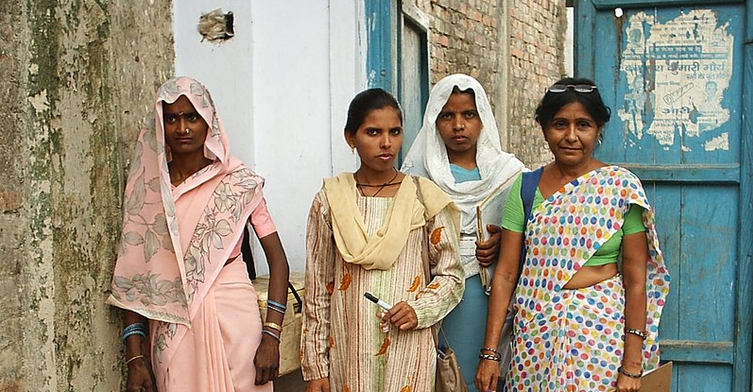
- Power of experts and local influencers - For example, researchers and medical professionals from both public and private sectors committed to the cause, made speeches, held discussions, conducted research, wrote articles to influence the community about the advantages of taking polio vaccine, and debunked myths. These experts leveraged their technical skills to exert a power and influence based on their academic credentials. In addition, female workers were able to access women-only spaces and to collaborate with women in the community to influence vaccination decisions. (Due to gender norms, roles, and power relations, many house-to-house campaigns were implemented by female volunteer vaccinators, who were able to access homes than men vaccinators could not.)
- Discursive power, which took the form of using strategic communication to influence social decisions based on norms about what is said and done, what is say-able, what is do-able, how it is do-able, and what is truth or knowledge. For example, government public service announcements featured renowned actor Amitabh Bachchan, who used his discursive power to connect with people directly and support polio eradication messaging.
- Network power - The polio programme in India employed a social mobilisation network (SMNet) strategy designed to build trust in the community using personal relationships, repeated interaction, and shared identities in the form of community influencers. These influencers (community mobilisation coordinators) exercised their power to work with other influential people to promote vaccination campaigns - not just in the GPEI but in other programmes. In addition, during booth days, young children themselves were engaged in spreading awareness and bringing mothers to polio booths. (This is a form of hidden power, demonstrated by so-called powerless actors like children.)

Notably, these power categories are not mutually exclusive and may be deeply interconnected with each other. The exercise of one type of power can be conditional upon another. For example, those actors identified with moral power also use discursive power to influence the solutions that policymakers may adopt (through institutional power) to address the problem. The kind of expert knowledge considered authoritative in debates over such solutions is likely to reflect underlying distributions of economic, discursive, and network power.
This study has illustrated how the GPEI's multipronged strategy of getting buy-in from key actors and their power dynamics to were used to persuade and influence decision-making for polio vaccination. The GPEI also used structural power to improve the accountability of the polio programme. Actors who exerted power derived it from technical expertise, political and bureaucratic position and influence, and forms of cultural capital and power gained from their title, education, and/or knowledge. The combination of many actors simultaneously wielding various kinds of power in a complex adaptive system means that outcomes are difficult to predict or control, causality is challenging to trace or establish, and power can be difficult to discern or analyse.
At the same time, this complexity may create opportunities for less powerful actors to wield influence. For example, one critical stakeholder that emerged in GPEI was the female community mobilisers who were able to enter spaces that men could not. This approach increased the programme's access to women and girls in more conservative communities, which was critical to GPEI's success. However, while female community mobilisers had increased power to influence change in communities, they still faced many challenges (e.g., around safety in the home and communities they served) and were not always adequately supported by the programme. Gender considerations should thus be fully integrated into GPEI programmatic strategies.
In conclusion, this study "demonstrated the role of power in IR and considered how power could be used as a variable within existing IR models and frameworks. Recognizing how and from where individuals, organizations and networks derive their power sharpens our understanding of how and why power flows in particular directions or accumulates with certain groups. This understanding can also facilitate awareness of how those sources of power are distributed unevenly which may be used to improve equity in health policy and systems...To design and implement effective health programs, policymakers must consider programs within the context of known health systems dynamics, path dependency, and interconnectedness and power plays a key role. Further research is needed from a range of stakeholders, particularly those from LMICs and members of marginalized groups, to more clearly understand the role of power in the design of implementation strategies for global programs."
Frontiers in Health Services 2:896508. doi: 10.3389/frhs.2022.896508. Image caption/credit (top): In India, where polio has been eliminated, female health workers prepare for yet another day of immunisation activities to keep their citizens safe from imported cases of polio as well as other possible threats, no matter what challenges lie ahead. © AJ Williams/CDC ( (CC BY 2.0)
- Log in to post comments