










































Responding to Threats to Press Freedom and the Media in a Time of Crisis: An Assessment of Types and Sources of Threats to Press Freedom and Mitigation Measures during the COVID-19 Pandemic in East Africa
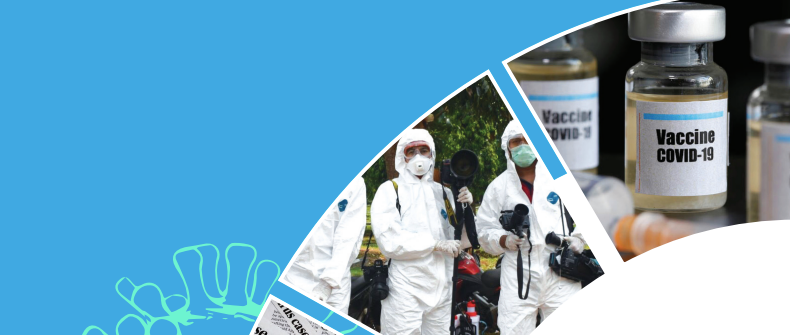
"Free and independent media that provide accurate information, facilitate public debate, and hold power to account have never been more critical than now when we are in the middle of a global pandemic."
This set of reports, published by the African Centre for Media Excellence (ACME) and the Open Society Initiative for Eastern Africa (OSIEA), documents press freedom violations and the economic effects of COVID-19 on media in Burundi, Rwanda, Kenya, South Sudan, and Uganda. The reports form part of ACME's and OSIEA's efforts to support media and its important role in society in the wake of the COVID-19 epidemic in the region.
As explained in the Kenya report, "Press freedom in the East African region was already under serious limits even before the pandemic. According to the 2019 Freedom House ranking, Rwanda, South Sudan, and Burundi were all ranked as 'not free' while Uganda, Kenya and Tanzania were only ranked as 'partly free.' Before COVID-19, there were growing concerns about the phenomenon of 'media capture', which often involves control over the news media by political and business interests as well as licensing and regulatory bodies that are usually not independent of governments." The impact of COVID-19 has, therefore, added additional obstacles to an already challenged media environment, and these obstacles are explored in the reports.
The findings are based on qualitative and quantitative research methods, including interviews and surveys with journalists and media managers from across a range of media (print, online, and broadcast). The studies also reviewed documents and reports that monitored the impact of COVID-19, which included reports from local and international civil society organisations.
The reports generally cover the following:
- The institutional context in each country related to the media and the economy;
- The impact of COVID-19 on the media, including challenges faced by media practitioners at the workplace and at an individual level during the pandemic, such as those related to job security, pay cuts, physical assault, arrest and detention, denial of access to information, insults, cyber harassment, torture, and court charges;
- Responses to COVID-19 and the media crisis by the government, media houses, and other stakeholders; and
- Recommendations for the way forward for media houses, journalists, media regulators, security organs, government authorities, and civil society (in detail in the Rwanda report only).
The following country reports are available for downloading:
- An Assessment of Types and Sources of Threats to Press Freedom and Mitigation Measures during the COVID-19 Pandemic in Burundi
- An Assessment of Types and Sources of Threats to Press Freedom and Mitigation Measures during the COVID-19 Pandemic in Kenya
- The State of Media Freedom During COVID-19 Pandemic in Rwanda
- An Assessment of Types and Sources of Threats to Press Freedom and Mitigation Measures during the COVID-19 Pandemic in South Sudan
- An Assessment of Types and Sources of Threats to Press Freedom and Mitigation Measures during the COVID-19 Pandemic in Uganda
22 (Burundi); 34 (Kenya); 28 (Rwanda); 20 (South Sudan); 30 (Uganda)
ACME website on July 22 2022. Image credit: ACME
- Log in to post comments