











































Reflect Reality Handbook
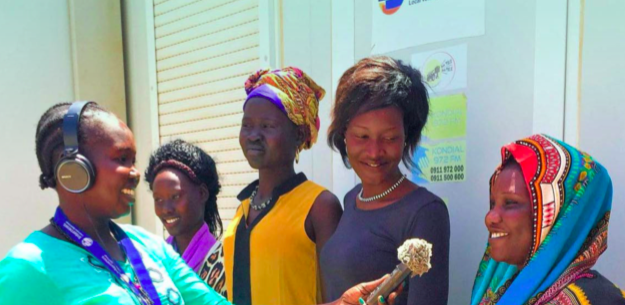
"When women's authoritative voices are represented in the news, there's a positive impact on society and newsrooms alike."
Reflect Reality is a resource and toolkit for newsrooms, journalists, and business professionals to increase women as sources in the news media. It includes strategies and best practices from more than two dozen individuals and organisations working around the world to amplify women's expert and authoritative voices.
The manual, in both digital and PDF document format, was launched by the United for News coalition, which is led by Internews in collaboration with the World Economic Forum and includes Bloomberg, BBC 50:50 Project, Global Forum for Media Development (GFMD), NewsGain, Edelman, Internews, and World Association of Newspapers and News Publishers.
As stated in the handbook, "women represent just one quarter of people featured in our news - with little change in two decades." According to United for News, "the absence of women's voices in the news contributes to a culture that devalues women - a world where women's potential is perpetually limited by their lack of exposure to powerful role models, their limited opportunity to connect with a shared experience and the reinforced notion of traditional gender roles. It also means that newsrooms miss out on perspectives that are critical to break stories and grow their audience."
Although there are often abundant female experts and spokesperson, there are numerous challenges faced by journalists and potential female spokespeople that prevent the voices of women being represented. The Reflect Reality handbook is designed to respond to these challenges with practical tips, approaches, and tools.
The handbook contains the following sections:
The Problem
This section looks at the deficit of women's voices in the news around the world, looking in particular at research by the GMMP, a research and advocacy initiative for gender equality in and through the news media.
Making the Case
As articulated here, understanding and articulating the reasons why women's authoritative voices need to be represented in the news is an important first step for any newsroom or organisation seeking to make gender parity in sourcing spokespeople a priority. This section offers four arguments for the greater inclusion of women's voices in the news and, specifically, the voice of women experts, leaders, and spokespersons. These include: It's Good Journalism; It Builds Trust; It's Good Business; and It's Good for Society.
Challenges
This section looks at why women are underrepresented as sources in the news media in different contexts across the world. Reasons include challenges faced by both journalists and the women experts themselves. For journalists, unconscious bias, tight deadlines, industries with a lack of women in leadership to serve as sources, and cultural challenges affect their ability to identify women experts. For women, corporate policies that determine who speaks to the media, lack of media training for women, and a higher probability of online harassment limit their opportunities to speak with journalists. The handbook offers insights from around the world highlighting some of these challenges, which include Q&As with experts working on these challenges on a daily basis.
Strategies
Strategies for newsrooms and journalists, as well as for business and for journalism trainers, on how they can increase women's voices in the media are covered in this section. Specific interventions for newsrooms fall within one of four strategy categories:
- Planning and analysis for launching key interventions in the newsroom;
- Tracking the gender split of sources;
- Ensuring staff buy-in for the ongoing participation of women in the newsroom; and
- Specific activities for cultivating sources.
The approaches proposed for the media draw from best practices developed by the United for News coalition and pilot project partners. For example, Bloomberg reveals lessons from their New Voices initiative, an internal effort to diversify the financial and business experts they turn to around the world. Edelman offers insights from the Trust Barometer and their effort to advocate for gender parity in corporate spokespersons. The BBC's 50:50 Project shares best practices for news teams to reach gender parity by tracking their sources daily. The World Association of Newspapers and News Publishers highlights experiences from their Women in News programme, and Informed Opinions shares strategies on how to cultivate sources and overcome women experts' reluctance to be interviewed.
Strategies for private businesses, government organisations, and non-governmental organisations (NGOs) address the need for businesses and organisations to consider the gender balance of their representatives.
Pilot Project
The Reflect Reality team engaged with newsrooms over the course of 2019 to test various approaches and activities to increasing women sources. Activities fell within one of four thematic areas: (i) Making the case: making gender parity in the newsroom a priority for staff and managers; (ii) Benchmarking and tracking: establishing a methodology for tracking the gender-split of sources; (iii) Newsroom practices: performing a process analysis and setting goals for accountability measures; and (iv) Cultivating sources: working to identify and maintain a pool of new sources for the news team to draw on. This section looks at pilot projects that were initiated: in Toronto, Canada, with the Toronto Star and The Globe and Mail; in Erbil, Iraq, through Internews' collaboration with local media and Our Voices project; and with the global, digitally-based Earth Journalism Network.
Resources
This section offers resources to help news organisations implement some of the strategies outlined in the handbook, such as a sample tracking template and an inventory of women-centric expert databases by region.
Publishers
107
GMFD website on June 19 2020; email from Paula Orlando to The Communication Initiative on June 22 2020; and "Reflect Reality: Increasing Women's Voices in the News" (press release on the Internews website, March 2 2020), accessed on June 23 2020.
- Log in to post comments