










































World Comics Finland
World Comics Finland arranges comics training for NGO activists, artists and campaign professionals and works mainly with organisations that have their own established projects, in which they can use comics as a tool for communication.
The basic strategy is to involve community members in shaping the campaign material. Either the activists make comics themselves (grassroots comics) or a professional comics artist is engaged in making the final artwork (campaign comics). The community members have a first-hand view of the issues that are facing them, and, therefore, it is hoped that the comics they make will have high credibility and will support the local debate.
According to World Comics Finland, comics that tell stories from local cultures in local languages give insights into how these communities look at their issues and the world. World Comics Finland arranges exhibitions of such comics - mainly for distribution in Europe - hoping that, by showing comics and cartoons from different parts of the world, new insights into other cultures will be discovered. Often these comics show how people, with humour, can cope - even in difficult circumstances.
Education, Political Development, Rights, Environment, Local Culture.
World Comics Finland cooperates with a variety of organisations from all over the world. It has also had a long cooperation project (2002-2010) with World Comics India, a fully independent organisation with activities mainly in the Indian subcontinent.
In the last few years, World Comics Finland has mainly been active in training comics trainers for NGO campaigning. Grassroots comics have also been introduced as a communication method in development education in schools and institutions in Europe.
According to World Comics Finland, almost any issue, idea, or fact can be expressed with comics. The organisation contends that it is a flexible, attention-grabbing, and inexpensive medium and a powerful tool in communication.
World Comics website, January 26 2001 and August 25 2010; and email from Leif Packalen to The Communication Initiative on August 27 2010.
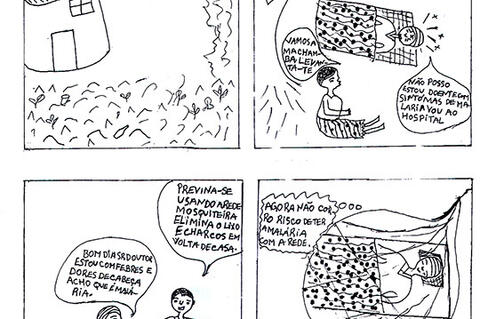
Image: This story explains how to avoid malaria in a rural setting by environmental sanitation and the use of mosquito nets. Story and artwork by Ms. Julia Vivaldo from Escola de Professores do Futuro (EPF), the Ajuda de Desenvolvimento de Povo para Povo (ADPP)-supported teacher training college in Maputo.

- Log in to post comments