










































Voluntary Formation of Community Organizations to Implement DRR
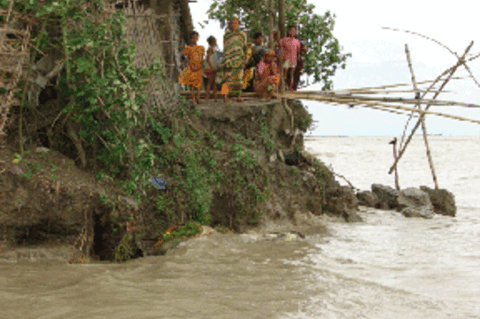
Local participation is the hallmark of this project, which involves selected community members voluntarily forming CBOs and then being guided in disseminating early warning messages to the communities, creating mass awareness, and rescuing marooned people in times of flood disaster.
Participatory action research (PAR) is integrated in this initiative from the beginning. The baseline for solution identification is hazard analysis, together with vulnerability and capacity assessments, all based on the sustainable livelihoods approach. According to Practical Action, the CBOs get involved from the initial stage of this process of problem and solution identification and prioritisation. For example, informal community meetings are held, with minimum assistance from the project staff. This is a strategy for creating self-confidence among the economically poorest and most vulnerable families, as well as for strenghtening community cohesion. Technologies which both strengthen local coping strategies and diversify livelihood strategies are offered on demand.
The advocacy aspect of the project is reflected in the CBO's action to liaise with district officials regarding strategies for incorporating a livelihoods approach into local and eventually national development and disaster plans. Through this process, organisers hope to develop guidelines and training materials on livelihood-centred disaster management for use by local and national service providers, planners, and humanitarian agencies. By analysing best practice in building consensus amongst stakeholders on how to link most effectively with and support communities' own disaster planning in a sustainable way, Practical Action will seek to influence policy makers involved in DRR at all levels. Specifically, organisers are working to collate and analyse past and current projects, working in partnership with regional and international networks to disseminate project findings and provide a platform for policy discussion and advocacy.
Risk Management.
Practical Action, with DFID funding.
Building Disaster Resilient Communities: Good Practices and Lessons Learned [PDF], United Nations International Strategy for Disaster Reduction, 2007; and Practical Action website.
- Log in to post comments