










































Video as Evidence Field Guide
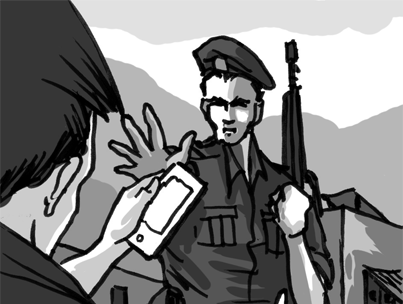
"Video captured by citizens and activists can be instrumental in drawing attention to human rights abuses, calling for investigations and advocating for change. But many filmers want their videos to do more: they want their footage to expose abuse and help bring about justice. However, the quality of citizen video and other content rarely passes the higher bar needed to function as evidence in a court of law."
The Video as Evidence Field Guide is designed to help filmers use videos to expose abuse and bring about justice. It is one of the core outputs of WITNESS' Video as Evidence (VAE) programme, part of a collaborative, international effort to pioneer a set of practices around the use of video to increase accountability, justice, and human rights for all people. The Field Guide provides basic and advanced practices activists can use to increase the likelihood that their footage can serve as evidence in criminal and civil justice processes, for advocacy, and by the media. With its practical guidance, case studies, checklists, and more, the Field Guide also aims to help activists and lawyers better collaborate on capturing and collecting valuable video evidence.
The premise of the guide is that, in many situations, citizens and on-the-ground human rights activists and advocates are better positioned to collect evidence of human rights abuse than professional investigators because investigators almost always arrive after the fact, when evidence has deteriorated or is gone. WITNESS says: "It is our belief...that if we train activists and citizen witnesses to capture video with enhanced evidentiary and documentation value, and develop and share tools that help authenticate videos and push for their incorporation into mainstream tools and platforms, international human rights and criminal justice stakeholders will be able to better leverage this important citizen media."
The Field Guide includes:
ALL ABOUT THE LAW: WHERE VIDEO AND LAW INTERSECT
- Role of Video Beyond the Courtroom
- Part I: Human Rights Justice and Accountability Processes
- Field Note: Video's Role in Human Rights Advocacy, Endorois Welfare Council v. State of Kenya
- Part II: Who Does What?
- Stages of the Criminal Justice Process and Standards of Proof
- Field Note: The Role of Video in the Criminal Justice Process: From the DRC to the ICC
- Anatomy of a Crime
- Field Note: Using Video to Help Prove One Element of “How" a Crime Was Committed, International Criminal Tribunal for the Former Yugoslavia v. Tolimir
- All About Evidence
- Field Note: Call It Like It Is, Ghouta v. Bhopal - Part I
- Part I: Sources of Evidence
- Part II: Purposes of Evidence
- Field Note: Video is Only One Piece of the Puzzle, Ghouta v. Bhopal - Part II
- Part III: Characteristics of Legal Evidence
BASIC PRACTICES: Capturing, Storing and Sharing Video Evidence [Click here to download this section of the Field Guide as a 24-page standalone document.]
- Part I: Get Ready to Film
- Part II: Press Record
- Part III: Safeguard Your Footage
- Part IV: Share Your Video
- Part V: Learn More
FILMING FOR EVIDENCE
- Collection Planning
- Filming Secure Scenes
- Field Note: Filming Long After a Crime, ICTY v. Dokmanovic
- Adding Essential Information
- Proving Responsibility: Filming Linkage and Notice Evidence
- Part I: The Law - The Different Ways a Person can Participate in a Crime
- Field Note: Illustrating "How" a Perpetrator Can Commit a Crime, ICTR v. Ruggiu, Nahimana and Barayagqwiza
- Part II: Command and Superior Responsibility
- Field Note: An Effective and Knowledgeable Commander, Constitutional Court of Guatemala v. Rios Montt
- Field Note: A Knowledgeable Commander, ICC v. Bemba - Part I
- Field Note: Bemba's Failure to Act, ICC v. Bemba - Part II
- Part III: How Can Video Help Prove Responsibility?
- Testimony: Filming Preliminary Interviews
- Part I: Preliminary Field Interviews v. Comprehensive Interviews
- Part II: Choose Your Recording Method
- Part III: Principles and Practical Tips for Filming Preliminary Interviews
- Part IV: Conducting Preliminary Interviews: Before, During and After
- Part V: More About Informed Consent
- Tech Tools for Transferring Files
SHARING AND USING EYEWITNESS VIDEO IN REPORTING AND ADVOCACY
- Verification of Eyewitness Video
- Ethical Guidelines: Using Eyewitness Videos in Human Rights Reporting & Advocacy
- Part I: Responsibility to Individuals Filmed
- Field Note: Witnesses Film Homophobic Attack
- Part II: Responsibility to Video Creators
- Field Note: Two Different Descriptions of a Video and Lack of Credit Leave Viewers Confused
- Part III: Responsibility to the Audience
- Field Note: A Montage of Clips Out of Context Reduces Footage to "Violence Wallpaper"
MINI GUIDES TO TAKE TO THE FIELD
- Basic Practices 1, 2, 3, 4, 5
- Collection Planning
- Filming Secure Scenes
- Adding Essential Information
- Proving Responsibility: Filming Linkage and Notice Evidence
- Testimony: Filming Preliminary Interviews 1, 2, 3, 4, 5
- Ethical Guidelines Checklist
The Field Guide draws on WITNESS' nearly 25 years of supporting and training human rights advocates to use video to document abuse and as a tool for justice, including at the Inter-American Commission of Human Rights and the International Criminal Court. One of the biggest drivers in creating the guide was the organisation's experience supporting Syrian activists. The Field Guide was written with universal principles at its core and is adaptable to global contexts - whether in Syria, Brazil, the Central African Republic, the United States (US), or beyond.
Since the publication of the Field Guide, WITNESS has partnered with the US group St. Louis First Responders to adapt sections of it into a more localised training handbook. The handbook outlines the different roles and responsibilities of the team and provides detailed information on filming evidence. It is a living document, constantly being adapted to new lessons learned on the ground. Parts of the guide are also informed by other WITNESS partners doing similar work on police violence in other parts of the world. In autumn 2015, members of WeCopwatch and the Brazilian group Colectivo Papo Reto met to share stories and tactics and to speak on a panel together about the parallels between the police violence in the US and Brazil.
Join the conversation online at #VideoAsEvidence.
Publishers
Arabic, English, Portuguese, Russian, Spanish, Ukrainian
230 pages (English)
Email from WITNESS Media Lab to The Communication Initiative on November 1 2016; and VAE website and "Community-led First Responders Use Video to Document Police Abuse", by Jackie Zammuto - both accessed on November 2 2016.
- Log in to post comments