










































Using Health Information for Community Activism: A Case Study of the Movement for Change and Social Justice in South Africa
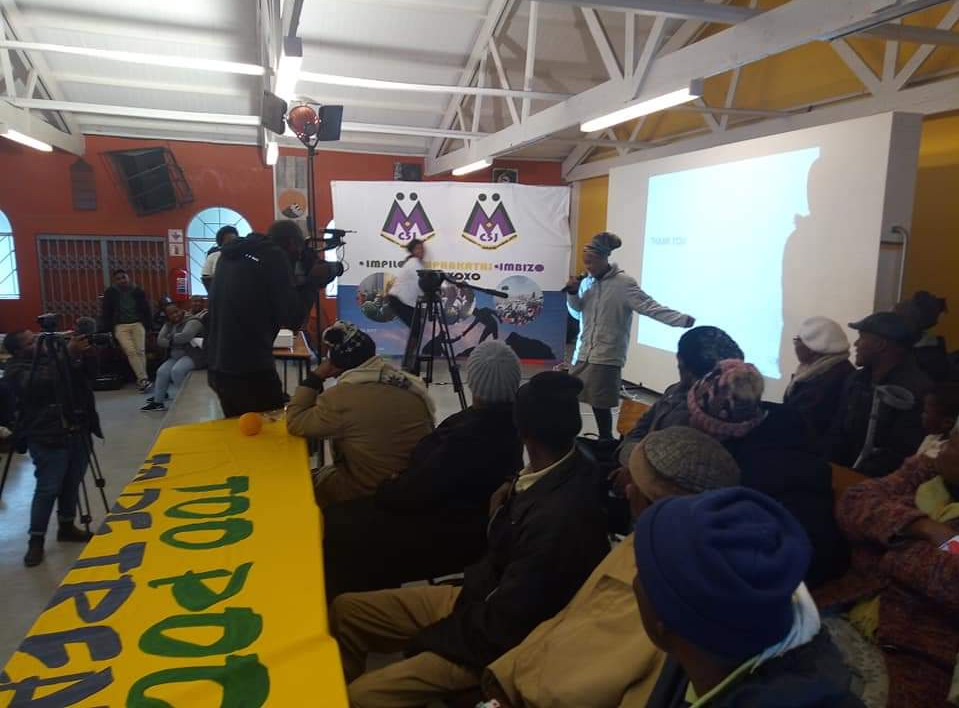
University of Cape Town (van Pinxteren, Colvin); University of Virginia (Colvin); South African Medical Research Council (Cooper)
"When community groups have more access to health information and can use this information meaningfully, this can lead to a more engaged community, more responsive health system and ultimately, better health outcomes for patients."
Community groups, themselves end-users of health care, are well-positioned to keep the health system accountable, provide feedback on the quality of services, and identify emerging health concerns. However, many community groups are perpetually excluded from accessing and using health information. Using qualitative, ethnographic methods, this paper investigates different strategies used by the Movement for Change and Social Justice (MCSJ), a local health activism group, to collect, use, and distribute health information to improve health care in Gugulethu, a low-income neighbourhood in Cape Town, South Africa.
The paper begins by providing background on health information use and exchange in Sub Saharan Africa, including in South Africa, where district-based integrated health information systems have emerged in the past 25 years but are mostly inaccessible to non-health actors, such as community activists. In the absence of community-based health information systems (CBHISs) in South Africa, clinic committees have been established to monitor the performance of health facilities through ongoing engagement with health workers and community members. Other strategies used to improve community engagement with health information systems are community monitoring, citizen report cards (CRCs), community score cards (CSCs), and social audits, which enable communities to collect their own information to improve services, create access to health services, and change the behaviour of healthcare providers (HCPs).
As detailed here, Mandla Majola, an experienced HIV activist from Gugulethu, established MCSJ in 2016 to develop short- and long-term health campaigns to improve the quality of and access to health services in Gugulethu and neighbouring areas (see Boxes 1-4 in the paper, as well as the video below). Information played a central role in these campaigns, and MCSJ employed creative various strategies to access, collect, use and/or distribute health information. MCSJ initially started with 15-20 committed activists, but has grown significantly, establishing branches (offices) in other low-income neighbourhoods in Cape Town.
Research into MCSJ's strategies involved participant observation, shadowing, informal conversations, and semi-structured interviews that were analysed using iterative thematic analysis. Findings indicate that, to get access to the health information needed for their activism, MCSJ used innovative strategies, including:
- Cultivating allies in the health system: Most information was not readily accessible to MCSJ activists, leading them to work closely with academic researchers and health system stakeholders in order to obtain the required information. For example, for MCSJ's "condom in schools" campaign, the goal was to design an evidence-based pamphlet containing statistics on teenage pregnancy and HIV infection rates, with the ultimate hope of convincing school governing bodies (SGBs) to distribute condoms in school. However, as MCSJ did not have this information, they approached iALARM researchers with whom they co-designed a 1-page pamphlet in English and then connected with local church leaders who had contact with SGB members to deliver the pamphlets. When this proved ineffective, MCSJ members teamed up with allies from the Treatment Action Campaign (TAC) in neighbouring Khayelitsha. Together, they developed a 15-minute documentary (below) to create awareness about pregnancy in schools and advocate for the need to distribute condoms to reduce school dropouts in the province. Beyond this specific case, relationships with health system stakeholders have proved to be reciprocal, as MCSJ has assisted with finding opportunities to share messages from health actors to the larger community of Gugulethu.
- Finding safe spaces: For example, to improve linkage of men to HIV care and promote the communication and information sharing between health actors and the larger community, the iALARM Task Team (TT) invited MCSJ members and HCPs to discuss HIV reports and other information in a bi-monthly meeting hosted by researchers from the University of Cape Town (UCT). During these meetings, MCSJ received up-to-date HIV information in which was used in their campaigns. In this shared space, MCSJ members and health actors also took the opportunity to question each other, the provided information or request clarifications. Throughout its work, MCSJ has learned that building trust between participants and compassionate discussion leaders are key to facilitate discussion, rather than using the information gathered to pinpoint persistent problems in the health system or problematic patient behaviour.
- Producing its own health information: In some cases, MCSJ produced their own evidence, employing similar techniques to those used by HIV activists, including creating testimonials to get buy-in for campaigns. One project drew on self-census as a strategy, which proved effective when the health information was presented to a clinic manager and dentist team. Sharing the 74 accounts from patients, MCSJ showed their engagement with patients and represented the community. This strategy reportedly created trust between MCSJ and the larger community and convinced the dentist team and clinic manager to think "outside the box" to find a suitable solution.
- Embedding health campaigns in the local context: MCSJ worked closely with community brokers to effectively mobilise community members, including religious groups, community leaders, and local doctors, to collect and distribute relevant health information, to mobilise community groups to support ongoing campaigns, and to keep the health system accountable. For instance, to better inform the community about men's engagement in HIV care, MCSJ actively shared minutes from iALARM TT meetings with street committees and members of grassroots civic organisations, who in turn became street-level supporters for MCSJ campaigns. In short: "Embedding campaigns into local contexts and working actively with community brokers strengthened MCSJ's presence in the community, successfully linked health system actors to the larger community, and encouraged further engagement and health information sharing in Gugulethu."
As this analysis demonstrates, community groups are active stakeholders who have the capacity to collect, produce, and distribute health information themselves - not simply end-users of care. MCSJ advocacy efforts were driven from the ground up, formalised by experienced activists who knew the longstanding health issues in the community and had the right network to collect, use, and exchange locally relevant health information for their own activism efforts. In addition, by working closely with researchers, MCSJ members had the opportunity to critically engage with health information and could share their knowledge and experiences with others in the community.
Cross-cutting lessons that can be drawn from MCSJ's experiences include:
- Engagement with health information by community groups is not a technical exercise but, rather, a complex social process that requires constant negotiation and relationship building. Therefore, just designing a system that stores information for community representatives to access, thereby ignoring the social and political processes, will not likely improve health information use and exchange across different levels of the health system.
- Community activist groups are well positioned to reach vulnerable populations, anticipate forthcoming health challenges, motivate residents to participate in health activities, and facilitate dialogues across different levels of the health system.
- Within the overstretched South African health system, primary care services rely heavily on the support and expertise of community-based health workers. With this shift from the clinic to the community, community stakeholders are becoming more central to care, increasing the need for them to have access to and engage with health information.
The researchers argue that there is a need to design new health information systems whereby high-quality, locally relevant health information is provided for and produced by community actors. When designing these systems, the process of using and exchanging should be continuously considered.
In conclusion: "to make meaningful improvements to health services and create adaptive and responsive health systems, we need to include community groups as active stakeholders in the health system, provide relevant, up-to-date and locally relevant health information, and facilitate opportunities to socially engage with health information and those who produce it."
PLOS Glob Public Health 2(9): e0000664. https://doi.org/10.1371/journal.pgph.0000664. Image credit: MCSJ
- Log in to post comments