










































Times Are Changing: Using the Power of the Media to Increase Accountability and Resilience in Tanzania
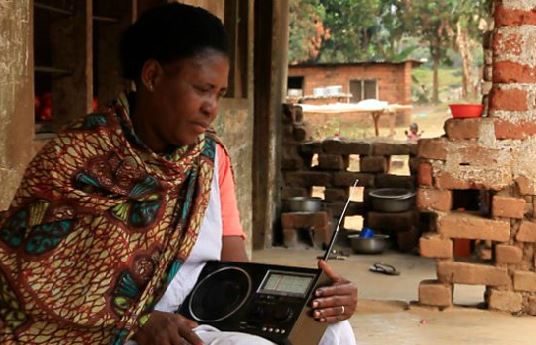
"The radio magazine and discussion programme Nyakati Zinabadilika (Times are Changing) aimed to empower individuals and communities to adapt to changing weather patterns. Research suggests that the programme helped people to address climate-related issues in three main ways. First, it improved skills, confidence and motivation. Second, it encouraged collective action. Third, it increased their awareness of the role of key stakeholders such as governments, the private sector and civil society organisations."
This 2-page brief discusses an impact evaluation of the Radio for Resilience project, which included the production of the Nyakati Zinabadilika magazine and discussion programme, and was designed to empower individuals and communities in Tanzania to adapt to changing weather patterns. Impact was assessed using a mixed methods approach comprising a quantitative survey of 2,285 respondents and qualitative methods such as focus group discussions with audiences, in-depth interviews with local leaders and radio station trainees, feedback forms from listening groups, and audience feedback.
The assessment summary discusses how the Radio for Resilience project, and the Nyakati Zinabadilika programme specifically, helped to improve both knowledge and behaviours related to resilience. To mention just a few findings: "86% [of listeners] agreed that the programme had inspired them by showing them how others were coping in similar situations" and "almost a third (31%) of radio audiences report having adopted a new practice." In terms of good governance, "60% of audience members reported that the programmes played a role in holding government to account, although they were not always satisfied with the answers that some government officials provided in the programmes." "Of those who reported taking action, 54% said that they had either established or joined a community group as a result of listening to the programme."
According to the brief, future programming can build on the project's success and address some of the barriers highlighted in the assessment. For example, while the project successfully reached women as well as men, women face greater obstacles in taking action, and future programming should address some of these obstacles, including attitudes towards women and the social norms that prevent them from taking action. The assessment also highlighted practical barriers for resilience facing both women and men, such as lack of access to markets, loans, financial capital and infrastructure, so future programming could put more emphasis on addressing these structural barriers.
BBC Media Action website on May 27 2015.
- Log in to post comments