











































Tested Solutions for Supporting Facility-Based Delivery
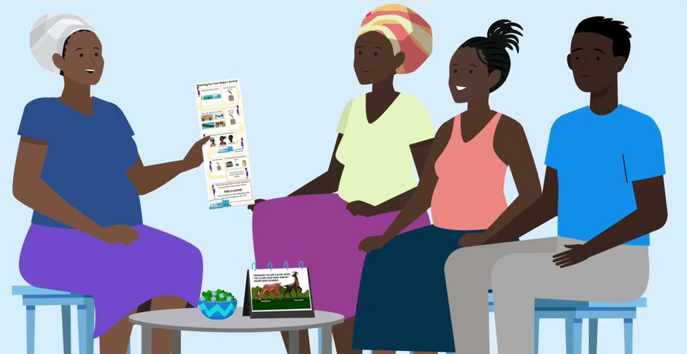
"Before, pregnant women will come to the facility, we will just check you and tell you to do this, buy this, buy this; but now, through the tools, we understand that early planning helps a lot to prevent you from difficulties while carry your baby." - provider, Grand Bassa
Delivery in a health facility is an important strategy for reducing maternal and neonatal mortality, yet many women still face obstacles to reaching the facility and instead give birth at home or in the community. In 2021, Breakthrough ACTION undertook a project to address these challenges among rural low-income pregnant women in Liberia. The resulting set of behaviourally informed solutions is designed to help address barriers, to facilitate facility-based delivery, and, ultimately, to promote respectful maternity care in facilities. This tool provides how-to guidance, enabling the reader to: learn more about the 5 solutions that were tested; consider how these could be useful for programming in other contexts; and download the actual files of the solutions (e.g., facilitator flipchart, story cards, provider job aid) for implementation.
The project, which was carried out in partnership with ideas42, conducted formative research to explore the context shaping decision-making and behaviour of pregnant women and others with influence. Breakthrough ACTION also undertook a collaborative co-design process that engaged local and national government stakeholders, pregnant and postpartum women and their families, and community and facility-based health workers.
The result: 5 solutions, each of which is described in this tool along with considerations for adaptation:
- Mobilising community transportation: Centres around a community meeting with community leaders and other stakeholders that prompts and facilitates problem solving around transportation logistics to overcome women's local transportation challenges so they can deliver at the facility. An available facilitator's tool helps guide initial meetings, but the community should take ownership of moving their respective plans forward in the way they choose.
- "Mothers first" facility commitment: Helps build empathy for the challenges women face in following through on their intentions for facility delivery, including those specific to young and first-time mothers. Opportunities for joint brainstorming as to what different facilities could do to improve the situation in their catchment communities leaves providers with actionable next steps. These activities can be incorporated into the reflection workshop component of the respectful maternity care solutions or any other facilitated group session involving providers that conduct antenatal care (ANC) and perform deliveries.
- Daughter's future fund: Revolves around a story, "Growing Our Daughter's Future", and visual job aid designed to help community health assistants to emphasise the importance of saving for a daughter's future expenses (pregnancy-related or otherwise) and includes prompts to support mothers in developing a savings plan. Specific story elements and images on the cards should be adapted to each setting in consultation with communities.
- Delivery logistics planner: Prepares a woman for facility-based delivery by considering the more complex and expensive elements to plan for early in a woman's pregnancy and supporting her to save for the associated expenses. Job aids should be adapted with planning prompts relevant to the local logistics challenges/options pregnant women may face, in consultation with health workers and the community.
- "Big belly savings tracker": Highlights the importance of saving early, gives women a simple visual way to track their savings progress, and, when used in conjunction with the delivery logistics planner, ensures savings goals are inclusive of the costliest aspects of facility delivery, giving women more confidence in their ability to cover related expenses.
Breakthrough ACTION is piloting the solution set in two districts in collaboration with Americares, a health-focused relief and development organisation that has been working in Liberia since 2015. Ultimately, implementation of the solutions will extend beyond the initial districts to support more rural Liberian women in following through on their intention to deliver at the health facility.
Publishers
- Log in to post comments