











































Stepping Stones with Children
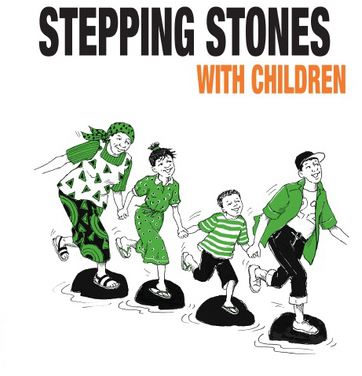
The Stepping Stones with Children training package equips organisations and individuals with materials with which they can engage children affected by HIV and their caregivers, using participatory exercises to convey information, explore norms, and discover their abilities.
The original Stepping Stones training programme was a training package on gender, HIV, communication, and relationship skills. It is also sometimes described as a social norms change training package, covering many aspects of our lives, including: why we behave in the ways we do; how gender, generation, and other issues influence this; and ways in which we can change our behaviour, if we want to. Developed between 1993 and 1995, mainly in Uganda, it has been used across every contient. The original programme was designed to support young men and women of around 15 years upwards, and older men and women, with a focus on communication and relationship skills in the context of HIV, across the genders and generations. Stepping Stones with Children is a sister programme, designed for use with orphans and other vulnerable children, aged 5-14, and their caregivers.
Developed with a team of writers and researchers from Tanzania, Kenya, and the United Kingdom (UK), Stepping Stones with Children consists of a training manual for facilitators, a DVD of accompanying films made by participants (and brief overview documentaries), and a counsellors' guide. The package was developed by Salamander Trust in close cooperation with its partner, Pastoral Activities and Services for people with AIDS Dar es Salaam Archdiocese (PASADA), and pilot workshop participants in Dar es Salaam, Tanzania. It has been funded by Comic Relief and is published by Practical Action Publishing.
The programme consists of 29 sessions designed for use by children affected by AIDS, aged 5-8, 9-14, and their caregivers. It seeks to support them all to overcome the challenges they face in their lives and build on their strength and resilience, to create happier, healthier, and safer ways of being. Editor's note: From the publishers: Because the workshop sessions are conducted with 3 peer groups - younger children, older children, and caregivers - those running workshops need at least 3 copies, so that each facilitator has his or her own copy, or ideally 6 copies so that assistant facilitators also have a copy. Discount packs for trainers are available.
The content of the Stepping Stones with Children materials is based on the following principles:
- recognising and affirming child rights and gender-based rights in a holistic, human-rights framework
- appreciating our abilities rather than focusing on problems
- noticing and affirming the use of virtues (these are timeless and universal, such as courage)
- exploring participants' own issues and experiences
- sharing information tailored to participants' lives
- supporting participants to develop their own solutions and responses to the issues they face
- developing skills in critical literacy, communication, and building relationships
- practising these skills through role-plays: "rehearsing for reality"
- promoting positive discipline instead of punishment and violence against children
- using a range of participatory learning methods, to give variety and suit different learning styles
- protecting participants' well being in the workshops through careful facilitation, confidentiality, and support
- asking challenging questions about gender and child rights when necessary
Some related external links may be of interest:
- The Stepping Stones International Community of Practice (CoP) is an ever-growing international network made up of over 1,200 members across 100 countries worldwide.
- To view the documentary and participatory films accompanying the programme, click here.
- To learn more about the whole programme on a dedicated website, click here.
- To access the Stepping Stones With Children Impact Brief, click here [PDF].
- To view a presentation for the UN Inter-Agency Task Team on eliminating mother-to-child transmission of HIV in relation to this programme, click here [PDF].
- To view a presentation at the NOPE Conference in June 2016 in Nairobi, Kenya, click here [PDF].
- To access the slides from a June 15 2017 Stepping Stones with Children Facilitators' Webinar on "Our use of language: the power of positive perspectives", click here [PDF].
- To access a 4-page impact brief on Stepping Stones with Children, click here [PDF].
- A July 2018 article, "Building resilience to adverse childhood experiences: An assessment of the effects of the Stepping Stones with Children training programme on Tanzanian children affected by HIV and their caregivers" (available by subscription or purchase only) demonstrates that the programme has been found to increase CD4 counts and weights of children who have gone through the programme, compared to a control.
- This poster from AIDS 2018 [PDF] shows how counsellors have found the accompanying counselling guide beneficial.
Publishers
English, Swahili
Email from Stepping Stones to The Communication Initiative on October 6 2017; emails from Alice Welbourn to The Communication Initiative on October 15 2017 and November 24 2018; and Guidelines for Adapting Stepping Stones [PDF], Salamander Trust website, Practical Action Publishing website, and Stepping Stones with Children Impact Brief [PDF] - all accessed on October 6 2017.
- Log in to post comments