










































The State of Press Freedom in Southern Africa 2022
Image
SummaryText
"There has been a breathtaking slide in terms of freedom of expression and of the media in the region, which translates to the violation of other rights."
This regional report offers an overview of the state of press freedom in Southern Africa, focusing in particular on violations against journalists and media workers that threaten media freedom, gender issues in the media, and media viability. Based on research conducted in the region, authors from Angola, Botswana, Eswatini, Lesotho, Malawi, Mozambique, Namibia, Tanzania, Zambia, and Zimbabwe provide comparative overviews from the region and individual summaries of the situation in the ten countries. The country chapters cover issues such as media and regulatory frameworks, internet access and affordability, the safety of journalists, surveillance, media pluralism and diversity, media independence, and gender and the media.
In an introductory chapter on the general situation in Southern Africa, one of the contributors, Zoé Titus, summarises the state of media in the region as follows: "Despite constitutional guarantees of freedom of expression in the majority of countries in the region, the inconsistency and lack of political will to enforce these liberties, have given rise to numerous incidents of censorship, self-censorship, and constraints on free speech. In certain cases, the individuals who express dissenting opinions or question established norms are vulnerable to harassment, persecution, or even physical violence."
She explains that "Southern Africa is grappling with a complex political, economic, and social crisis that threatens the exercise of freedom of expression, media freedom, access to information and associated rights. This crisis is characterised by numerous interrelated factors, including corruption, political repression, economic instability, and social inequality. We are witnessing an intensifying of crackdown on journalists, human rights activists, leaders of social movements, political activists, and trade unionists who have exposed gross human rights violations, authoritarian tendencies, corruption, lack of service delivery, and social justice issues. Their attempts to hold national governments and leaders accountable for development, good governance, and respect for human rights and the rule of law have been met with violent force, including physical assaults, arbitrary detention, torture, murders, intelligence monitoring, breaches of cyber laws to shut down the internet, and enforced disappearances. Elections, including pre-, during-, and post-election phases, have increased restrictions on association and assembly. This is the treacherous path that the media in Southern Africa is forced to navigate, often finding themselves caught in the crosshairs of power, politics and corruption."
In addition, "Despite the slow recovery from the devastating impact of COVID-19 on its viability, the media in Southern Africa still faces one of its greatest challenges: economic viability. This challenge undoubtedly impacts media freedom and freedom of expression, as limited financial resources, high operational costs, and limited access to information make it difficult for media outlets to provide quality journalism, investigate and report on sensitive issues, and fulfil their role as watchdogs of society. These factors make the media vulnerable to pressure and intimidation from powerful interests, leading to self-censorship and a lack of critical reporting on sensitive issues."
The article also notes that, despite the challenges, "there are also encouraging signs of progress. Civil society organisations, human rights groups, and independent media outlets are working tirelessly to promote media freedom and access to information. These groups play a critical role in advocating for policies and laws that protect and promote media freedom, as well as developing the capacity of journalists and media professionals."
The report is divided into the following sections:
This regional report offers an overview of the state of press freedom in Southern Africa, focusing in particular on violations against journalists and media workers that threaten media freedom, gender issues in the media, and media viability. Based on research conducted in the region, authors from Angola, Botswana, Eswatini, Lesotho, Malawi, Mozambique, Namibia, Tanzania, Zambia, and Zimbabwe provide comparative overviews from the region and individual summaries of the situation in the ten countries. The country chapters cover issues such as media and regulatory frameworks, internet access and affordability, the safety of journalists, surveillance, media pluralism and diversity, media independence, and gender and the media.
In an introductory chapter on the general situation in Southern Africa, one of the contributors, Zoé Titus, summarises the state of media in the region as follows: "Despite constitutional guarantees of freedom of expression in the majority of countries in the region, the inconsistency and lack of political will to enforce these liberties, have given rise to numerous incidents of censorship, self-censorship, and constraints on free speech. In certain cases, the individuals who express dissenting opinions or question established norms are vulnerable to harassment, persecution, or even physical violence."
She explains that "Southern Africa is grappling with a complex political, economic, and social crisis that threatens the exercise of freedom of expression, media freedom, access to information and associated rights. This crisis is characterised by numerous interrelated factors, including corruption, political repression, economic instability, and social inequality. We are witnessing an intensifying of crackdown on journalists, human rights activists, leaders of social movements, political activists, and trade unionists who have exposed gross human rights violations, authoritarian tendencies, corruption, lack of service delivery, and social justice issues. Their attempts to hold national governments and leaders accountable for development, good governance, and respect for human rights and the rule of law have been met with violent force, including physical assaults, arbitrary detention, torture, murders, intelligence monitoring, breaches of cyber laws to shut down the internet, and enforced disappearances. Elections, including pre-, during-, and post-election phases, have increased restrictions on association and assembly. This is the treacherous path that the media in Southern Africa is forced to navigate, often finding themselves caught in the crosshairs of power, politics and corruption."
In addition, "Despite the slow recovery from the devastating impact of COVID-19 on its viability, the media in Southern Africa still faces one of its greatest challenges: economic viability. This challenge undoubtedly impacts media freedom and freedom of expression, as limited financial resources, high operational costs, and limited access to information make it difficult for media outlets to provide quality journalism, investigate and report on sensitive issues, and fulfil their role as watchdogs of society. These factors make the media vulnerable to pressure and intimidation from powerful interests, leading to self-censorship and a lack of critical reporting on sensitive issues."
The article also notes that, despite the challenges, "there are also encouraging signs of progress. Civil society organisations, human rights groups, and independent media outlets are working tirelessly to promote media freedom and access to information. These groups play a critical role in advocating for policies and laws that protect and promote media freedom, as well as developing the capacity of journalists and media professionals."
The report is divided into the following sections:
- Foreword - Shaping a future of rights: Freedom of expression as the driver of all other human rights
- Southern Africa perspectives: Governments reneging on commitments to media freedom - by Zoé Titus
- Press freedom under severe strain in Southern Africa - by Hlengiwe Dube
- Online and offline harassment of women journalists - by Molly Chimhanda, Kagure Gacheche, and Susan Makore
- Country Reports
- Angola: Restrictive environment hinders media freedom - by Dércio Tsandzana
- Botswana: Freedom of expression faces headwinds - by Queen Mosarwe
- Eswatini: Tensions, self-censorship rife in media landscape - by Mancoba Mabuza
- Lesotho: Change brings hope - by Maleshoane Ratsebe
- Malawi: Challenges outweigh progress in media law reform - by Teresa Temweka Chirwa-Ndang
- Mozambique: Independent journalism under threat - by Ernesto Saul Nhapanze
- Namibia: A mixed bag for the media industry - by June Shimuoshili
- Tanzania: Media law reform process lacks momentum - by Elizabeth Riziki
- Zambia: In the right direction but more needs to be done - by Thomas Zulu
- Zimbabwe: Media law reform agenda stalls as civic space shrinks - by Lesley Moyo
- Media Freedom Violations 2022 (graphic representations of freedom violations in each country)
Publication Date
Number of Pages
80
Source
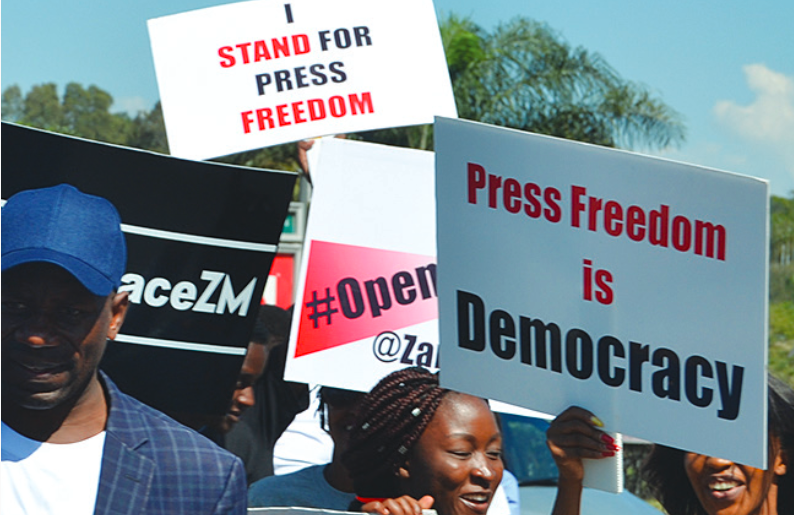
MISA website on June 30 2023. Image caption/credit: Journalists march carrying placards during the 2022 World Press Freedom Day commemorations in Zambia. Thomas Zulu
- Log in to post comments