










































Sesame Street - Japan (Sesamisutorīto)
This edutainment project used engaging live-action, animation, and colourful characters in an effort to meet the educational needs of young children in Japan through entertaining media. Although Japanese children had been exposed to a dubbed version of the US's Sesame Street series for over 25 years, this effort drew on local participation to develop and incorporate a curriculum created specifically for Japanese preschoolers. To craft the series, Sesame Workshop collaborated with and drew on the expertise of several Japan's media organisations (that is, SSPJ), also consulting with Japanese educators and child development specialists. Kevin Clash, the actor behind Elmo, travelled to Tokyo for 2 weeks to select and train what organisers call "the first ever Japanese Muppeteers" for the new series.
Besides basic literacy skills, this version of Sesame Street focused on ethics, interacting with friends, and environmental issues. The series used nature as a thematic springboard for conveying educational goals appropriate for Japanese preschoolers. In 2004, four new Muppet characters were introduced for the Japanese audience: Teena, a pink monster girl who likes to sing; Mojabo, a bossy green and purple monster who likes to exercise; Pierre, a blue frog; Arthur, a little yellow bird; and Joe, a large rhino-like Muppet who is jealous. In 2006, two new Muppets were added: Grorie, an orange Grover-like monster; and Meg, a Japanese girl. A few established Sesame Street characters also appeared in the segments, including Elmo, Big Bird, and Cookie Monster. The Muppets were shown living, playing, and having adventures in a Japanese neighbourhood.
In 2012, a "Sesame Street Fun World" was unveiled at Universal Studios Japan in Osaka. Inside the new Elmo Exploratorium, children can climb around in Big Bird's Big Nest (a net-shaped jungle gym), build things at Grover's Construction Company, or have a healthy snack at Cookie Monster's Kitchen.
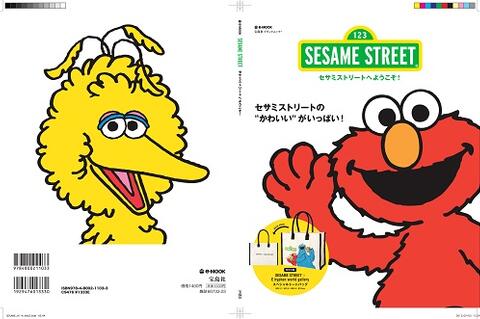
Noting that Sesame Street fans are young adults who grew up watching as children, Japanese publisher Takarajima launched its second Sesame Street Mook (the name is a combination of "magazine" and "book") title on July 19 2013. Designed for teens and adults, it reinforces Sesame Street's educational mission, with a focus on its curriculum - especially literacy (with a special section focusing on Sesame Street books). But the main feature of this Mook edition is a profile of Muppeteer Caroll Spinney, who has performed Oscar and Big Bird since Sesame Street premiered in 1969.
Click here to visit the colourful, interactive website (Japanese language only), which is designed to foster a fun, child-friendly learning experience.
Early Childhood Development, Education.
Sesame Workshop and SSPJ, which includes ADK (an advertising agency), WE'VE (a licensing company), Nikkeisha (an advertising agency), TX-BB (the broadband arm of broadcaster TV Tokyo) and Odyssey Communications Inc. (an education company providing information technology (IT) certification programmes and English language training), and Kyodo Television, Ltd.
Sesame Workshop press release, March 29 2004; Sesame Workshop 2005 Annual Report [PDF]; "New 'Sesame Street Fun World' unveiled in Japan", by Graydon Gordian, April 23 2012; "Arigato Big Bird: Sesame Street in Japan", by Tomoko Nagano, July 30 2013; and email from June Lee to The Communication Initiative on January 10 2014. Image credit: © 2013 Sesame Workshop. "Sesame Street" ® and associated characters, trademarks, and design elements are owned and licensed by Sesame Workshop. All Rights Reserved.
- Log in to post comments