










































Seasonal Influenza Vaccine Acceptance among Pregnant Women in Zhejiang Province, China: Evidence Based on Health Belief Model
Zhejiang Center for Disease Control and Prevention
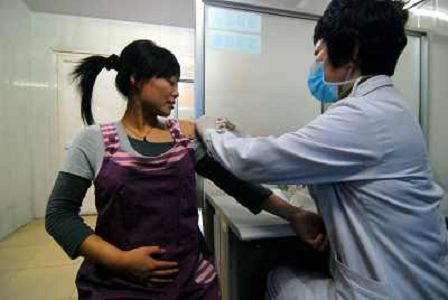
Seasonal influenza vaccine (SIV) vaccination during pregnancy provides benefits to both a pregnant woman and her newborn, and pregnant women in any trimester are considered as the highest priority group for SIV vaccination by the World Health Organization (WHO). However, SIV has not been included in the Chinese expanded programme on immunisation (CEPI) schedule for pregnant women and children; the category II (parent-pay) vaccine is voluntary in China. The coverage rates of SIV among adults and children aged 6 months to 3 years old were less than 1% in recent years in Zhejiang province. In that context, this study aimed to identify the impact factors associated with the acceptance of SIV vaccination among pregnant women in an effort to provide guidance for improving communications directed at pregnant women's awareness of the benefits of SIV vaccination and concerns regarding vaccine safety.
A self-administrated structured questionnaire was developed based on health belief model (HBM), which includes 5 constructs that influence health behaviours - namely, perceptions of susceptibility, severity, barriers, benefits, and cues to action. The HBM assumes that people are likely to adopt disease prevention behaviours (like vaccination) if they perceive that they are susceptible to the disease, that the disease is severe, that the behaviour is beneficial, or that barriers are minimal. Furthermore, cues to action, such as recommendations from immunisation provider or health education messages, can also influence the behaviour.
From January 1 to March 31 2014, pregnant women with ≥12 gestational weeks who attended antenatal clinics (ANCs) at public hospitals in 6 out of 90 districts were surveyed. The researchers examined the associations between the acceptance of SIV vaccination and the demographic factors and HBM constructs using the logistic regression model, calculating the adjusted odds ratio (AOR).
Of the 1,252 participants, 76.28% were willing to receive the SIV vaccination during their current pregnancy. High levels of perceived susceptibility of influenza (AOR = 1.75 (95% confidence interval (CI): 1.36-2.08), high levels of perceived severity of influenza (AOR = 1.62 (95% CI: 1.25-1.95)), high level of perceived benefits of vaccination (AOR = 1.97 (95% CI: 1.76-2.21)), and high levels of cues to action were positively associated with the acceptance of SIV vaccination among pregnant women (AOR = 2.03 (95% CI: 1.70-2.69)), while high level of perceived barriers of vaccination was a negative determinant (AOR = 0.76 (95% CI: 0.62-0.94)).
Given perceived fears about SIV among the study's participants, and the significant association detected between physician recommendations and vaccine acceptance, the researchers underscore the need to encourage health providers to discuss SIV vaccination with their pregnant patients. Their help might be solicited in advocating and recommending vaccine uptake, as well as in dispelling any myths and fears about SIV that pregnant women or their families might harbor. "Health education and direct communication strategies on SIV vaccination and influenza infection are necessary to improve the acceptance of SIV vaccination among pregnant women."
International Journal of Environmental Research and Public Health. 2017 Dec 11;14(12). pii: E1551. doi: 10.3390/ijerph14121551. Image credit: CFP
- Log in to post comments