










































Sasa! Activist ToolKit
Produced by Raising Voices, the SASA! Activist Toolkit is designed to raise awareness, encourage support, and motivate people to take action on the interconnected issues of violence against women and HIV/AIDS. Sasa is a Kiswahili word meaning "now" and was chosen by the producers to convey the message that now is the time to begin thinking differently about preventing violence against women and HIV/AIDS infection.
The toolkit includes the following components:
Sasa! Film - This 30-minute documentary film tells two women’s personal stories of violence and HIV/AIDS. The first story is about Mama Joyce who lives in Mwanza, Tanzania. She had ten children with her husband before he decided to take a second wife. When his new relationship began, he became increasingly violent and hostile towards Mama Joyce. Because so many women in her community experience physical violence from their partners, Joyce believed for a long time that men had the god-given right to use violence against their wives. When Joyce’s co-wife fell sick with an AIDS-related illness, her husband abandoned both women. The second story is about Josephine who lives in Kampala, Uganda. She was married when she was only 18 years old, because her parents could no longer afford to send her to school or to support her. Her husband was very violent and was unfaithful. Fearing possible exposure to HIV from her husband, Josephine attempted several times to leave him, only to be forced back to him each time he demanded the return of the dowry he had paid to her parents. When Josephine discovered that her husband had infected her with HIV, she kept her diagnosis a secret from him, fearing more violence. After he died, his family took custody of Josephine’s children. These two stories aim to highlight the need for awareness, the importance of support, and the urgency of action around HIV and violence against women. Through their experiences, both women have been moved to become activists in their communities and work to support women experiencing violence and those living with HIV/AIDS.
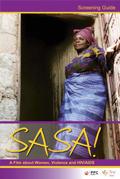
SASA! Screening Guide - The Guide is designed to help use the film as an educational and advocacy tool in efforts to prevent violence against women and HIV infection. The guide includes tips on how to use the film in public screenings, trainings, presentations, and advocacy sessions. It also offers in-depth discussion guides with questions to help facilitate active discussion around the film.
Media and Advocacy materials – These include: radio programmes, listening guides, fact sheets, persuasion sheets, and postcards.
Communication materials – These include pamphlets, posters, comic sheets, and games. The materials are designed to encourage individuals and organisations in the community to begin talking and thinking about violence and HIV/AIDS.
- Log in to post comments