











































Réseau en Afrique Francophone pour la Télémédecine (RAFT) Project
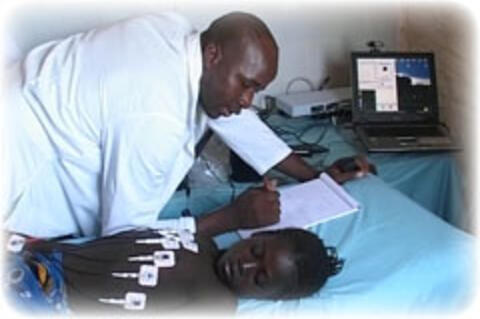
The project provides assistance to culturally adapt online medical content while training medical librarians to improve the quality and accessibility of medical information over the internet. According to the project organisers, the project aims to strengthen the human capacities necessary to share meaningful information in the telemedicine networks.
The RAFT project is the continuation of telemedecine projects developed in Mali and Mauritania and is based on three pillars:
- The development of a communication infrastructure and servers allowing the hosting of a webcasting technology and auditorium for e-courses, mainly inside medical institutions involved in post-graduate training.
- Support and training for the production of locally-adapted online medical content of high quality and with strong added value.
- The deployment of internet access points in rural areas, using satellite communications, in order to integrate from the beginning all specific healthcare needs for rural health centres.
The core activity of RAFT is the webcasting of interactive courses designed for physicians and other care professionals, on topics proposed by partners of the network. These sessions are designed to put emphasis on knowledge sharing across institutions, usually in the form of presentations and dialogue between experts in different countries. The technology used for the webcasting works with an internet connection and a Java-enabled Web browser. A bandwidth of 30 kbits/second, the speed of a basic telephone modem, is sufficient, and enables the participation of remote hospitals.
Another key component of RAFT is distance learning. About 80 courses are produced each year, webcast live on Thursdays, and usually followed by several hundreds (up to 1200) healthcare professionals throughout Africa (up to 42 sites connected simultaneously). Rural healthcare sites have been equipped and serve as pilots for wider deployments. National groups host their own courses at least one other time per week.
Other activities of the RAFT network include video-conferences, tele-consultations, collaborative knowledge development, support for medical laboratories quality control (in collaboration with the Swiss Center for Quality Control), and the evaluation of the use of telemedicine in rural areas (via satellite connections) in the context of multisectorial development.
Finally, RAFT emphasises the development of capacities for the creation, maintenance, and publication of quality medical didactic contents. Specific courses (remote and face-to-face) are organised for the national coordinators of the network to develop these competencies, with the help of the Health On the Net Foundation.
Health, Information and Communication Technologies
Health On the Net Foundation, Geneva University Hospital, World Health Organisation, World Francophone Digital University, Global Digital Solidarity Fund (DSF)
Service d'Informatique Medicale website on July 1 2004 and Stockholm Challenge website on April 29, 2009.
- Log in to post comments