










































Public Funding for Private Media in the MENA Region
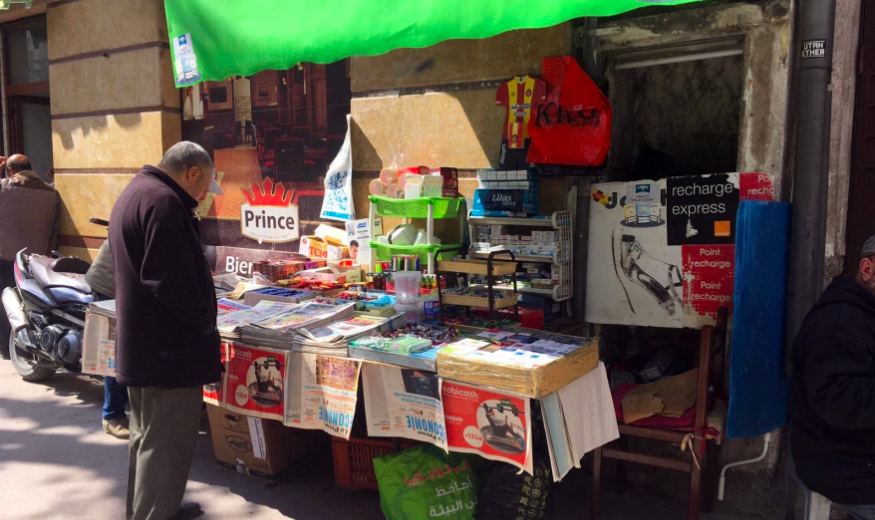
"Challenges posed by media globalisation and digitisation combined with falling audiences and advertising revenues are the key reasons behind the creation of public funding schemes to support the press in the MENA region."
This research paper examines national funding mechanisms for private media in five Middle East and North Africa (MENA) countries and gives a general assessment of their role in promoting viable, independent, and diverse media. Lessons learned from the four countries - Morocco, Tunisia, Mauritania, Jordan and Palestine - are meant to inform discussions at the National Media Viability and Investment Conference in Sierra Leone, which was organised by BBC Media Action as part of the Protecting Independent Media for Effective Development (PRIMED) programme. The conference brought together government, media organisations, industry leaders, and other stakeholders to explore public funding and advertising models that have been used to support media viability around the world and to create a national action plan to strengthen public interest media in Sierra Leone. (See Related Summaries, below, for all papers presented at the conference.)
As the author explains, governments and professional organisations in the MENA region have developed a range of public funding models aimed at rebuilding public trust in the media and promoting sustainable, inclusive, and high-quality journalism. The foremost examples can be found in Tunisia and Morocco; however, Mauritania, Jordan, and Palestine have launched a number of smaller schemes that could also serve as replicable models.
In the case of Morocco, public funding for the printed press is aimed at fostering pluralism, supporting capacity-building, and enhancing the sector's contribution to the economy. In order to access these funds, applicants need to reach certain thresholds in terms of size and distribution, as well as to meet legal and ethical obligations. Grants are awarded by a Joint Committee whose 17 members include nine representatives from the newspaper industry. In the period from 2005 to 2020, the Moroccan Government disbursed more than €100 million in public funds to the press sector including digital media. However, in 2018, the country's Court of Accounts published a scathing assessment of the national fund. In particular, it highlighted a perceived lack of equity, stating that almost a quarter of the aid was allocated to just four major publishing companies, while the committee managing the fund lacked a proper set of regulations and an ethical code. Other observers claim that the fund has failed to achieve its goals of increasing media pluralism and improving the quality of content through capacity-building.
The author of the report suggests that in-depth research and analysis of the media sector would improve the ability of the national fund to support innovative content and formats, rather than simply promoting obsolete business models. She also concludes that the government's role should be limited to creating the fund and establishing its operating guidelines. Government stakeholders should not be allowed to determine which media outlets receive support - these decision-making powers should rest with professional associations and independent bodies.
Since the Jasmine Revolution of 2011, media stakeholders in Tunisia have launched a range of schemes aimed at supporting private and community media. These have included indirect support through public advertising, small grants for community radio stations, tax breaks, and reductions in social contributions for the press. The initiatives have enjoyed varying degrees of success but are generally considered to have been too limited in their scope and ambition. The draft law to create a national agency responsible for collecting public advertising has been widely criticised for a perceived lack of accountability. Local stakeholders have called for changes in the criteria applied by the Special Committee overseeing the agency and for the introduction of clear safeguards for independence. As a result, there has been little progress with the draft law in recent years, although rebooting the process was a key demand of media practitioners who went on strike in April 2022.
Other schemes have suffered from low levels of take-up and lukewarm interest. Newspapers are exempt from paying value-added tax (VAT) on newsprint; the 2018 finance law includes a provision whereby print and digital media outlets can ask the state to cover a proportion of social contributions for staff. However, not all newspapers take advantage of this reduction. The HAICA, the country's media regulatory agency, operates a programme to support community media, however, the grants are very modest - averaging €5,000 - and their resonance is, therefore, muted. The author concludes that Tunisian media institutions should be more creative in their efforts to generate funding, and the international community - which, to date, has suffered from poor coordination and a lack of joined-up thinking - should support these efforts. She notes that the diversity of approaches and the absence of government interference are both positive signs.
The report also looks at initiatives in Mauritania, Jordan, and Palestine. In Mauritania, a "fund to support the press" was launched in 2012 and, in 2020, a total of €500,000 was allocated to more than 300 media outlets. However, 73 applications were rejected for failing to comply with the eligibility criteria, leading to a high degree of resentment within the industry. Attempts to establish public funding schemes in Jordan and Palestine have been stymied by the absence of employers' associations capable of negotiating effectively with authorities. However, successful initiatives include a production fund run by the Palestine Broadcasting Corporation that offers creative opportunities to local filmmakers and producers.
Editor's note: The above summary is based on the one-page summary document [PDF] submitted by the author.
Click here for more information (including a video) on the Sierra Leone National Media Viability and Investment Conference.
Email from Maha Taki to The Communication Initiative on April 28 2022; and BBC Media Action website on May 4 2022. Image credit: International Media Support (IMS)
- Log in to post comments