











































Population, Health, and Environment Toolkit
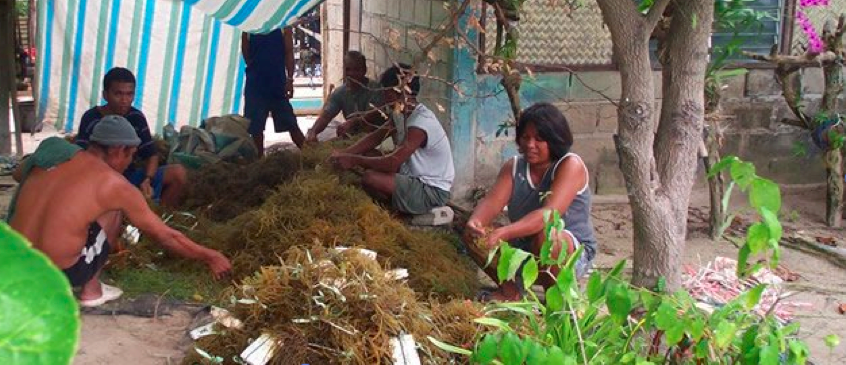
This toolkit houses a collection of knowledge on how to design, implement, communicate, promote, and advocate for Population, Health, and Environment (PHE) programmes. As explained in the toolkit, PHE is a term used for programmes that use “a holistic approach to community-based development by simultaneously addressing the complex relationships and links between health, particularly reproductive health, and conservation and natural resource management.”
The toolkit, which is hosted on the Knowledge for Health (K4Health) website, “was created to serve as a useful central location and "go to" resource for high-quality, current information and materials on PHE, for both seasoned PHE practitioners and those who may be new to the approach. It also contains PHE resources of historical value.” Professionals who may find the toolkit useful are programme managers and field-based practitioners, researchers, advocates, policymakers, donors, and educators.
Originally launched by the Building Actors and Leaders for Advancing Community Excellence in Development (BALANCED) Project in 2009, the toolkit was completely updated in 2016 by the The Policy, Advocacy, and Communication Enhanced for Population and Reproductive Health (PACE) project. It contains the following:
- Information about integration benefits, PHE links, and current issues and “hot topics”.
- Guidance on and experiences with programme design, training materials, implementation, data collection, monitoring and evaluation, and scale up and replication of PHE efforts.
- Research, project/programme evaluations, and conference documents.
- Guidance and examples of effective policy, advocacy, and communications materials and strategies.
The toolkit is divided into the following sections:
- Why PHE? - This section of the Toolkit contains documents and other materials that effectively demonstrate what the PHE approach is; the linkages between population dynamics (such as population growth, urbanization, and migration), health, and the environment; the benefits that result from these integrated projects; and current PHE activities and opportunities.
- PHE Programming - This section of the Toolkit contains guides, training materials, and other implementation resources from past and current PHE projects. The materials in this section are intended to assist practitioners in designing and implementing PHE projects/programmes. Some of the topics covered include: developing an integrated theory of change; implementing and training PHE project staff; improving data quality and monitoring and evaluation (M&E) of PHE; and scaling up PHE (both horizontally and vertically, as well as getting institutional buy-in).
- Research, Evidence, Project/Program Evaluation, and Learning- This section contains documents related to furthering the body of evidence in support of PHE projects and increasing learning about PHE results through critical research, evaluations of PHE programmes, and conferences.
- Policy, Advocacy, Communication - Resources in this section are divided into three sub-sections related to global, regional, and national/local development priorities and frameworks. It also has a sub-section on communication, which highlights resources focused on crafting messages and working with the media.
- Country and Regional PHE - This section of the Toolkit allows users to access tools and resources that are relevant to one or more particular regions of the world. These materials are categorized in a specific region or regions if they were produced as part of a project in that region or regions, or if they focus on a specific region or regions.
English
- Log in to post comments