
























Development action with informed and engaged societies

After nearly 28 years, The Communication Initiative (The CI) Global is entering a new chapter. 

Following a period of transition, the global website has been transferred to the University of the Witwatersrand (Wits) in South Africa, where it will be administered by the Social and Behaviour Change Communication Division. Wits' commitment to social change and justice makes it a trusted steward for The CI's legacy and future. 

On the transfer, co-founder Victoria Martin expressed her pleasure to see this work continue under Wits' leadership, knowing that co-founder Warren Feek (1953–2024) would have felt deep pride in The CI Global's Africa-led direction. 

As Wits, we honour the team and partners who sustained The CI for decades and look forward building from that strong base. This includes co-founders Warren Feek (1953-2024) and Victoria Martin as well as La Iniciativa de Comunicación (CILA), which continues independently at lainiciativadecomunicacion.com with links to The CI Global site. We are also eager to forge new partnerships and entertain new ideas as we consider how best to contribute to social and behaviour change in our rapidly evolving environment.

If you are joining the International Social and Behaviour Change Communication (SBCC) Summit in Panama, please join Wits and CILA on Monday, 22 June, to share your thoughts and suggestion for the relaunch of the Communication Initiative. We will be in Pacifica 5 from 12-1:25 for the Refuel, Reflect, and Renew Lunch Series: The Communication Initiative: celebrating a driving force for Communication for Social Change and the way forward. We will reflect on the legacy of Warren Feek and family in creating the Communication Initiative, consider the contributions of CI over the years and then turn our attention towards the future in this dynamic session. 

If you are unable to join us in Panama, we still want to hear from you. Please contribute your thoughts by following this link: https://redcap.link/CommunicationInitiative2026 or reaching out to ci_surveys@commint.com

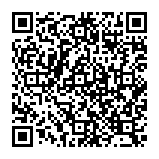
You can also follow the QR Code:

 https://redcap.link/CommunicationInitiative2026

Time to read
1 minute
Read so far

Our Neighbourhood

0 comments
Our Neighborhood is a distance education radio programme for Neighborhood Health Committees (NHCs) in Zambia. It is a 6-month, 30-minute per week, course that can be repeated. The programme provides technical updates on both health interventions and community mobilisation techniques, and provides ongoing support and encouragement, filling some of the gaps existing in supportive supervision. The programme is in 6 Zambian languages and is broadcast on 8 community radio stations.
Communication Strategies

The Zambia Integrated Health Programme (ZIHP) launched Our Neighbourhood in January 2001 after determining its scope, content, and details through a design workshop. Organisers say, "looking at the numbers of NHC members across the country that needed to be trained, radio seemed to be the most logical option in terms of cost-effectiveness."

A follow-up radio programme entitled "Community Health with Sister Evelina" was also launched. The programme was intended for those NHC members who already completed the formal distance-learning course. Community Health with Sister Evelina is a 15-minute programme that gives NHC members additional health technical updates, community mobilisation tips, and information on current health events.

The programme seeks to foster:

  • management and leadership skills
  • the ability to strengthen health services
  • partnerships between services and the community.


The project has developed reference materials to support learning on the part of NHC members. These tools include:

  • 26 individual counseling/information cards
  • current information covering basic health care areas and healthcare issues in the community
  • a resource mobilisation tool
  • mobilisation tools for community action
  • simplified guide to people living with AIDS (PLA)
Development Issues

Health.

Key Points

Organisers are working to:

  • assess the effectiveness of the radio programme
  • identify issues that may hinder the programme in achieving its goals
  • identify area of implementation that may require improvement.


USAID developed the ZIHP in partnership with the Government of the Republic of Zambia to address the main health problems of the people of Zambia and to continue the process of the government's health reform. ZIHP is implemented by a group of USA and international agencies and organisations in partnership with Zambian public and private institutions and other international cooperating agencies.