










































Mental Health Crises in Pakistan
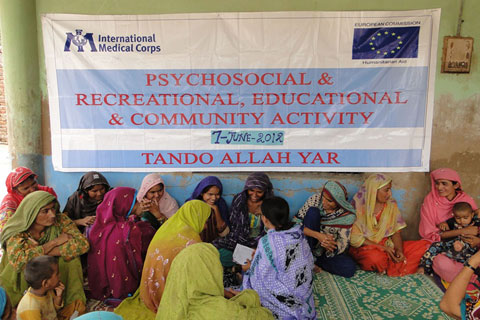
Author: Rana Tassawar Ali, July 9 2014 - Mental health is not a priority of any regime; it is a most neglected field in Pakistan. Mental health crises do not get attention at any time in this country; there is no good mental health care in Pakistan.
Pakistan is a disaster-prone country; many disasters occur through natural and manmade sources.
Every disaster brings physical and mental suffering. Our institutions and organizations always work to fill all of the physical demands of disasters and leave blank the space for mental health.
The mental health crises are very deep-rooted and chronic in this country, where 15-20% of the population is suffering from mild-to-moderate psychological illness, and most of the sufferers are women. Women in Pakistan mostly face domestic violence; thus, they are suffering different psychological disorders. There are limited numbers of psychiatrists and clinical psychologists; we calculate one psychiatrist for more than 10,000 people. There is not a single mental health caregiver in any rural area of Pakistan, where 60% of the population is living. The majority of patients goes to traditional faith healers and visits different quacks. There is a serious shortage of mental health professionals in Pakistan and a lack of awareness at all levels. Globally, it is now realized that poor mental health leads to abuses of human rights and discrimination in society.
Now economists are claiming that poor mental health is the main reason for a poor growth rate, and it leads to poor decisionmaking in all sectors. Mental health is not only a health issue; it links with country economic development and healthy political leadership. Good mental health enables peoples and societies to realize their potentials and increase their choices to live healthy, wealthy, and mentally stable lives. This is fact that, in Pakistan, constant poverty, ongoing stresses, and jobless markets and continuing stressful conditions are major factors for increasing mental illness. On the other hand, our political parties have no political will and no thinking about prioritizing mental health through legislation and implementation. All political parties’ manifestos are without mental health agendas.
The stigma and discrimination against patients and mental disease are preventing individuals and families from seeking mental health care. In the country, the ongoing ‘war on terror’ situation increases the risk factors. The people are living in an insecure situation, and terrorism is increasing the suffering among the masses. Major psychological disorders in Pakistan are: depression - more than 30% of the population is suffering from it; anxiety; schizophrenia; and epilepsy. If we analyse BHUs (Basic Health Units) in Pakistan, they have very poor conditions, both the physical facilities and the level of equipment. There is not a single mental health caregiver available in more than 14,000 BHUs; and, even at all district levels, only one psychiatrist visits on a weekly basis. It is a very critical situation in this country; people visit traditional faith healers for psychological treatment. I have many times listened and read in the news of deaths occurring due to unethical and cruel practices of traditional faith healers.
In Pakistan, no psychology council is available for regulating psychological services. It is clear that, without any national psychology council, Pakistan cannot achieve the mental-health-for-all dream. In this country, only few INGOs (international non-governmental organizations) provide limited psychological services. These services are also without trained staff, but the something-is-better-than-nothing formula applies here.
Communities are demanding that we need a crafted psychological approach to better provide psychological services. The bio-psycho-social approach is an appropriate approach for Pakistani communities, where only counseling or talking therapy fails due to the demanding behavior of patients. I have visited many organizations’ psychological settings and found that patients are satisfied with the bio-psycho-social approach. Doctors without Border, a medical association working in Pakistan, is now applying this approach in their mental health department, and their patients are more satisfied with their setup and way of treatment.
The mental health crisis in Pakistan grows day by day, due to the negligent attitude of the government and health department, there has been no bold step taken by the government for providing mental health for the basic and secondary level health units; only privileged classes of society are availing mental health services. Now, the country is decentralizing power, federal government to provincial government; and provincial governments are responsible to provide psychological relief to citizens through effective legislation. If our authorities continue with the same attitude, it will be a cause of big damage. Establishment of psychological council bodies and legislation on mental health is very necessary for saving people from great harm.
Controlling the mental health crises in Pakistan is a challenge for the government and the international community because poor mental is leading to abuses of human rights, crimes and discrimination in society. A comprehensive action plan is needed which would cover multi-disciplined approaches through linking health, social welfare, and education departments. The main objectives of such a plan should be promotion, prevention, treatment, rehabilitation, care and recovery from mental disorders. The legislation on mental health should be on priority bases, and it should be at all levels. In Pakistan, where mental health treatment leaves a stigma, we urgently need to change stigmas through advocacy and awareness. It is a difficult time for Pakistan in that the country is fighting for its survival. The international community needs to give a hand to Pakistan and provide assistance for saving lives of Pakistani citizens at risk of mental health crises. The Pakistani government also needs to create space for the international community and provide facilitation for working on these mental health crises.
Image credit: International Medical Corps
- Log in to post comments