










































Mali Shambani
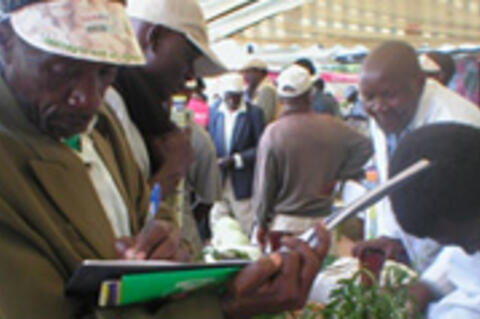
According to the organisers, the radio shows are developed with farmers' needs in mind, and content is driven by what the farmers themselves want to hear and learn about. The programme provides information on farming techniques, inputs, quality standards, weather and seasonal issues, market prices and trends, business tips, land use, and financing opportunities. Each programme also features a question-and-answer segment, where listeners can call (or text-message/use short messaging service (SMS) to communicate with) the radio station and interact live with a featured panel of experts. In order to fulfil the aim of providing relevant information to farmers, the programme strategy involves bringing together radio station producers, agriculture information content providers, advertisers, and farmers.
The Mali Shambani programme was piloted in Kiswahili on the Kenya Broadcasting Corporation (KBC), but subsequently expanded to vernacular stations, allowing issues and topics to not only be broadcast in local languages, but also to be localised to the specific agricultural or aquacultural needs of that region. For example, Radio Salaam will broadcast in Kiswahili about fisheries and fruit farming in the coastal areas where this kind of farming activity is most practised. On the other hand, Coro FM will broadcast in Kikuyu, and will cover dairy farming, which is popular in Central Kenya region.
Agriculture.
According to FIT Resources, farmers have complained in the past that educational programmes were controlled by advertisers who doubled as suppliers and turned the radio talk shows into selling opportunities. This reduced the time for educational information and meant that they did not necessarily address the needs of farmers. It also meant that programmes would be discontinued as soon as the sponsorship dried up.
According to a study conducted by Steadman Research, the programme is the most listened to programme after the news.
At a lessons-learned meeting, attended by KBC's producers and sales and marketing team - along with representatives from ACDI/VOCA, the Ministry of Agriculture, and the Kenya Agricultural Commodity Exchange - Research International presented the findings of a July 2006 study measuring programme impact. According to the study, Mali Shambani had an audience of about 2 million listeners, 40% of whom were women. The programme was found to be effective in delivering appropriate extension messages to a wide array of listeners. It was recommended that stakeholders consider developing a website for the programme and also disseminating short message texts on mobile phones. The possibility of using a sector-specific information approach was discussed, and a pilot project for dairy is being developed.
UK Department for International Development (DFID)'s Business Services Market Development Program (BSMDP); Agricultural Cooperative Development International/Volunteers in Overseas Cooperative Assistance (ACDI/VOCA).
All Africa website on August 10 2008; and ACDI/VOCA's January/February 2007 Global Connections E-Newsletter, accessed on December 3 2009.

- Log in to post comments