










































Life at the Turn Off Radio Drama
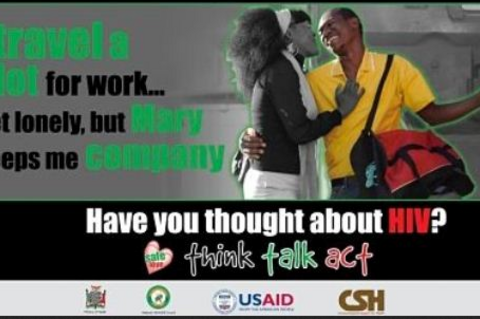
Launched in February 2012, Life at the Turn Off is a serial radio drama following the stories of fictional Zambian characters and the ways HIV affects them and their community. Using entertainment-education, the series is designed to encourage healthier behaviour, especially in rural areas. The radio series is part of the Zambian National AIDS Commission's national prevention campaign, Safe Love: Think. Talk. Act., which is funded by the United States Agency for International Development (USAID).
The 26-part 15-minute radio episodes of Life at the Turn Off are airing twice a week on two national radio stations and 23 community radio stations throughout Zambia. Set in a rural village, a cast of common and uncommon characters is intended to makes each episode relevant to rural life, with adventure and drama to keep the lessons fun and interesting.
The drama focuses on reducing multiple and concurrent partnerships, promoting condom use within and outside of marriage, and timely use of prevention of mother-to-child-transmission of HIV services. It is designed to offer accurate information about risky behaviours and promote discussion to inspire Zambians to adopt healthier behaviours. It is also intended to offer valuable information about HIV and guide people on what they can do to prevent the spread of the disease and to support those who are HIV positive.
A complimentary discussion guide for communities and listening clubs is designed to facilitate group reflection, discussion, and action after each episode. The discussion questions are intended to support: individual behaviour change intention, group support for changes, and collective action on specific issues.
HIV/AIDS
The Safe Love HIV prevention campaign, being implemented by the National HIV/AIDS/STI/TB Council with project support, addresses key drivers of HIV/AIDS in Zambia, including multiple and concurrent sexual partnerships, low and inconsistent condom use, and mother-to-child transmission of HIV. Key messages urge people to think about HIV and their personal risks, talk more openly about HIV, and take action to protect themselves and others. The messages in the Safe Love campaign also include encouraging pregnant women to seek treatment early in their pregnancies to prevent transmitting HIV to their babies, and encourages men to be more involved in family health decisions.
Zambian National AIDS Commission, United States Agency for International Development (USAID), National HIV/AIDS/STI/TB Council, Chemonics
Email from Lisa Sherburne (The Manoff Group, Inc) on December 10 2012 and USAID Zambia website, USAID Zambia website, and Chemonics website on January 16 2013.
- Log in to post comments