










































Kyrgyz-Swiss Health Reform Support Project
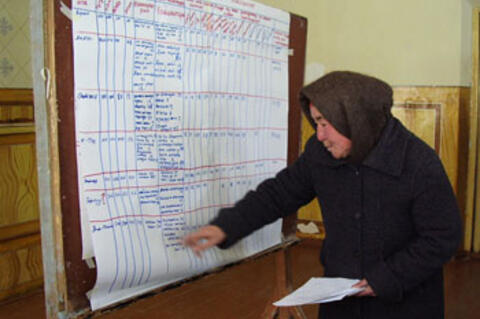
Through the project, communities analyse their health priorities and elect representatives to health committees to coordinate action on these priorities. Campaigns launched on the priorities selected by the communities have included: promoting iodized salt; brucellosis prevention; promoting vegetable gardening; reducing alcohol abuse; access to treatment of reproductive tract infections; and addressing cardiovascular diseases, anaemia, hypertension, and tobacco consumption. For example, the iodized salt promotion campaign enabled communities to check the salt sold in their villages with simple test kits. It achieved a coverage rate of iodized salt in 98% of households. As of November 2008, a total of 807 villages have set up their own village health committee.
Health, Rights.
In 1999 the Swiss Agency for Development and Cooperation (SDC) started to support other donors in the health sector through the Kyrgyz-Swiss Health Reform Support Project. Initially, the geographic focus of the project was on Naryn oblast which is the largest and poorest in Kyrgyzstan. A qualitative assessment of people's health priorities revealed brucellosis, anaemia, hypertension, cold/influenza, reproductive tract infections (RTI), and dental diseases as the most prevalent. Nutrition, clean drinking water, hygiene and access to drugs were identified as the most important health needs in Naryn oblast.
During phase II, health promotion became the main focus of the project through the development of a community centred health promotion strategy for rural areas, called Community Action for Health. Phases III and IV saw the expansion of the project to the rest of the country of Kyrgyzstan. The project is currently (March 2009) in phase V.
Swiss Red Cross, United States Agency for International Development (USAID), Swedish International Development Agency (SIDA), and the Ministry of Health in Kyrgyzstan.
Community Action for Health website, Kyrgyz-Swiss-Swedish Health Project (KYSS) summary on the Swiss Agency for Development and Cooperation (SDC) website, "Kyrgyz Health Project: A Precedent-setting SDC-devised Project," and "Healthcare for Remote Regions - An SDC Project in Kyrgyzstan Sets the Standard" [PDF].
- Log in to post comments