










































Key Barriers to Women's Access to HIV Treatment
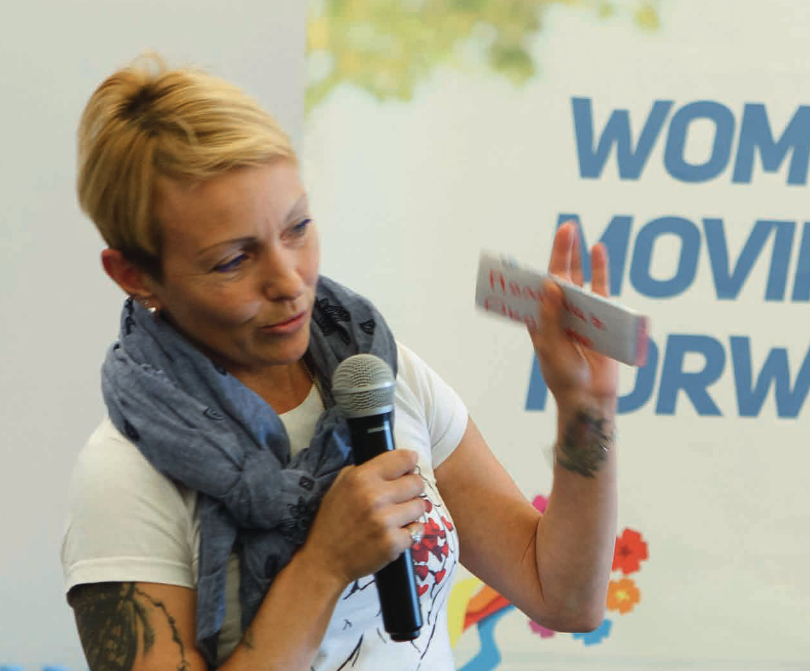
"Women's voices are clear, consistent and urgent in their articulation of what must be done to create a woman-centred, rights-based approach to holistic health and well-being."
In collaboration with UN Women, the ATHENA Network, AIDS Vaccine Advocacy Coalition (AVAC), and Salamander Trust undertook a multistage review of the global status of women's access to antiretroviral therapy (ART). Highlighting the experiences of women living with HIV accessing treatment and quality care, the review is informed by a gender-responsive and human-rights-based framework to explore the micro-, meso-, and macro-level factors that impact women's experiences of treatment availability and their decision-making processes around its uptake. The participatory approaches used in this review placed women living with HIV in leadership roles in designing, implementing, and reviewing findings.
Informed by the conviction that it is crucial to understand what is known about factors that govern individual choice regarding ART initiation, continuation, and adherence/retention in care, this review informs the coordinated efforts of stakeholders striving to achieve the Joint United Nations Programme on HIV/AIDS (UNAIDS) "Fast track to end AIDS 2016-2021" strategy. The UNAIDS strategy recognises the importance of addressing the holistic needs of people living with HIV. It includes 3 major parts, corresponding to the 3-phase methodological approach to amplifying women's voices:
- A review of peer-reviewed and grey literature related to women's access to treatment and an analysis of available sex-disaggregated data. Conducted from July - August 2014, the review identified current knowledge about women's ability to access ART and highlighted key knowledge gaps.
- A participatory, community-based global dialogue with women living with HIV via 12 country-based focus group discussions (FGDs), 9 one-to-one interviews, and a virtual dialogue space. The dialogue framework employed a holistic, woman-centred "continuity of care" approach with regard to understanding factors impacing women's access to and utilisation of HIV care and treatment. All data collection tools for this phase (September - December 2014) were designed and implemented by women living with HIV, with oversight from a global reference group (GRG) of 14 women living with HIV from 11 countries: They designed the survey questionnaires, conducted the FDGs and interviews, and validated the findings.
- Three country case studies - Kenya, Uganda, and Zimbabwe - involving FGDs, literature reviews (September - December 2016), and policy scans.
Findings presented in this report address the interplay of structural factors that affect women's overall access to health and resources, such as poverty, economic security, decision-making power, and stigma and discrimination. The most frequently cited barriers included actual and/or fear of violence, stigma and discrimination, treatment side effects, low treatment literacy, gender roles and care responsibilities, lack of access to and control over resources, dismissal, fear of disclosure or of HIV-related employment refusal, and other barriers.
The 3 phases of this project prioritise the following issues:
- Although there are clear indications of ways to improve access to ART, data on women's experiences in choosing to start, and stay on, treatment remain scarce. Findings that do exist are not translated into policy and practice.
- Violence against women remains a major barrier to accessing care and treatment, including violence in the home, in the community, and in health facilities.
- Women in all their diversities welcome the offer of ART in programmes but want this intervention to be presented as a voluntary, informed choice in an environment that is confidential, respectful, supportive, and closely connected to community-based resources for treatment literacy and peer support.
- Many women continue to struggle with transport issues, distance to facilities, and waiting times in substandard environments and health facilities that do not respect human rights.
Community dialogues highlighted, for example, these facilitators to treatment access:
- Women reported strong positive experiences with peer-led treatment literacy and support groups, with these interactions directly linked to accessing and remaining on ART over time.
- Women cited building trusting relationships with health providers as important to staying on treatment. Participants stressed that access to ART has improved since their diagnosis or since their engagement with ART, including for women who occupy intersecting marginalised identities or contexts.
- Many women reported finding strength, value, and motivation from their roles within families as mothers, partners and caregivers, as well as leaders within their communities.
- Participants observed the distinct value support plays in helping them to start and stay on treatment. Key sources of encouragement include peers, healthcare providers, and community and family members.
There are detailed, topic-specific recommendations throughout the document. Taken together, and distilled to core issues, the following 6-point plan for action is recommended:
- Human rights: Expand definitions of access to include rights-based, voluntary, and informed choices with full information and appropriate medical guidance. Address gender-related structural barriers to initiate, continue, and adhere to treatment. For example, ensure that "know your rights" and treatment literacy programmes are available to all women on treatment in the community, in health and other related settings (e.g., with police and prison staff).
- Gender: Engage in more analysis of treatment access barriers with gender at the centre, recognising the intersections with other structural factors. For example, dvelop a rights-based research agenda in collaboration women living with HIV and related to implementation of Option B+, and with new World Health Organization (WHO) guidelines.
- Diversities: Fill the data gaps that exist across the HIV treatment cascade care continuum) for women in all their diversities and use the findings of research to, for example, attend to issues of choice, coercion, supportive services, and clinical and psychosocial outcomes for women.
- Multiple levels: Ensure that care and treatment packages include basic needs and account for gender-specific barriers at individual, household, family, community, institutional, and national levels.
- Gender-based community engagement: Incorporate a gender analysis into expansion of support for community-based service delivery - a core component of UNAIDS' Fast-Track goals.
- Peer-led involvement: Harness the power and leadership of peer-led and -governed analyses of treatment access as part of a participatory research, implementation, and evaluation framework. This review has focused on available data; there remains, however, a paucity of rights-based, peer-reviewed literature focused on women's lived experiences as reported by women themselves. This gap should be filled via strategic support of innovative research projects that employ a participatory methodology and a holistic, well-being approach to understanding women's treatment access, adherence and health.
In conclusion, the expressed hope is that "this extensive review catalyses change and encourages robust dialogue at international and national levels in the physical spaces and communities where new and existing forms of antiretroviral therapy are offered...It is also our ambition that the methodology used here will be adapted and expanded upon as a basis for continuing to monitor progress and map gaps in the global HIV response."
United Nations Entity for Gender Equality and the Empowerment of Women (UN Women) website, October 30 2018. Image caption/credit: "Natalia Kovnir, a woman-activist living with HIV, at the National Women's Forum on HIV and AIDS (19-21 September 2016, Odessa, Ukraine), supported by UN Women and other partners." © Alina Yaroslavska
- Log in to post comments