










































Journalists' Insight Website
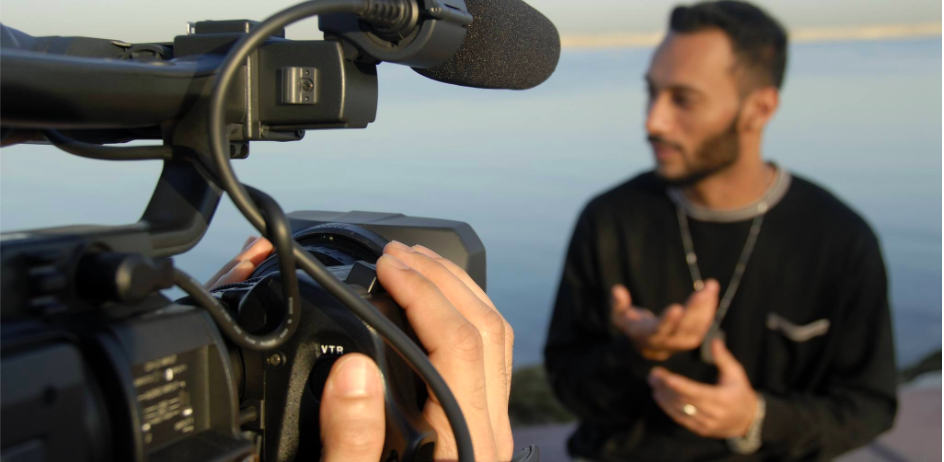
"From Bangkok to Beirut via Johannesburg, seasoned international journalists share their know-how on covering the news in a different way and developing constructive journalism."
In this collection of videos, journalists working for international media organisations in Europe, Africa, and Asia share their experiences to help young fellow journalists from all over the world to boost their knowledge and skills around various themes and fields of journalism. The more than 70 videos cover five themes: environment, health, gender, fake news and fact-checking, and solutions journalism. The collection has been made available by the French media development agency Canal France International (CFI) in partnership with Radio France Internationale (RFI), France 24, and Monte Carlo Doualiya.
Written and presented by more than 42 different media experts, the video collections are available in English, Arabic, and French. Each thematic collection offers up to 15 short 5-minute videos dealing with a sub-topic related to the theme. The themed collections are as follows (hyperlink takes you to the relevant collection):
1. Journalism and the Environment - This collection was written by Anne Sophie Novel, a journalist, writer, and producer specialising in the sharing economy, ecology, and social innovation. It is presented by Marina Bertsch, a journalist on the 24-hour TV news channel France 24.
Description: Climate change is partly linked to human activity and threatens all forms of life on Earth. But the environmental threats weighing on the planet also take the form of soil, air, and water pollution. In the face of destructive human activity, journalists have a crucial role to play in raising people's awareness and prompting changes in behaviour. They need to know how to make scientific information widely accessible to and understood by the general public but also, and above all, to deal with environmental issues through local reporting to demonstrate how these issues are a danger in practical terms to the health, resources, or the way of life of a village or region. This educational collection seeks to establish a connection between environmental issues and the risks they pose to local populations.
2. Journalism and Health - This collection was written by Laure Dasinières, a freelance journalist specialising in the fields of health, medical science, psychology, gender, and sexuality. It is presented by Micha Khlalil, a journalist on Monte Carlo Doualiya, the French public radio service that broadcasts across the Arab world.
Description: Health is an issue that is crucial to the life of every human being. It is thus normal for a media organisation to devote a significant proportion of its content to health, in particular when its role is to inform people facing endemic diseases (malaria, typhoid fever, etc.), recurring epidemics (Ebola, Zika etc.), global pandemics (HIV/AIDS, COVID-19, etc.), or health crises caused by armed conflict. However, medical news coverage is an area journalists need to treat with particular sensitivity in order to make often complex information accessible to the general public within short time frames that do not fit with the timing of the scientific research. This series of videos discusses the importance of health journalism and offers guidance on how journalists can better inform the public at regional and international levels, particularly in Africa, about prevention and about health concerns in areas of conflict, such as in the Middle East.
3. Journalism and Fact-Checking - This collection was written by Guillaume Ledit, author of "Dans la Tête de Julian Assange" ("In the Head of Julian Assange"), published by Acte Sud, and former journalist with the online news site Owni and cultural TV magazine show Télérama. He also teaches fact-checking at the Sciences Po Journalism School. It is presented by Diara N'Diaye, a journalist for the international radio station Radio France Internationale (RFI).
Description: Fact-checking is a set of practices and tools used to verify information and is a basic principle of journalism. There are many ways to check facts and anything can be verified (photos, videos, rumours spread on social media, etc.). It is imperative that a journalist verifies a piece of information before publishing it due to the explosion of fake news, which is often created online and distributed on a massive scale on social media. This series of online learning aids provides the essential elements for understanding the different guises that disinformation may take and introduces the tools and techniques for verifying facts and deconstructing fake news.
4. Journalism and Gender-equality - This collection was written by Sophie Ekoué, a journalist specialising in gender issues and a CFI trainer in Africa. It is presented by Juliette Fievet, a presenter on RFI and France 24, and RFI journalist Namouri Dosso.
Description: The profession of journalism must be as accessible to women as it is to men, it must promote journalism training for women, and it must encourage initiatives that seek to make underrepresented media professionals and their work more widely known and appreciated. Gender-sensitive journalism strikes a balance, reminds the media organisations of their moral responsibility, and, in a nutshell, gives every part of society the same opportunity to express itself. This series presents viewers with responses and habits to adopt to avoid falling into the trap of gender-related stereotypes in news coverage, and it offers some tips to encourage better representation of women as experts and agents of change.
5. Solutions Journalism - This collection is written by Eric Le Braz, a solutions journalism specialist and CFI trainer in Africa, and it is presented by France 24 journalist Yena Lee and Zéphyrin Kouadio, a journalist with RFI.
Description: The news is often considered to be a never-ending stream of depressing and negative stories that induce anxiety, which hurts journalism and makes the profession less popular among the general public. However, journalism can also provide solutions and bring them to fruition. This is called solutions journalism, or SoJo – a form of journalism that tries to restore a sense of balance to the news without ignoring the negative stories entirely. This series of online learning aids sheds light on SoJo's characteristics, providing required tools to investigate, conduct interviews, and put together a report, programme, or dossier.
English, Arabic, and French
Journalists' Insight website on April 11 2022 and Journalists' Insight Press Folder, sent from Pierre-Florentin Champel to The Communication Initiative on April 5 2022. Image credit: CFI
- Log in to post comments