










































Improving the Impact of Non-Pharmaceutical Interventions during COVID-19: Examining the Factors that Influence Engagement and the Impact on Individuals
University of New South Wales (Seale, Dyer, Abdi, Qureshi, Dowell-Day, Sward, Islam); New South Wales Health (Rahman); The University of Sydney (Rahman); New South Wales Health (Sun); International Centre for Diarrhoeal Disease Research, Bangladesh, or icddr,b (Islam)
"It is essential that we understand the factors that impact engagement with these mitigation strategies, to facilitate realistic expectations amongst the community and to devise appropriate communication strategies to promote acceptance and uptake."
Experience from past outbreaks or pandemics has underscored that considerable community understanding and motivation is needed to successfully implement non-pharmaceutical interventions (NPIs) such as physical distancing, isolation, and mask use. To support preventative activities during the COVID-19 pandemic, this narrative review identifies the key determinants - enablers and barriers - to effective public engagement in the NPI response.
Using a combination of search terms, the researchers searched for quantitative (survey-based, observational studies) and qualitative (in-depth interviews, focus groups) studies for the period between January 1 2000 and March 5 2020 that focused on "the community" in general or on a discrete section of the community. They then applied three conditions - capability, opportunity, and motivation (COM-B system) - to the identified issues to outline suggested intervention functions that could be implemented to address these deficits.
In analysing the 53 papers they found in their search, the researchers employed the Behaviour Change Wheel (BCW), a theoretical guide to designing interventions consisting of the following steps: (i) using behavioural terms to define the problem, ensure that one is specific about the intended population and the behaviour; (ii) from a list of potential competing behaviours, select the target behaviour; (iii) specify the target behaviour in terms of who needs to do what, when, where, how often, and with whom; and then (iv) identify the factor that needs to change in order to achieve the desired behaviour. Data analysis involved the Theoretical Domains Framework (TDF), which comprises 14 theoretical "domains" representing a range of possible theory-based facilitators and barriers to behaviour change.
Key results, with suggestions:
- Personal protective measures:
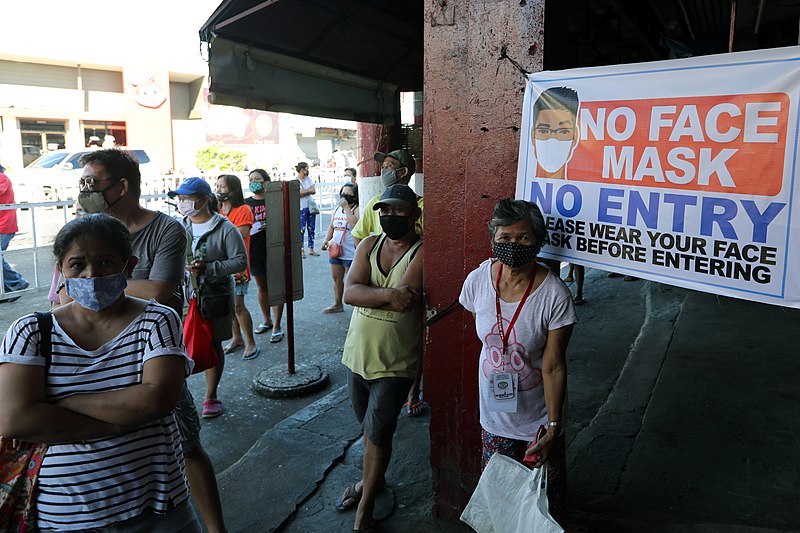
- Mask use: In the studies reviewed, most authors report some level of willingness to wear masks in the community, with higher levels of compliance amongst women, older adults (aged > 50 years), the highly educated (results are inconclusive in some studies), those who are married, and adults with poor self-rated health and/or home duties. When it comes to cues to action, it has been suggested that corporate knowledge of outbreaks, social acceptance, and perceived pressure from different sectors, including employers, mass media, government, and family, can all play a role in influencing compliance. One suggestion: "In communicating about the use of facemasks, efforts should be made to normalize the behaviour, to reduce the risk of discrimination or stigma targeted at those that are exempted from use (for physical or mental health reasons) and which continue to focus on the community being part of the solution."
- Hand washing/hygiene: Much of the behaviour is automatic, habitual, cultural, or determined by stimuli that are not open to conscious scrutiny. Other factors that influence this behaviour include: gender, social facilitation, modelling by people who may have perceived influence (social diffusers), and environmental barriers. One suggestion: Hand washing/hygiene educational materials whould incorporate positive emotional cues or social norm appeals rather than fear-based messaging.
- Respiratory etiquette: Studies have found that the message of covering one's sneeze with an elbow or arm (in the absence of a tissue) was not having the desired behavioural impact. One suggestion: Mass media and the use of targeted social media campaigns may help to normalise this behaviour.
- Isolation and quarantine: In the past, compliance with quarantine has been linked to certain life circumstances, such as educational status, work-related and financial concerns, family needs, and the behaviours of others. A range of attitudinal factors has also been associated with compliance with quarantine, including perceived susceptibility, perceived efficacy, and trust in authority. During the severe acute respiratory syndrome (SARS) outbreak and the 2014 Ebola outbreak, it was reported that those under quarantine reported fear, loneliness, boredom, and anger. These factors can be amplified by the duration of quarantine, fear of infections, inadequate supplies, and unclear information and communication. During SARS, Canadian residents who participated in focus group sessions stressed that, to create an environment for compliance and to justify the use of restrictive measures, measures must be proportional to the risk that is perceived by the public. One suggestion: Ensure that the communication about the situation (e.g., quarantine) does not only come from external agents; instead, use local knowledge and practices of the community to create an environment of dialogue - e.g., by working with and through local leaders such as religious and community leaders.
- School closure (childcare, primary/secondary school): Studies conducted during the H1N1/A 2009 influenza pandemic found that parents may lack the motivation or willingness to comply with measures because: they may not believe that school closure will have any impact; they may not understand the rationale for the action; they may not feel that their children are at risk for the infection; and they may not understand the requirements. Loss of income (economic strain) due to family members needing to take time off work to care for out-of-school children was one of the key issues reported in previous outbreaks. Self-care has been found (in non-outbreak/pandemic situations) to expose children to various types of elevated risks. Another barrier is that closing schools in the event of a pandemic could leave children without access to school-based nutrition programmes. One suggestion: Public health officials should clearly communicate with parents both why the intervention (school closure) is necessary, and what the benefits to the community will be; the same messages need to be delivered by the schools, as they may be a trusted agent in some communities.
Drawing on the COM-B model, the barriers identified in this narrative review were mapped across the three elements of capability, opportunity, and motivation and suggested communication interventions (e.g., "Communicating about the positive impact on communities from high levels ofengagement - emphasizing social norms around the practices, that they represent the right and socially responsible thing to do"): See Table 1 in the paper.
In discussing the findings, the authors observe that compliance with NPIs reflects the interaction of a range of modifiable and nonmodifiable factors, including the availability of resources, socioeconomic status, perceived consequences that could result, and perceived level of personal and local community risk. A dominant theme that emerged in the literature is how to create an environment that supports and promotes adoption. To support an approach that is grounded in rewards or suasion rather than compulsion or punishment, the authors suggest that: strategies are proportional to the threat; members of compliant communities are offered reciprocal arrangements; and there is clear and transparent communication from key stakeholders.
Notably, for some of the issues identified in this review, a solution focused on supporting behaviour change is not straightforward. For example, the promotion of self-imposed home curfews assumes that people have the luxury to take time off, as they can access sick leave benefits or can work remotely. A short-term solution would be to encourage businesses to implement company policy that protects the jobs of people who are required to take time off.
Another challenge is that health literacy levels (or the skills needed to obtain, understand, and process information) vary across communities. As an impact of lower health literacy, people are less likely to access services or to understand the issues related to their health. During a pandemic, this may equate to mistrust in the recommendations and/or misunderstandings about risk, as well as lower levels of uptake of recommended interventions. Complicating this picture is that, in the whirlwind of COVID-19 facts and fiction, simply knowing about the risks (i.e., functional health literacy) is insufficient; individuals also need to be able to critically assess the information. Thus, the authors urge that communication approaches need to be tailored to meet the needs of intended communities, in terms of messages and dissemination strategies. For example, personal stories could be integrated into communication materials to normalise thinking about NPIs. "We also need to think carefully about how we use objectiveness and empathy, solidarity, and altruism to garner engagement."
In conclusion, the authors recommend:
- Facilitate community participation and co-design on the development of communication messages and practical materials to support those who are imposed upon to comply with these community strategies.
- Map the strategies or interventions to ensure we are addressing the relevant key individual and contextual factors that have been identified in this study and others.
- Ensure community voice in all the interventions that are planned.
"Working with the community to design new communication messages, community outreach initiatives and support documents will ensure that they have a higher level of authenticity and that they are received and adopted by those we need to effectively engage."
BMC Infectious Diseases (2020) 20:607 https://doi.org/10.1186/s12879-020-05340-9. Image credit: Philippine News Agency (PNA)/Joey O. Razon
- Log in to post comments