










































Girl Empower - A Gender Transformative Mentoring and Cash Transfer Intervention to Promote Adolescent Wellbeing: Impact Findings from a Cluster-Randomized Controlled Trial in Liberia
The World Bank (Özler); Population Council (Hallman); International Rescue Committee (Guimond, Rogers, Karnley); City University of New York (Kelvin)
"...findings will add to the existing knowledge base of interventions for girls in humanitarian settings, and strengthen the evidence-base for girl-centered programming more broadly" - Population Council
Liberia has high levels of interpersonal and sexual violence (SV) continue to occur, particularly in areas that saw high conflict events and fatalities during the civil war. In Nimba County, Liberia, nearly four in ten rural girls aged 13-14 years have experienced some form of sexual abuse, and nearly half indicated having experienced physical abuse. This parallel cluster-randomised controlled trial (RCT) examines the potential of adding a cash transfer component to a gender-transformative mentoring intervention in Nimba County that aimed to reduce SV among females in early adolescence.
The International Rescue Committee (IRC) implemented Girl Empower in Nimba County, Liberia, from February to November 2016. It aimed to equip adolescent girls with the skills and experiences necessary to make healthy, strategic life choices and to stay safe from sexual abuse. Girl Empower was implemented in 2 variations, called "GE" and "GE+". Both GE and GE+ consisted of (i) the 39-week Girl Empower life skills curriculum, facilitated by local female mentors, which covered these topics: sense of self; feelings and emotions; social networks; protection and safety; financial literacy; reproductive health; leadership and empowerment; and setting life goals; (ii) 8 monthly caregiver discussion groups, facilitated by IRC staff, which were intended to bolster adult supportive attitudes toward their girls; (iii) individual savings start-up for the girls, which would hopefully enable girls to avoid SV by delaying entry into unsafe sexual relationships; and (iv) capacity-building for local health and psychosocial service providers to offer quality services to survivors of gender-based violence. In the GE+ variation, the IRC added an incentive payment to caregivers tied to girls' participation in weekly sessions.
Eighty-four villages (1,216 girls) were assigned to one of 3 arms: control, GE, and GE+ (allocation ratio: 1:1:1). Follow-up data collection started in August 2017 and continued through February 2018. The Population Council evaluated 7 key outcomes and sub-indexes across the 3 arms, including SV, schooling, psychological well-being, gender norms, life skills, sexual and reproductive health (SRH), and protective factors, such as social capital.
The primary outcome was SV, the self-reported rates of which are very high in the study population: For example, 33.0% reported having been raped during the 24-month period between baseline and endline data collection. Almost everyone (94.8%) reported having experienced physical violence during the same period. Neither GE nor GE+ had a statistically significant effect on the SV index (or on physical violence). Per the researchers: "As the program did not increase the protective factors surrounding adolescent girls - the social network of program beneficiaries was not affected, nor were the caregivers' gender attitudes or their aspirations for the girl children - it is perhaps not surprising that the incidence of sexual violence experienced by program beneficiaries did not decline..."
However, both intervention arms had moderate and statistically significant effects on 3 domains: gender attitudes, life skills, and SRH. The effects of both GE and GE+ were above 0.2 standard deviation SD for all 3 indices, and as large as 0.37 SD for the SRH index in GE+. Beneficiaries of both programmes were less likely to be accepting of intimate partner violence (IPV), and they showed a better understanding of condom effectiveness, HIV/AIDS, and financial matters. They were also 3.6 percentage points (or 46%) less likely to be married, had a lower number of sexual partners (0.58 fewer partners, 43% lower), and were more likely to practice safer sex compared with the control group. The effect size on the SRH index, as well as each of its components, was approximately 50% higher in GE+ than GE. GE+ reduced the likelihood of marriage and the number of sexual partners in the past 12 months by more than 50%.
The researchers had predicted that GE+ would be more effective than GE due to the small cash incentives for attendance, which they thought would increase programme participation. However, attendance was similarly high in both GE and GE+. While the cash incentives increased the likelihood of caregivers attending the monthly sessions, it does not seem that the modest increase in caregiver attendance (6.80 vs. 7.45 out of a total of 8 sessions) can explain the differential effects on SRH. As mentioned above, the programme had no effect on caregivers' gender attitudes or their aspirations for the girl children. One way to explain the higher impacts on SRH in GE+ than GE is that "the additional income provided the space for the GE + participants to better internalize the lessons from the mentoring program and to reinforce their newly obtained knowledge and skills towards sustained behavior change."
In conclusion: "The study showed that Girl Empower could equip adolescent females with important life skills, positively influence their gender attitudes, and, perhaps most importantly, improve their sexual and reproductive health, all of which were sustained 12 months after the end of the program. Small incentive payments for regular attendance were effective in enhancing the impact of the program on SRH....It is also important, however, to identify how programs like Girl Empower can be modified or enhanced to reduce the sexual abuse of adolescent girls, the rates of which are unacceptably high, especially in conflict and post-conflict settings like the one studied here."
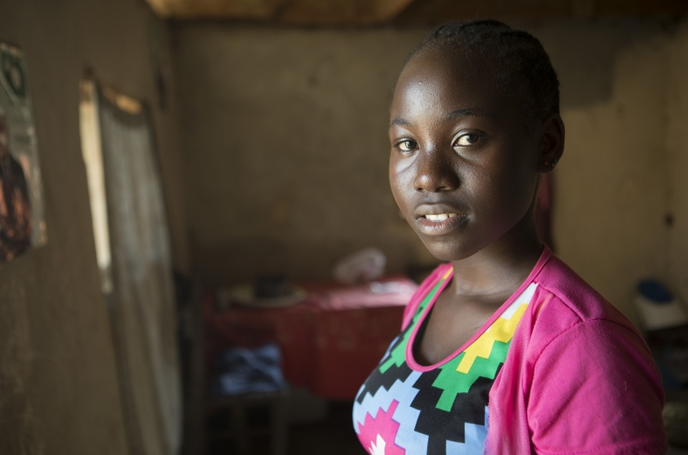
SSM - Population Health Volume 10, April 2020, 100527 https://doi.org/10.1016/j.ssmph.2019.100527; and Population Council website, November 14 2022. Image credit: © Sarah Grile/International Rescue Committee
- Log in to post comments