










































Enhancing Global Health Communication during a Crisis: Lessons from the COVID-19 Pandemic
City University of New York, or CUNY (Ratzan, Rauh); Editor in Chief, Journal of Health Communication: International Perspectives (Ratzan); University of South Florida (Sommariva)
"...features of the media environment and the way people engage with the news call for a revision of the risk communication guidance during a public health crisis..."
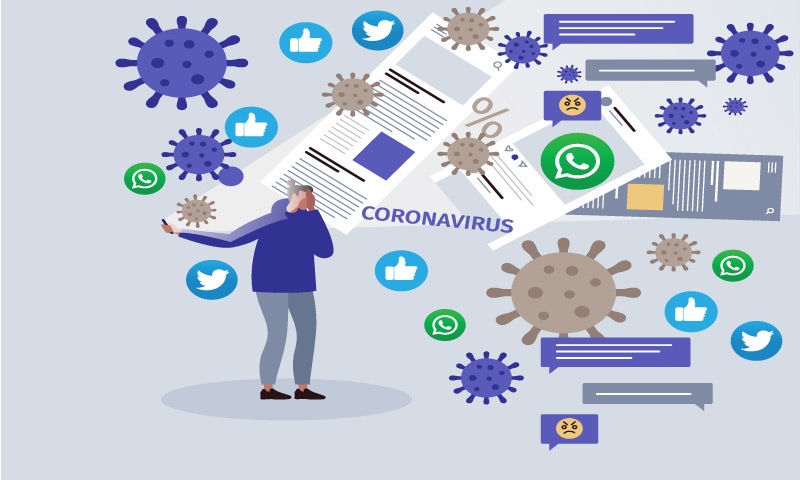
The COVID-19 pandemic has introduced challenges for health communicators, including the increasing amount of false content circulating on social media platforms. For example, rumours of safety scares and conspiracies relating to a potential COVID-19 vaccine have led social media outlets to take active measures to limit misinformation. This article adapts key principles of health communication in light of the challenges that have emerged during the COVID-19 pandemic, using as its framework previous works written for the 2014 Ebola crisis and the mad cow disease outbreak in the mid-1990s. The perspectives offered in this paper reflect challenges presented by the communication environment in the United States (US) in particular, though many platforms (e.g., social media) have international reach, and the communication checklist included within it is applicable elsewhere.
The paper draws on findings from a CUNY COVID-19 tracking survey, which assessed how people in New York State, US, are responding to the pandemic, including their attitudes towards a potential vaccine - "a key area that calls for strengthened communication". The phone, online, and mobile text messaging (SMS)-to-online survey involved a representative sample of 1,000 adults in New York City and a sample of 1,000 for the entire state, surveyed at regular intervals over 16 weeks beginning on March 13 2020.
Three general areas of capacity building for health communication emerge from the ongoing pandemic:
- Be proactive - Health communicators may need to compete for attention of their audience while they position their messages in the context of a diverse media environment. This may involve finding ways "to be louder by speaking to those most vulnerable to misinformation with the information most meaningful to them." In the CUNY tracking survey, 66% of respondents reported that the side effects of a potential COVID-19 vaccine were worrisome for them. This vulnerability to mis/disinformation about vaccine safety could provide incentive and direction for proactive health communications to stand out. Health communicators are called to revise their strategies to respond to inaccuracies that are already circulating, while also picking up on early signals of rumours and preventing them from spreading further. Findings from the survey also highlight the importance of establishing trust between governments and the public, with 65% of respondents indicating they had grown extremely suspicious of the COVID-19 situation. In a country like the US, which has lacked one firm voice as the source for accurate and clear information, government and public health leaders will face challenges in persuading the public to accept a potential COVID-19 vaccine when or if it becomes available.
- Plan ahead, but acknowledge the uncertainty - The urgent desire for more information on COVID-19 risks creating a dangerous environment in which the wrong information can spread rapidly while people seek answers. In the CUNY tracking survey, 75% of those unwilling to take a COVID-19 vaccine expressed a desire to wait to find out whether or not it is effective. When articles that are published before undergoing traditional peer-review processes find their way into the news media stream and then are later debunked, the result is confusing public-facing messaging that could undermine trust in scientific evidence and have a disastrous effect on vaccine uptake.
- Focus on people - "Given the role of social media users in creating and disseminating information, it is crucial to engage them in positive health information seeking and sharing behaviours. In the age of social media (with each platform being distinct in patrons and content),...make sure that users know how to navigate online platforms in order to access and accurately judge the information they see...."
In light of the health communication challenges and practices that have emerged during the COVID-19 pandemic, the paper features a checklist of principles for effective global health communication practices:
- Set shared goals - e.g., plan for monitoring and evaluation, assigning tasks and building an infrastructure for continuous information sharing on the ongoing progress.
- Establish coordinated response - e.g., build a network of partnering institutions and organisations and an intranetwork communication infrastructure to share information in real time.
- Devise a communication strategy - e.g., develop and pre-test simple, clear, and user-centred messages that need to be conveyed to the audience(s) and that can be adapted to different formats (visual, audio, video, etc.) and platforms, including community-based and grassroots channels.
- Implement the communication plan - e.g., monitor trends in online discourse to detect early signals of misinformation and disinformation, as well as to better position the ongoing communication activities.
- Be ready to adapt - e.g., be aware of (and monitor) how prevention messages may be perceived in diverse sociocultural contexts, providing science-based guidance while leaving room for communities to adapt and find creative solutions to specific contextual constraints.
In conclusion, "the checklist presented in this paper is intended to be used as a tool for preparation as well as a tool for implementation of communication strategies to move from the acute phase of the pandemic to the 'next normal'. It is critical that health communicators worldwide are more proactive in tackling risk communication challenges related to COVID-19, with likely prevention achieved through vaccination and societal COVID-19 resilience."
Public Health Research & Practice. 2020;30(2):e3022010. https://doi.org/10.17061/phrp3022010. Image credit: Saad Arifi
- Log in to post comments