










































Eastern and Southern Africa Regional Study on the Fulfilment of the Right to Education of Children with Disabilities
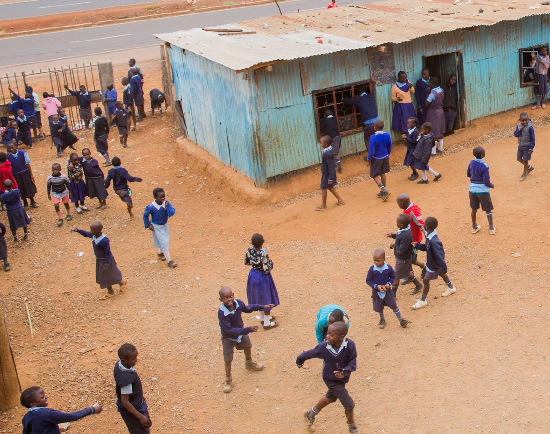
“While worldwide 93 million children (5 per cent) aged 14 or younger live with a moderate or severe disability of some kind, in sub-Saharan Africa a higher percentage of children (6.4 per cent) have a disability. Meanwhile, as many as one third of the 58 million children who are out of school globally are children with disabilities, and more than half of these live in sub-Saharan Africa.” Leila Gharagozloo-Pakkala, Regional Director, Eastern and Southern Africa, United Nations Children’s Fund
This report shares the findings of a regional study that sought to generate evidence on the status of the fulfilment of the right to education of children with disabilities of pre-school, primary, and lower secondary school age in 21 countries in Eastern and Southern Africa. The research was conducted by the Education Development Trust (Formerly CfBT Education Trust) and the United Nations Children’s Fund (UNICEF) Eastern and Southern Africa Regional Office (ESARO) between December 2014 and August 2015. It is UNICEF’s hope that this regional study can assist policymakers, child protection specialists, and education practitioners to assess the situation in their own country and benefit from the good practices and systems that are supporting education for children with disabilities in the region.
The research includes a desk-based study of the 21 countries covered by UNICEF ESARO to investigate the fulfilment of the right to education of children with disabilities across the region. Accompanying this research are detailed studies on the Republic of Madagascar, the Republic of Rwanda, and the Union of the Comoros, which provide a more in-depth analysis of the realisation of the right to education of children with disabilities (see links to individual studies below).
The research findings are analysed according to the following three domains of barriers and bottlenecks that prevent access to education for disabled children:
- Enabling factors (conventions, policies, plans, institutional frameworks, coordination mechanisms, stakeholder organisations, and coordination and collaborations between ministries).
- Supply-side factors (identification of disabilities, screening, monitoring of progress, modalities of provision, curricula development, capacity in teaching resource, technical support, and understanding and accommodating gender factors).
- Demand-side factors (social norms, stakeholder attitudes, and encouragement for families to engage with educational opportunities for children with disabilities).
The following are a selection of some of the findings:
Enabling environment: Although many countries have signed and ratified the UN Convention on the Rights of Persons with Disabilities (CRPD) and allocated responsibility to their ministries, the findings showed that it is not always clear where central responsibility for the education of children with disabilities lies. Spreading the responsibility without clarity and accountability could result in a climate in which each ministry is unsure of its role, and services are not delivered effectively. There is also very little data on the numbers of children with disabilities, and there is no coherent system to identify and categorise disabilities.
Supply side: The research showed that an inclusive education approach is the dominant strategy for providing education to children with disabilities. However, there appears to be a rhetoric-reality gap, as no evidence was found that documents the commitment to implement such an approach - such as the provision of teacher training for inclusive education as a mainstream activity. There is also limited work on training teachers in the delivery of inclusive education, and the impact of the training is not known. The evidence from the country studies also suggests, among other things, that: schools are not always willing to enrol pupils with disabilities, and there are no incentives or penalties; specialist provision is not always available locally; there is no system for placement of children with disabilities in appropriate schools; and there is inadequate specialist teacher support. The research also looked at the role of non-state actors and showed that they were often active in conducting surveys and awareness-raising campaigns, implementing projects and programmes, and offering legal aid and training.
Demand-side conditions: The country case studies reveal persistent stigma of persons with disabilities, including from parents themselves. Parents sometimes do not prioritise education for children with disabilities and often have difficulty in accepting they have a child with a disability and are unwilling to engage the child in public and community life, given the associated stigma. Research also showed that stigmatisation of children with disabilities can be compounded by issues such as having no school uniform (due to poverty or discrimination by parents) and left handedness. Being a girl with a disability can also mean facing double the sense of discrimination and marginalisation (being female and having a disability), leading to lower confidence and engagement of girls with disabilities in education, and increased risks such as sexual abuse.
The report provides a list of recommendations for action to promote the rights of children with disabilities to education. The following us a selection of these recommendations (based on the Executive Summary):
Enabling environment
- Continue to develop and implement national polices to support the right of children with disabilities to access education and succeed in school.
- Legislation and policies should be reviewed to check for consistency with the CRPD for states that have ratified the convention, and advocacy conducted to encourage non-signatory states to ratify the CRPD and protocol.
- Legislation and policies in the field of education and disability should be easily accessible online with stable web addresses to enable organisations to hold governments to account. Legislation and policies should be made widely available to stakeholders at all levels.
- Implement robust collection and sharing of data about children with disabilities at the national level and in the education system, particularly the use of Education Management Information System (EMIS). This should be based on the creation and use of clear and pragmatic categorisations (and their associated definitions) of disability.
Supply-side conditions
- Implement procedures for early and ongoing identification of children with disabilities, in coordination with health, Community-Based Rehabilitation (CBR), and education agencies. This requires comprehensive and practical definitions of disability.
- Provide disability-friendly school facilities that are close to the community.
- Provide teaching and learning materials that are adapted or appropriate for different types of disabilities.
- Train teachers to ensure that schools offer inclusive education. For example, all mainstream teachers should have some specific knowledge about disability awareness, identification of signs of probable hearing and visual impairments, and how to obtain further knowledge as required to teach a particular child with a disability in their class.
- Conduct evaluations of the programmes of non-state actors to ascertain the effectiveness of support so that good practice can be identified and transferred.
- Ensure that the activities and efforts of international non-governmental organisations (INGOs), NGOs, civil society organisations (CSOs), and disabled persons' organisations (DPOs) are coordinated and used strategically to achieve national objectives related to the fulfilment of the right to education for children with disabilities.
Demand-side conditions
- Alleviate financial burdens on families who are unable to access education because of poverty.
- Sensitisation of parents, caregivers, and communities is vital in recognising the right to education for every child, including children with disabilities, given the stigma and cultural attitudes towards disability.
- Collect good data to support understanding of the relationships between disability and poverty, gender and security, and the ways in which these factors affect children with disabilities, and the extent to which they further reduce the demand for education from children with disabilities.
Click here to download "A study on children with disabilities and their right to education: Union of Comoros".
Click here to download "A study on children with disabilities and their right to education: Madagascar."
Click here to download "A study on children with disabilities and their right to education: Republic of Rwanda"
UNICEF ESARO website on May 22 2017.
- Log in to post comments