










































Deconstructing Development Discourse: Buzzwords and Fuzzwords
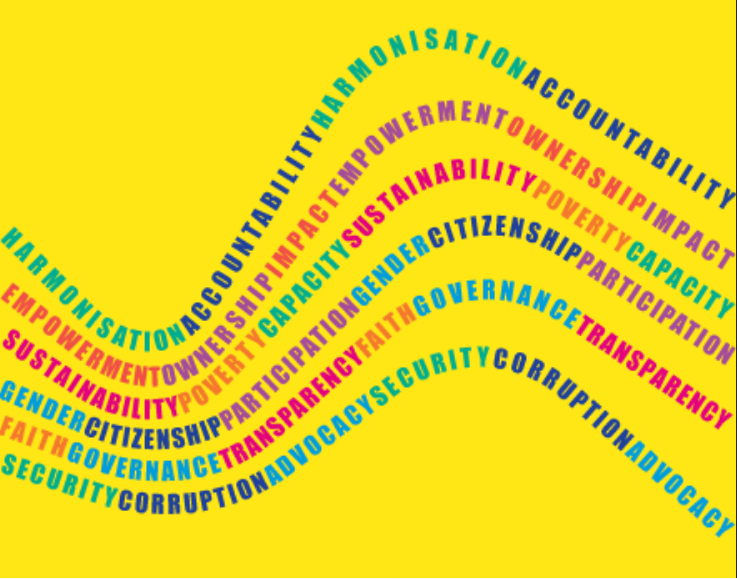
"...buzzwords serve to numb the critical faculties of those who end up using them, wrapping up all manner of barbed policies and practices in linguistic cotton wool."
This collection of essays examines some of the key terms in current development discourse. Published by Practical Action Publishing in association with Oxfam GB, it attempts to deconstruct the language of development through "Gramsci’s notion of cultural hegemony, whereby the values of the ruling culture - in this case, the captains of the Development Industry - capture the ideology, self-understanding, and organisations of the working class - in this case, those whose lives are most significantly affected by international development policies and by the ministrations of development assistance."
Originally published as a special double issue of Development in Practice journal, the book looks at the language of development buzzwords that can conceal ideological differences or "sloppy thinking" and intends to show that the process of "constructive deconstruction” makes it possible to re-examine terms like "civil society", "poverty reduction", "partnership", or "empowerment". The reflections included are aimed to raise questions on how people think about development itself.
The first essay names the word "development" "an unavoidable password" and suggests that other buzzwords represent contested concepts. Some become part of the language of evasion, or "fuzzwords", and many relate to: a) relationships, such as: partners, networks, social capital, and civil society; b) remedies, such as "harmonisation"; c) ideology, such as: good governance or security; and d) approaches, such as power- or pleasure-based approaches. However, following the thinking of French philosopher and historian of ideas Michel Foucault on language, the use of terms is "strategically reversible"; thus, words can be reclaimed by social movements. "Dislocating naturalised meanings, dislodging embedded associations, and de-familiarising the language that surrounds us becomes, then, a means of defusing the hegemonic grip...."
The essays that follow select specific terms for deconstruction, such as "development", globalisation", "social capital", civil society", "participation", "best practices", and "poverty reduction", among others. They analyse terminology changes over time, examine concepts such as "faith-based", "secular", and "country-ownership". They discuss language used in the concepts of security, of knowledge management, and of "transparency and accountability". They look at the use of language in social change and non-governmental organisations.
The final section gives a 56-word lexicon of development terms arranged in 4 columns. "Advertising executives and businessmen are very familiar with these ‘Buzzwords’ - words which make a pleasant noise but have little explicit meaning. One property of these words is that they may be combined into almost infinite permutations and still ‘mean’ something....These may be immediately recognisable, but what do they mean? If two or three people were each to write a paragraph explaining one of these phrases to the masses, on behalf of the government of Ruritania, their different interpretations should bear further witness to the malleability of such language."
Oxfam Publications website, November 2010 and March 3 2020.
- Log in to post comments