
























Development action with informed and engaged societies

After nearly 28 years, The Communication Initiative (The CI) Global is entering a new chapter. 

Following a period of transition, the global website has been transferred to the University of the Witwatersrand (Wits) in South Africa, where it will be administered by the Social and Behaviour Change Communication Division. Wits' commitment to social change and justice makes it a trusted steward for The CI's legacy and future. 

On the transfer, co-founder Victoria Martin expressed her pleasure to see this work continue under Wits' leadership, knowing that co-founder Warren Feek (1953–2024) would have felt deep pride in The CI Global's Africa-led direction. 

As Wits, we honour the team and partners who sustained The CI for decades and look forward building from that strong base. This includes co-founders Warren Feek (1953-2024) and Victoria Martin as well as La Iniciativa de Comunicación (CILA), which continues independently at lainiciativadecomunicacion.com with links to The CI Global site. We are also eager to forge new partnerships and entertain new ideas as we consider how best to contribute to social and behaviour change in our rapidly evolving environment.

If you are joining the International Social and Behaviour Change Communication (SBCC) Summit in Panama, please join Wits and CILA on Monday, 22 June, to share your thoughts and suggestion for the relaunch of the Communication Initiative. We will be in Pacifica 5 from 12-1:25 for the Refuel, Reflect, and Renew Lunch Series: The Communication Initiative: celebrating a driving force for Communication for Social Change and the way forward. We will reflect on the legacy of Warren Feek and family in creating the Communication Initiative, consider the contributions of CI over the years and then turn our attention towards the future in this dynamic session. 

If you are unable to join us in Panama, we still want to hear from you. Please contribute your thoughts by following this link: https://redcap.link/CommunicationInitiative2026 or reaching out to ci_surveys@commint.com

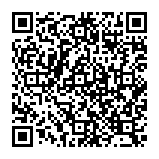
You can also follow the QR Code:

 https://redcap.link/CommunicationInitiative2026

Time to read
1 minute
Read so far

Cross Border Malaria Initiative (CBMI)

0 comments

In July 2010, Christian Aid launched the Isdell: Flowers Cross Border Malaria Initiative (CBMI). The project works in four districts bordering on Namibia and Angola to prevent and treat malaria using a community-based network of 100 trained community volunteers known as Malaria Control Agents (MCAs). Co-funded by the JC Flowers Foundation, Coke Africa Foundation, and others, and implemented in partnership with the Zambia Anglican Council (ZAC), activities include distributing insecticide-treated nets and educating families on the signs and symptoms of malaria.

Communication Strategies

The CBMI was initiated to contribute to the wider coordinated national effort that seeks to end malaria-related deaths and to eliminate the impact of the disease altogether in Zambia. Malaria Control Agents (MCAs) are elected by, and work within, their own communities. According to the project, this ensures that their position is respected, their advice well received and that they are always on hand for help and assistance.

The scheme's initial goal was to reduce malaria prevalence by 40% in these areas by December 2011. Another objective of the CBMI is to stop the disease from spreading across porous national borders. Making use of the strength of church networks across the borders with neighbouring countries, such as Angola and Namibia, the project seeks to help to establish a coordinated effort to ensure that malaria is controlled on both sides of the border.

Development Issues

Malaria

Key Points

One in every five childhood deaths in Zambia is due to malaria, and one out of every four outpatient cases in Zambia is attributable to the disease, creating a burden on the government's health system.

Partners

Christian Aid, JC Flowers Foundation, Coke Africa Foundation, Zambia Anglican Council

Sources

Christian Aid website on June 8 2012.