










































COVID-19 Behavioural Drivers and Patterns: A Longitudinal Assessment from the South Asia Region
"The COVID-19 global pandemic (and its reliance on the adoption of individual and collective behaviours as a means to reduce transmission and take up vaccination) threw social and behavioural science into the limelight, demonstrating the urgent need to understand the people UNICEF was attempting to reach."
Effective management of COVID-19 depends on communicating about the pandemic; encouraging people to get vaccinated against the virus; improving people's knowledge, attitudes, behaviours, and practices about it; and engaging communities and local organisations, networks, and influencers in emergency response. However, a "one-size-fits-all" approach to risk communication and community engagement (RCCE) may fail to account for the evolving nature of perceptions and behaviours in particular contexts. In response to the need for social and behavioural data to inform RCCE in South Asia during COVID-19, the United Nations Children's Fund (UNICEF)'s Regional Office for South Asia (ROSA) undertook a community rapid assessment (CRA) initiative in Afghanistan, India, Nepal, and Pakistan. This report provides insights and trends gleaned from the CRAs.
The CRA was designed around the UNICEF Behavioural Drivers Model (BDM), which aims to help practitioners inform programme design by moving beyond identifying what people are doing to understanding why people do what they do in a given context. Dimensions include: prevalence of protective behaviours and the barriers to adopting them; perceptions about risk; trust in institutions, community groups, and information channels; coping strategies and emerging needs; and willingness to be vaccinated, among others.
The overall survey design varied between the four countries. Repeated cross-sectional surveys were implemented in Pakistan, India, and Afghanistan, while a panel survey is used in Nepal. UNICEF used remote data-collection technologies such as phones, interactive voice response (IVR), and online surveys. Data across countries were synthesised and analysed to measure associations between outcomes of interest (e.g., behaviours) and respondent characteristics. Initial analysis used data from Afghanistan, Nepal, and Pakistan covering the period August to December 2020 (presented in an interim report - see below). This process was expanded to also cover the India CRA and data up to April 2021, with an additional thematic focus on vaccine acceptance. (One of the objectives of the CRA is to learn about the generation and use of rapidly produced citizen- and community-sourced, time-series data. Table 5 on page 15 of the report summarises the strengths and limitations of the CRAs.)
The report presents data on:
- COVID-19 vaccine willingness (chapter 4) - Sample findings:
- Data for all four countries indicate that people were generally willing to get the COVID-19 vaccine, if available. The data suggest that the proportions have the potential to increase further upon advocacy by health workers; in Afghanistan, about 35% reported wanting to first get advice from their doctors.
- Amongst respondents who were not willing to get the vaccine, the most common reasons were: fear of side effects, fear that the vaccine was ineffective, desire to get natural immunity, and the inclination to wait and see how things unfolded.
- In both India and Pakistan, respondents who trusted the effectiveness of government efforts to provide the COVID-19 vaccine were more than three times more likely to report willingness to get a COVID-19 vaccine compared to their counterparts who did not trust the government efforts. Furthermore, respondents who trusted the information from the government about the vaccine were approximately five times and two times more likely to report vaccine willingness in India and Pakistan, respectively.
- Risk perception of COVID-19 (chapter 5) - Sample findings:
- Data from all countries indicated that individual risk perception regarding COVID-19 infection was low and dropped significantly over time. For example, risk perception decreased in Nepal from 48% in August 2020 to 28% in January 2021 and in Pakistan from 59% in August 2020 to 41% in March 2021.
- In Pakistan, respondents who reported receiving information on COVID-19 "all of the time" were significantly more likely to report individual risk perception for COVID-19 infection (25%) compared to their counterparts who reported never receiving information. Similarly in India, respondents who received "a lot" or moderate information were 50% more likely to report individual risk perception for COVID-19 infection compared to those who received little or no information. These findings emphasise the importance of relaying information on COVID-19 regularly.
- Across countries, factors associated with the likelihood of respondents perceiving themselves at risk varied, which highlights the importance of disaggregating COVID-19 risk data along several dimensions (gender, age, urban vs. rural, etc.). The availability of such disaggregated data can help tailor social and behaviour change (SBC) and community engagement (CE) interventions to local conditions and needs.
- Information, communication, and trust (chapter 6) - Sample findings:
- Overall, radio and TV remained the most trusted sources of information on COVID-19 in all countries except in the five survey states in India where the radio was not popular. Also, other sources were cited by sizeable proportions, including mobile ringtones and social media.
- In Afghanistan, around 75% reported reading or hearing nothing or little about COVID-19 in the previous week (February to March 2021 data).
- In Pakistan, in contrast to the other countries, the frequency of receiving COVID-19 information varied substantially between groups (more urban and older respondents indicated learning frequently about COVID-19 or having received enough information). Furthermore, 73% of respondents trusted information provided by the government about COVID-19, while 56% thought that what the government was doing was effective against COVID-19, and 74% trusted in information provided by the government about the COVID-19 vaccine.
- Protective behaviour against COVID-19 (chapter 7) - Sample findings:
- The most common barriers to practice of protective behaviours against COVID-19 (including staying at home) cited by respondents were socio-economic (fear that practicing protective behaviour puts jobs and relationships at risk) or material in nature (lack of infrastructure such as running water, or overcrowded neighbourhoods).
- In Afghanistan, Nepal, and Pakistan, respondents who perceived themselves at risk of COVID-19 infection were more likely to indicate using protective behaviour against COVID-19 compared to those who did not perceive themselves at risk.
- In India, respondents who trusted local healthcare providers were more likely to report practicing handwashing to avoid COVID-19 infection.
- Receiving regular information on COVID-19 weekly was significantly associated with the practice of COVID-19 protective behaviour in India and Pakistan.
In conclusion, the CRA data from Afghanistan, India, Nepal, and Pakistan "have helped unpack the factors that influence individual willingness to get the vaccine and collective behaviours related to COVID-19 to avoid misalignment of efforts. Recognizing that behaviour and social change are complex phenomena, further providing insight into public opinion, levels of trust and engagement mechanisms which will enable better programme strategies that are community-responsive and people-centred."
Editor's note: Also available is an interim report (July 2021), COVID-19 Behavioural Drivers and Patterns: Early Insights from the South Asia Region - Findings from Afghanistan, Pakistan and Nepal [69 pages, PDF], and an 8-page summary [PDF] of the July 2021 interim report.
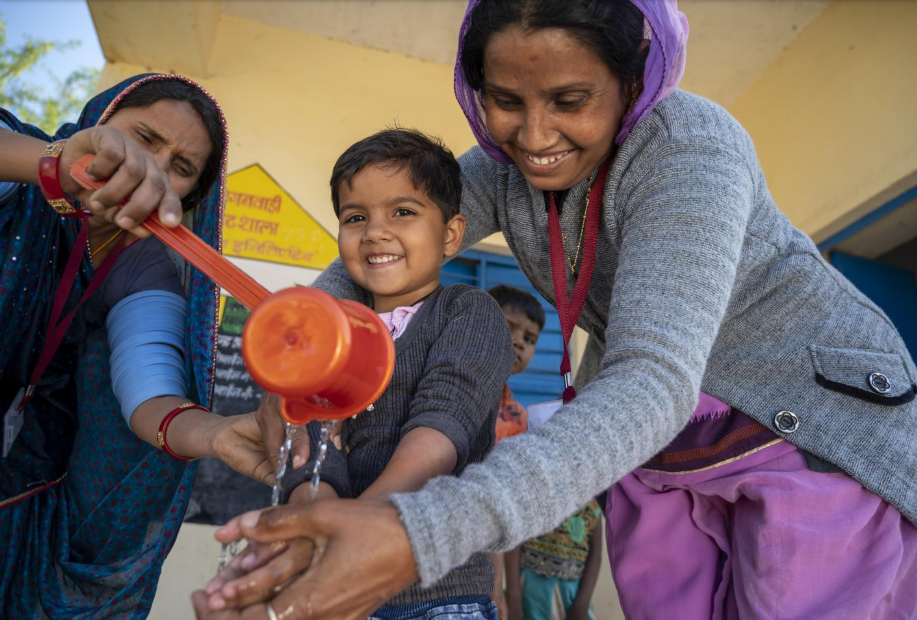
UNICEF ROSA website, February 10 2022. Image credit: © UNICEF/UN0389268/Panjwani
- Log in to post comments