











































Communicating Risk in Public Health Emergencies
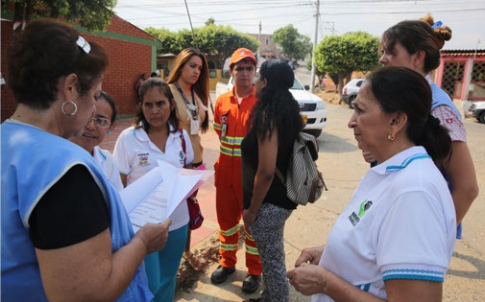
Created by the World Health Organization (WHO) Department of Infectious Hazard Management in collaboration with the WHO Department of Communications, the recommendations in this resource provide overarching, evidence-based guidance on how risk communication should be practised in an emergency. The recommendations also guide countries to build capacity for communicating risk during health emergencies under the International Health Regulations and Pandemic Influenza Preparedness Framework. The guidelines were developed for policy- and decision-makers responsible for managing emergencies, particularly the public health aspects of emergencies, and practitioners responsible for risk communication before, during, and after health emergencies.
In one of the opening sections of the document that provides background and context for the recommendations that follow, WHO explains why risk communication is an integral part of any emergency response. In short, accurate information provided early, often, and in languages and channels that people understand, trust, and use, enables individuals to make choices and take actions to protect themselves, their families, and communities from threatening health hazards. It also allows authorities and experts to listen to and address people's concerns and needs so that the advice they provide is relevant, trusted, and acceptable.
However, recent public health emergencies have highlighted major challenges and gaps in how risk is communicated. The challenges include the rapid transformation in information and communication technology (ICT), including the near-universal penetration of mobile telephones, the widespread use and increasingly powerful influence of digital media, which has had an impact on "traditional" media (newspapers, radio, and television), and major changes in how people access and trust health information. Gaps include considerations of context - the social, economic, political, and cultural factors influencing people's perception of risk and their risk-reduction behaviours. Finally, guidance is needed on the best approaches for strengthening emergency risk communication (ERC) capacity and sustaining them for potential health emergencies.
Recommendations fall into these categories:
A. Building trust and engaging with affected populations
- A.1. Trust
- A.2. Communicating uncertainty
- A.3. Community engagement
B. Integrating ERC into health and emergency response system
- B.1. Governance and leadership
- B.2. Information systems and coordination
- B.3. Capacity building
- B.4. Finance
C. ERC practice
- C.1. Strategic communication planning
- C.2. Monitoring and evaluation tools
- C.3. Social media
- C.4. Messaging
The WHO Health Emergencies Programme is using the guidelines with frontline responders and sharing it with local, national, and international development partners, civil society, the private sector, and all organisations, private and public, involved in emergency preparedness and response. The guidelines will be translated into all United Nations (UN) official languages (Arabic, Chinese, French, Russian, and Spanish), as well as Portuguese. They will also be translated into local languages used in countries experiencing, or at high risk of, disease outbreaks and epidemics.
78
Email from Mara Frigo to The Communication Initiative on January 12 2018; and WHO website, January 12 2018. Image credit: WHO/U. Zhao
- Log in to post comments