
























Development action with informed and engaged societies

After nearly 28 years, The Communication Initiative (The CI) Global is entering a new chapter. 

Following a period of transition, the global website has been transferred to the University of the Witwatersrand (Wits) in South Africa, where it will be administered by the Social and Behaviour Change Communication Division. Wits' commitment to social change and justice makes it a trusted steward for The CI's legacy and future. 

On the transfer, co-founder Victoria Martin expressed her pleasure to see this work continue under Wits' leadership, knowing that co-founder Warren Feek (1953–2024) would have felt deep pride in The CI Global's Africa-led direction. 

As Wits, we honour the team and partners who sustained The CI for decades and look forward building from that strong base. This includes co-founders Warren Feek (1953-2024) and Victoria Martin as well as La Iniciativa de Comunicación (CILA), which continues independently at lainiciativadecomunicacion.com with links to The CI Global site. We are also eager to forge new partnerships and entertain new ideas as we consider how best to contribute to social and behaviour change in our rapidly evolving environment.

If you are joining the International Social and Behaviour Change Communication (SBCC) Summit in Panama, please join Wits and CILA on Monday, 22 June, to share your thoughts and suggestion for the relaunch of the Communication Initiative. We will be in Pacifica 5 from 12-1:25 for the Refuel, Reflect, and Renew Lunch Series: The Communication Initiative: celebrating a driving force for Communication for Social Change and the way forward. We will reflect on the legacy of Warren Feek and family in creating the Communication Initiative, consider the contributions of CI over the years and then turn our attention towards the future in this dynamic session. 

If you are unable to join us in Panama, we still want to hear from you. Please contribute your thoughts by following this link: https://redcap.link/CommunicationInitiative2026 or reaching out to ci_surveys@commint.com

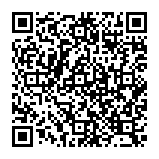
You can also follow the QR Code:

 https://redcap.link/CommunicationInitiative2026

Time to read
1 minute
Read so far

Changing Behavior to Improve People's Lives: A Practical Guide

0 comments
Image

Author

SummaryText

This resource focuses on the role of behaviour change in improving individual and social outcomes. The framework is based on the work of ideas42, an organisation that uses insights from behavioural science to design scalable solutions for social impact.

The ideas42 approach is based on the observation that many, if not most, technological solutions ultimately depend on individual behaviour. The birth control pill, invented in the 1950s, provided a technological solution to the need for contraception. But effective use of the pill requires that it be taken for three weeks with a break for the fourth. For many users, this regimen, with its irregular routine, was more difficult to follow than taking the pill every day. The behaviourally informed solution was to include a fourth week of placebos.

The core resource components correspond to the first four parts of the ideas42 framework (with the fifth being "SCALE"):

DEFINE: Identify the problem and intended outcome

  • Determining the causes of the problem
  • Identifying the beneficiaries and their needs
  • Identifying possible approaches to solving the problem
  • Eliminating approaches that seem implausible or weak under the particular circumstances
  • Identifying behavioral aspects of your theory of change

DIAGNOSE: Hypothesize barriers to target behaviors relevant to your strategy

  • Introduction: Transition from define
  • Decision-Action Map
  • Behavioral barriers
  • Decision barriers
  • Action barriers
  • Diagnosing the 'Water jug chlorination' strategy for addressing infant diarrhea
  • Transition to Design

DESIGN: Develop strategies to address behavioral barriers

  • Introduction: Transition from Diagnose
  • Brainstorming
  • Common Interventions
  • Concept selection
  • Design and Diagnose Redux
  • Unintended consequences

TEST: Testing your designed intervention through prototyping

  • Testing in the field
  • The challenge of generalizability

A case study and conclusion, the latter featuring "a word on the ethics of influence", complete the resource.

Publishers

Publication Date
Number of Pages

60

Source

ideas42 website, November 4 2019. Image credit: Denver Frederick