










































Celebrating the Female Vaccinator
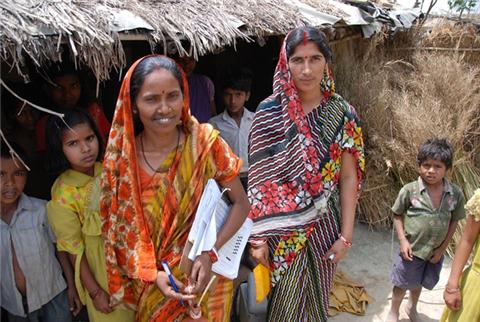
"In many countries, a vaccination team cannot function without a female vaccinator. In conservative areas, where male vaccinators can not enter the house, having a woman on the team can mean the difference between a closed door or a welcoming invitation into the home."
This Global Polio Eradication Initiative (GPEI) article explores the role of women in ensuring that polio is eradicated. Female vaccinators walk from door to door, talking to families and giving children the oral polio vaccine (OPV). "In northern Pakistan, Afghanistan or northern India, the sight of burkha-clad women tramping through the alleys with their clipboards, vaccinating children, conducting social mobilization with mothers and recording coverage is a heartening signal of how these women and their communities value the health of their children."
In India, it is estimated that 80-85% of the 2.3 million vaccinators involved during each round of National Immunization Days (NIDs) are female workers. In addition, nearly 70% of the 155,000 supervisors that oversee the work of these vaccinators are female. Furthermore, women make up most of the 8,000 members of the United Nations Children's Fund (UNICEF)'s Social Mobilization Network (SMNet), which goes door to door spreading messages about polio and routine immunisation, exclusive breastfeeding, nutrition, handwashing, and diarrhoea treatment.
As reported here, "by showing that they are willing to have their own children vaccinated against polio, vaccinators who are mothers demonstrate to wary parents that they have the children's best interests at heart. And in parts of Nigeria, where the wise words of older women are greatly respected, the inclusion of senior women in vaccination teams is having a positive effect on the number of parents who want their children to be vaccinated."
Furthermore, GPEI has found that this work has offered women an opportunity to have a respected voice as health providers in their community, as well as to find professional fulfillment through something beyond their role as wife and mother.
Image credit: F. Caillette/World Health Organization (WHO)
- Log in to post comments