










































Blue Heart Campaign
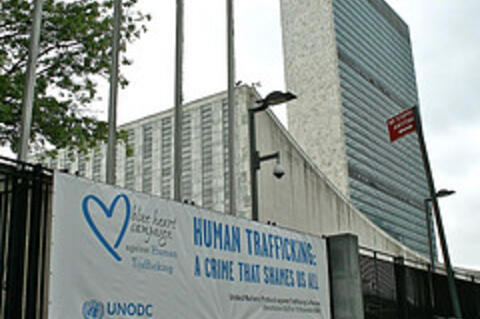
The campaign uses information and communication technology (ICT) to educate people about trafficking issues and impact, to engage in dialogue with others concerned about this "modern form of slavery", and to show solidarity with the victims of human trafficking by wearing the Blue Heart. It is a participatory cry for action: "Wear the Blue Heart on your website, your Facebook profile, your products, your publications - above all "Wear it on your heart!"
The Blue Heart represents the sadness of those who are trafficked while aiming to signify the cold-heartedness of those who buy and sell fellow human beings. The use of the blue UN colour also demonstrates the commitment of the UN to combating this "crime against human dignity". In the same way that the red ribbon has become the international symbol of HIV/AIDS awareness, this campaign aims to make the Blue Heart into an international symbol against human trafficking. Various banners with the Blue Heart symbol are available for download on the campaign website. Organisers also encourage people to change their Facebook profile picture to a Blue Heart, stay connected through twitter, or watch video on human trafficking on Youtube. By taking advantage of social networking tools, people can get involved and support the Blue Heart Campaign virtually.
Human Trafficking.
The campaign's launch came just ahead of the 2009 International Women's Day (March 8), whose theme was "Women and Men United to End Violence against Women and Girls." Speaking to the Women's World Congress, which took place in March 2009 in Vienna, Austria, the Executive Director of UNODC described human trafficking as "the worst kind of violence against women, made even more repulsive by the fact that people make money from it." While poverty makes people vulnerable to human trafficking, gender discrimination and sexism are also to blame. "Whether it's burkas or bikinis, the humiliation of women as property or sex objects is an affront to human dignity. It creates a market for women and girls who are traded like commodities," he said. The UNODC chief called on everyone to join the campaign "in order to end enslavement, and achieve women's equality."
"UN Rallies Public Support to End Human Trafficking with Blue Heart Campaign", posted to the Women's United Nations Report Program & Network (WUNRN) listserv on March 13 2009; and Blue Heart Campaign website.


- Log in to post comments