










































Advocacy for Resource Mobilization (ARM) for Malaria Guide
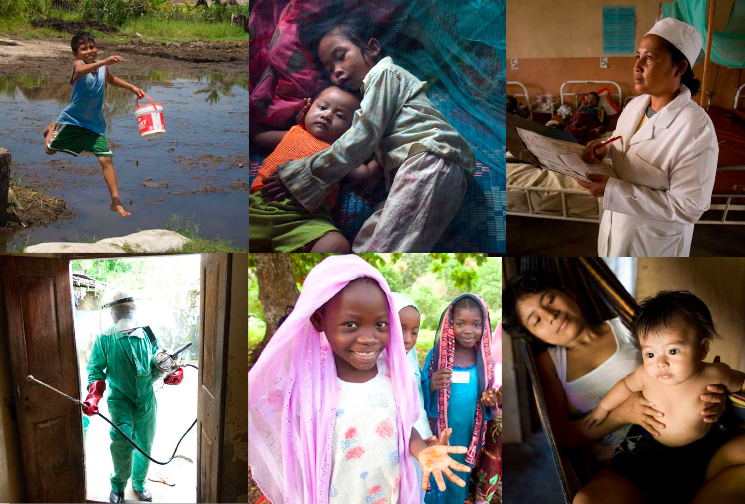
“Compelling advocacy is crucial to persuade national decision-makers to make efficient and effective use of the available resources to secure new funding from national budgets, donors, innovative financing mechanisms and the private sector. Without continued investment, the great gains in malaria could be reversed.”
Developed by the Roll Back Malaria (RBM) Partnership’s Malaria Advocacy Working Group, the aim of this guide is to provide malaria stakeholders in endemic countries with an advocacy strategy and implementation guide, case studies, and tools to assist them with mobilising resources for malaria control and elimination at the country level.
As explained in the manual, “[A]ddressing the malaria burden in a way that is effective, scalable and sustainable can only be achieved with adequate international and domestic funding streams; while global funding for malaria has increased from $200 million in 2004 to $2.7 billion in 2013, donor funding for malaria control and elimination will be insufficient to achieve the milestones set out by the World Health Organization’s Global Technical Strategy for Malaria and country-level goals and targets. Securing domestic resources in countries affected by malaria and using current donor funding more efficiently will be critical as the world moves towards malaria elimination.”
To respond to this need, the guide was developed to support in-country stakeholders to assist them to scale up malaria resource mobilisation efforts at the national and local level. These stakeholders could include government officials in national malaria control programmes or implementing partners focusing on health and malaria.
The RBM ARM Guide is organised into a five-stage process based on an advocacy model developed by the Johns Hopkins Bloomberg School of Public Health, Center for Communication Programs (JHU.CCP). The five stages are: 1) Analysing the situation, 2) Building relationships, 3) Making the case, 4) Monitoring and evaluation, and 5) Building sustainability. By following these stages and using the tools and case studies within them, implementers can build and execute a country-level advocacy strategy for malaria resource mobilisation.
The content of the guide is broken down as follows:
Purpose of this Guide
Global Malaria Landscape
- Malaria Burden
- Malaria and Development
- Defining Malaria as a Human Right
- Malaria Advocacy Model
Stage 1. Analyzing the Situation
- Analyzing the Gaps
- Using the Evidence
- Using Problem and Solution Trees
- Mapping Stakeholders and Targets.
- Financing Mechanisms
- Assessing your AdvocacyPriorities
Stage 2. Building Relationships
- Value of Partnerships
- Partnership Development Cycle
- Engaging the Private Sector
- Working with Regional and National Partners
Stage 3. Making the Malaria Advocacy Case
- Developing Advocacy Messages
- Using Your Messages
- Key Opportunities to Convey Your Messages
- Generating Media
Stage 4. Monitoring and Evaluation
- Useful Definitions
- Guidelines
- Measuring Success
- M&E Planning Tools
Stage 5. Building Sustainability
- Branding
- Knowledge Management
The guide also contains a list of donors, financial mechanisms, and support for resource mobilisation, as well as tools and templates.
110
VectorWorks website on November 4 2016.
- Log in to post comments