










































Rapid Gender Analysis of Ukraine
"Women have been playing vital roles in their communities' humanitarian response. They must also be meaningfully involved in the planning and decision-making processes to make sure that their specific needs are met, especially those related to health, safety, and access to livelihoods." - UN Women Executive Director Sima Bahous
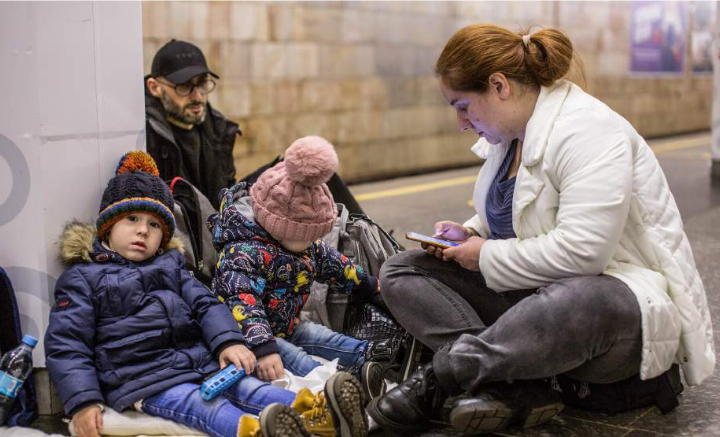
Two months after the war in Ukraine that began on February 24 2022, 5.5 million refugees - approximately 90% of them women and children - had fled the country, and the number of internally displaced people (IDPs) - approximately 60% of them female - had reached 7.7 million. This Rapid Gender Analysis (RGA), carried out by the United Nations Entity for Gender Equality and the Empowerment of Women (UN Women) and CARE International, seeks to draw attention to the gender dynamics in the humanitarian crisis resulting from the war in Ukraine. It also proposes recommendations for humanitarian leadership, actors, and donors to ensure consideration of the gendered dimensions of risk, vulnerability, and capabilities in response to this crisis.
From April 2-6 2022, the RGA team reviewed English, Ukrainian, and Russian sources and interviewed 179 women and men from local communities in 19 regions of Ukraine, as well as representatives from civil society organisations (CSOs), UN agencies, and government bodies. Particular effort was made to ensure that the voices of women and men in vulnerable situations and from different marginalised groups were included.
Key findings include:
Women are playing a key role in the humanitarian response but are not fully involved in decision-making. The RGA reveals that women are performing vital roles in the immediate humanitarian response in local communities. Women's CSOs and women volunteers are mobilising quickly to ensure that their communities and IDPs receive the support they need to access critical services and humanitarian aid. While many men have become unemployed and are primarily engaging in the armed forces, women report taking on new roles and multiple jobs to make up for the lost family income. Women's leadership and their role in decision-making has increased at the family level and partially at the community level, with women reporting they participate on equal terms in family decisions in response to the crisis.
However, at the formal decision-making level, the RGA finds that the centralisation of power and increased role of the military has made it more difficult for women to exert influence in formal political and administrative decision-making processes, thus decreasing women's overall participation. Issues of social development and gender equality tend to be sidelined, and the voices of women (especially those most vulnerable and marginalised) are not included meaningfully in planning and decision-making around the humanitarian response or wider peace processes.
The crisis is largely exacerbating preexisting gender and intersectional inequalities and discrimination. As explained in the report, in the years before the war, Ukrainian women made some measurable gains in terms of towards gender equality and women's empowerment (GEWE) in Ukraine, including the development of a strong civil society that included women- and minority-led organisations. Yet entrenched gender discrimination (disproportionately affecting the socioeconomic status of women), the compounding effects of eight years of conflict in the east, and the increasing rates of violence against women experienced during the COVID-19 pandemic threaten to undo the gains made.
Namely, women's care burden has increased significantly due to the lack of access to education facilities due to security risks and men's absence due to engagement in the armed forces. Expectations on traditional gender roles are likely to have compounding impacts, with women more likely to take on additional emotional care responsibilities within the family - exacerbating their own mental health struggles. Poverty and dependency on social payments, especially among female-headed households, will be expected to increase. Women facing multiple forms of discrimination, such as women from minority groups such as Roma communities, have increased protection needs and yet face particular challenges in accessing humanitarian support.
Women are disproportionally affected by the multi-sectoral and compounded impact of the crisis. Incidents of gender-based violence (GBV), particularly domestic violence and conflict-related sexual violence, are reportedly increasing, but services for GBV survivors are not provided in full. Other sectors that require specific attention to the gender-differentiated needs within the crisis include:
- Limited access to and availability of safe and sex- and family-segregated shelter;
- Inconsistent access to adequate water, sanitation, and hygiene (WASH), such as menstrual health and hygiene needs;
- Restricted availability of adequate food, including food distributions that address the dietary needs of pregnant/breastfeeding women and newborns; and
- Gender-specific needs in health care, such as access to psychological support and sexual and reproductive health (SRH) care, including that related to maternal, newborn, and child health (MNCH).
Sofia Sprechmann Sineiro, Secretary General of CARE International, said that the RGA "allows us to consult directly with affected populations in order to accurately identify what specific needs different groups of people have, and how to best meet them. What we are hearing from the people of Ukraine is that certain groups - such as those with disabilities, Roma and other ethnic minorities, single mothers, and unaccompanied children - are each in need of different forms of protection and assistance. To keep our response effective and relevant, such groups must be consulted and prioritized across the aid ecosystem as this truly devastating situation continues to evolve."
The report offers recommendations to donors, humanitarian leadership, and various actors. Some selected communication-related recommendations include calls to:
- Collect information regarding the preferred and trusted means of two-way communication by men and women and among different population groups, including people with restricted mobility.
- Make information on services, access, and rights widely available and accessible to all sections of the crisis-affected population, taking into consideration language, access to technology, preferred and trusted communications channels and formats, and gender roles.
- Disseminate information about humanitarian aid and evacuation opportunities via diverse communication channels to ensure that women and men without internet access and/or mobile phone connections in the occupied territories and territories under immediate attack can still receive it.
- Set up gender-responsive, inclusive, and confidential two-way feedback and complaints mechanisms that ensure effective procedures for follow-up.
- Support women-led and women's rights organisations engaged in the response through provision of financial resources and by amplifying their voices at national and international platforms.
- Ensure that humanitarian coordination and planning processes led by the UN and the government meaningfully consult with representatives from women's civil society, and create opportunities for their participation in decision-making.
- Consult with women and girls on the locations, distances, and routes to access water, sanitation, and hygiene (WASH) facilities to ensure that safety risks are mitigated.
- Alleviate mothers' increased care burden through programming that offers them support with homeschooling and that works to change attitudes at home, encouraging redistribution of the care burden among male family members.
- Engage the private sector in supporting women in job placement, including the training and retraining of displaced women.
- Include female frontline health workers in decision-making spaces to improve the health response, specifically in relation to women's health and GBV response and prevention mechanisms.
- Provide clear messaging to the crisis-affected population on the risks of trafficking and how people can protect themselves.
- Communicate and reduce stigma about the importance and value of psychological support, particularly among men.
In conclusion, this RGA shows that "It is vital to ensure a holistic response to the crisis that prevents and responds to gender inequalities. Women from all levels, and especially those in vulnerable situations and from different marginalized groups, need to be fully and meaningfully involved in the planning and decision-making processes to inform the way forward."
"Ukraine: New UN Women and CARE Report highlights disproportionate impact of the war on women and minorities", May 4 2022 UN Women press release. Image caption/credit: A family seeking shelter in Kyiv underground. Photo: Oleksandr Ratushniak / UNDP Ukraine
- Log in to post comments